
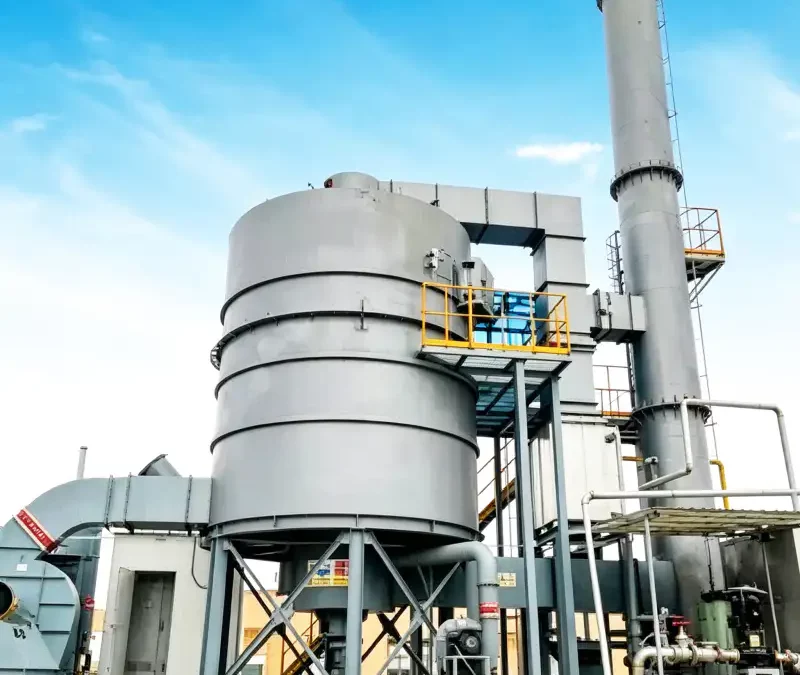
An RTO quotation can only be as useful as the process data behind it. “We have VOC exhaust and need an RTO” identifies the equipment family, but it does not tell an engineer how much gas must be treated, how hot it is, what organic compounds are present, how concentration changes, whether dust or mist is carried over, how the line starts and stops, or what the site expects during an upset. Those missing facts become assumptions, and assumptions make quotations hard to compare.
A strong RFQ does not need to be a perfect process design. It needs to separate known data from unknown data and make the operating envelope visible. Buyers can usually collect production schedule, connected sources, available airflow measurements, temperatures, material lists, utilities, space constraints, and permit requirements. Engineering can then identify where sampling, hazard review, or further design work is still required.
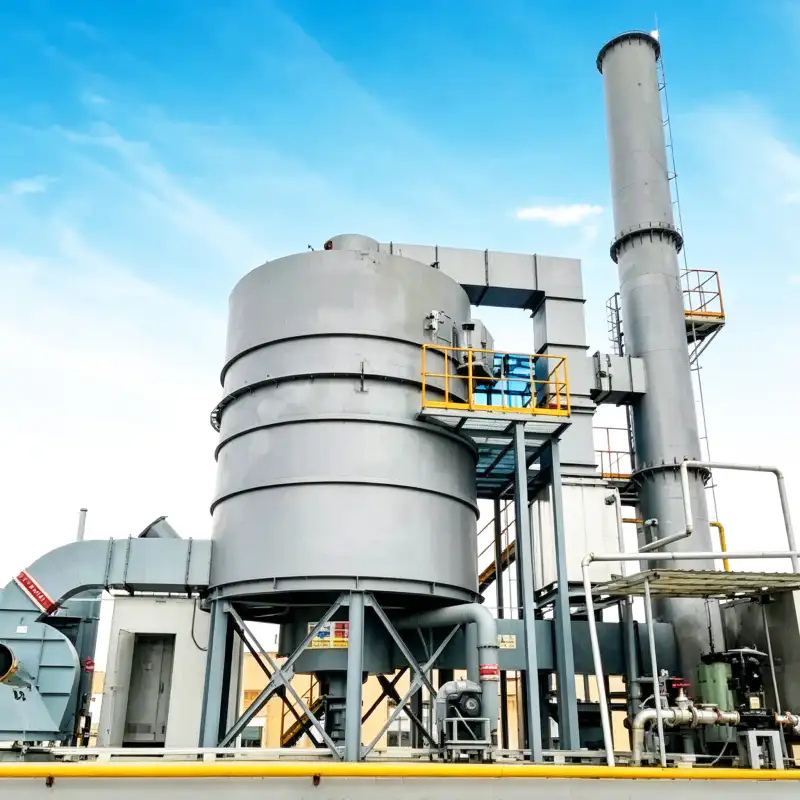
Exhaust flow by operating case and the wider decision
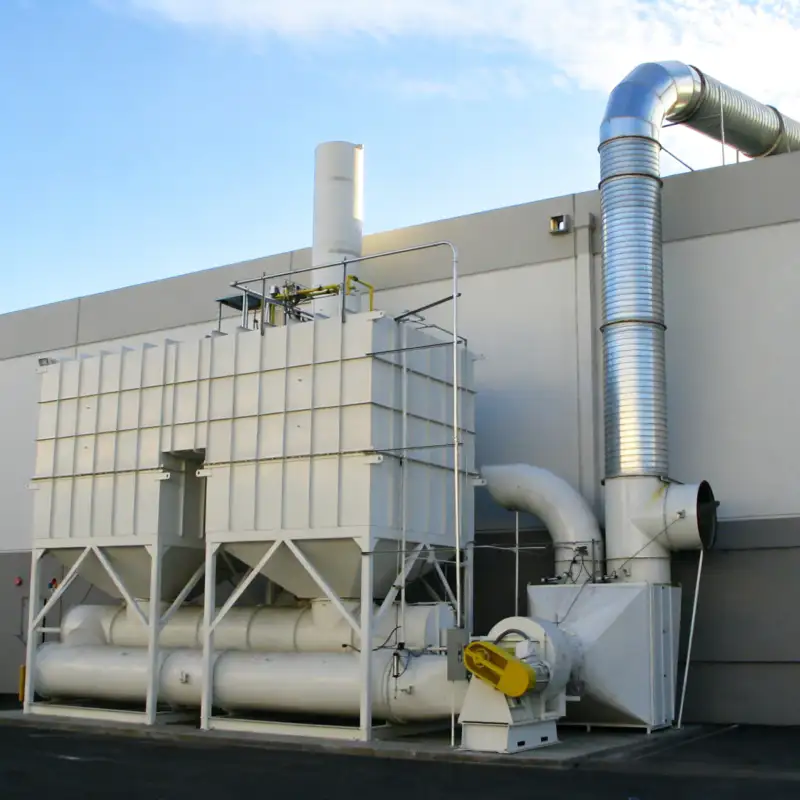
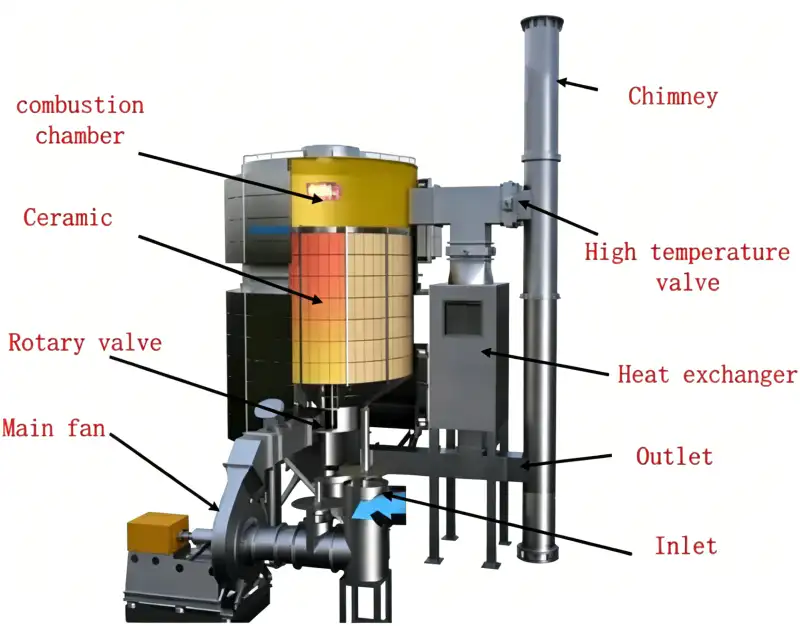
A five-stage RFQ workflow for procurement and engineering
1. Collect what the plant already knows
Gather process flow diagrams, exhaust fan data, production schedule, material lists, temperatures, permits, utility information, and site layout before asking vendors to fill the gaps.
2. Mark measured, calculated, and unknown values
Do not mix a recent instrument reading with a rough estimate without labeling them. Uncertainty is manageable when it is visible.
3. Ask every bidder to use the same basis
Issue one controlled data sheet and require deviations or alternative assumptions to be stated explicitly. That prevents a low price from winning simply because it was based on an easier duty.
4. Resolve high-impact unknowns first
Prioritize sampling, airflow measurement, contaminant identification, or safety review where the uncertainty could change technology, size, pretreatment, fan duty, or operating cost.
5. Freeze the design basis before final comparison
Once major unknowns are resolved, update the RFQ so commercial and technical comparisons use the same operating envelope and project boundary.
Copyable RTO RFQ data checklist
- Connected process sources and which sources can operate simultaneously.
- Minimum, normal, maximum, startup, shutdown, and upset exhaust flow.
- Inlet temperature range and measurement location.
- VOC species, concentration range, and basis of the data.
- Oxygen, humidity, particulate, aerosol, condensable, corrosive, and other relevant constituents.
- Production schedule, turndown, line changes, cleaning cycles, and future expansion.
- Required control objective, permit basis, and performance-test expectations.
- Fuel, power, compressed air, controls interface, and other site utilities.
- Available footprint, height limits, stack route, access, lifting, and foundation constraints.
- Existing pretreatment, collection fans, ducts, dampers, and instrumentation.
- Safety standards, combustible-gas monitoring, dilution, bypass, and shutdown philosophy.
- Documentation, training, commissioning, spares, and maintenance-access requirements.

Questions buyers commonly ask
What if some VOC data is unknown when the RFQ is issued?
Label it as unknown and ask what sampling or analysis is needed before final design. A clearly marked data gap is better than an invented value because every bidder can treat the uncertainty consistently.
Should buyers specify the exact RTO size themselves?
Usually the buyer should define the process duty and project constraints, then require the supplier to size and explain the proposed configuration. If the plant already has an engineering specification, include it, but keep assumptions and measured inputs traceable.
How can quotations be compared fairly?
Use one controlled process-data sheet, require each supplier to list deviations and exclusions, compare complete system boundaries, and normalize utilities, pretreatment, controls, stack, installation scope, testing, and maintenance access.
Which site pages should an RFQ reference?
Use the general RTO page for the core process, review bed and rotary RTO pages if architecture is still open, then use the contact page to send the process envelope and project constraints for engineering discussion.
Add a data-quality column to the RFQ
One simple improvement is to label every important input as measured, calculated, supplier data, operator estimate, or unknown. Add the date and operating condition when a measurement is available. This prevents a number copied from an old drawing from carrying the same authority as a recent field measurement. It also tells bidders where uncertainty is concentrated. If peak VOC concentration is an estimate while airflow has been measured carefully, the next engineering action is obvious. A data-quality column makes clarification meetings shorter, reduces silent assumptions, and gives the project team a clean record of which values were later updated. That traceability is especially useful when the final design basis must be reviewed months after the first budget quotation.
A practical next step
A better RFQ does not have to know every answer. It has to show which answers are known, which are estimated, and which still require engineering work. Put the operating cases, contaminants, schedule, safety basis, utilities, and site constraints in one controlled package. Then require every proposal to state its assumptions against that same package. Procurement gets a cleaner comparison, and engineering gets fewer surprises after the purchase order.
 EN
 ZH
 ES
 AR
 ID
 PT
 FR
 JA
 RU
 DE
 MS
 CS
 BG
 NL
 KO
 RO
 SK
 TH
 VI
 ZH_TW
 UK