
Odor Gas Treatment Solutions
We specialize in treating various odorous waste gases, including hydrogen sulfide, ammonia, and VOCs. We offer customized deodorization solutions such as biological filters, chemical scrubbing, activated carbon adsorption, and RTO/RCO, achieving high efficiency and compliance with standards. Our solutions are widely used in wastewater treatment plants, chemical plants, and the food industry.
Sulfur Compounds
Nitrogen Compounds
Volatile Organic Acids
Aldehydes and Ketones
Aromatic Hydrocarbons & Heterocyclic Compounds

Odor Control: Reaching Standards From the Source
Odorous gases—such as hydrogen sulfide, ammonia, organic amines, and volatile organic compounds (VOCs)—not only emit pungent odors, severely impacting the lives of nearby residents, but may also contain toxic or even carcinogenic components. Long-term exposure can harm human health and damage the ecological environment. Traditional deodorization methods (such as spraying and adsorption) often only transfer pollution, failing to achieve a fundamental solution.
We specialize in deep odor gas treatment solutions centered around Waste Gas Incinerators. Through high-temperature oxidation (TO/RTO) or catalytic oxidation (CO/RCO) technologies, complex odor components are thoroughly decomposed into harmless substances such as CO₂ and H₂O, achieving a removal rate of over 99%. The system combines high reliability, low operating costs, and fully automated control, and has been successfully applied in various industries prone to odor generation, including chemical, pharmaceutical, waste treatment, and food processing.
Choosing our incineration solution is not only about meeting regulatory requirements such as the “Odor Pollutant Emission Standard” (GB 14554), but also a firm commitment to community responsibility and green manufacturing.
Major Components of Malodorous Gases
Note: In practice, malodorous gases often consist of a mixture of multiple substances with complex compositions and fluctuating concentrations. Tailored analysis is required to select appropriate treatment processes.
Common Sources of Odorous Gas
Wastewater Treatment Plants
Waste Disposal Facilities
Food Processing
Livestock Farming
Chemicals & Pharmaceuticals
Paper & Leather
Biogas Engineering
Why Does Malodorous Waste Gas Require Professional Treatment?
Detectable at Trace Levels
Odorous compounds like hydrogen sulfide (H₂S) can be smelled at concentrations as low as 0.0005 ppm—far below health thresholds. Even compliant emissions may cause nuisance complaints and trigger “Not-In-My-Backyard” (NIMBY) opposition.
Toxic and Harmful to Health
Many odorous gases (e.g., H₂S, ammonia) irritate eyes and airways; others like formaldehyde and benzene are carcinogenic or mutagenic. Chronic exposure can lead to headaches, nausea, insomnia, and respiratory diseases.
Complex Mixtures, Hard to Treat
Odorous streams often contain multiple pollutants (e.g., H₂S + NH₃ + VOCs + organic acids) with fluctuating concentrations. Simple methods like scrubbing or carbon adsorption only mask odors temporarily and risk secondary waste (spent carbon, contaminated water).
Strict and Enforced Regulations
Global regulations now mandate odor control:
- China: GB 14554 sets emission and boundary limits for 8 key odorants.
- EU: IED requires Best Available Techniques (BAT).
- California: AQMD enforces complaint response and reduction plans.
Non-compliance risks fines, production cuts, or shutdowns.
Our Core Technologies for Odorous Waste Gas Treatment
We offer a full range of advanced thermal and catalytic oxidation systems—engineered to destroy complex odorous compounds efficiently, reliably, and cost-effectively.
Regenerative Thermal Oxidizer (RTO)
- Destroys odorous pollutants through high-temperature oxidation (typically 760–850°C).
- Ideal for high-concentration, high-volume waste gas streams.
✔ 99% destruction efficiency
✔ Up to 95% thermal energy recovery
✔ Low auxiliary fuel consumption
Catalytic Oxidizer (CO)
- Oxidizes odorous VOCs at lower temperatures using a catalyst (typically 250–400°C).
- Best suited for low-to-medium concentration emissions with low particulate content.
✔ 30–50% lower operating temperature vs. thermal oxidizers
✔ Reduced natural gas usage and NOx formation
✔ Compact footprint
Thermal Oxidizer (TO)
- Direct-flame combustion of contaminants at high temperatures (700–1,000°C).
- Effective for high-concentration, non-recyclable, or halogenated waste gases.
✔ Simple, robust design with minimal maintenance
✔ Handles fluctuating loads and complex gas compositions
✔ Proven reliability in harsh industrial environments
Selective Catalytic Reduction (SCR)
- Reduces nitrogen oxides (NOx) to N₂ and H₂O using ammonia/urea and a catalyst.
- Essential for facilities emitting NOx-containing odorous gases (e.g., from high-temperature processes)
✔ 90% NOx removal efficiency
✔ Prevents secondary odor issues from NOx byproducts
✔ Compliant with stringent air quality standards
Regenerative Catalytic Oxidizer (RCO)
- Combines catalytic oxidation with regenerative heat exchange for ultra-low energy use.
- Optimized for medium-to-low concentration, high-volume streams (e.g., wastewater plants, food processing).
✔ Lowest operating costs among oxidation technologies
✔ Energy recovery >90%
✔ Quiet, stable operation with minimal emissions
Case Study – Fish Canning Plant as an Example
I. Project Background and Exhaust Gas Conditions (Design Basis)
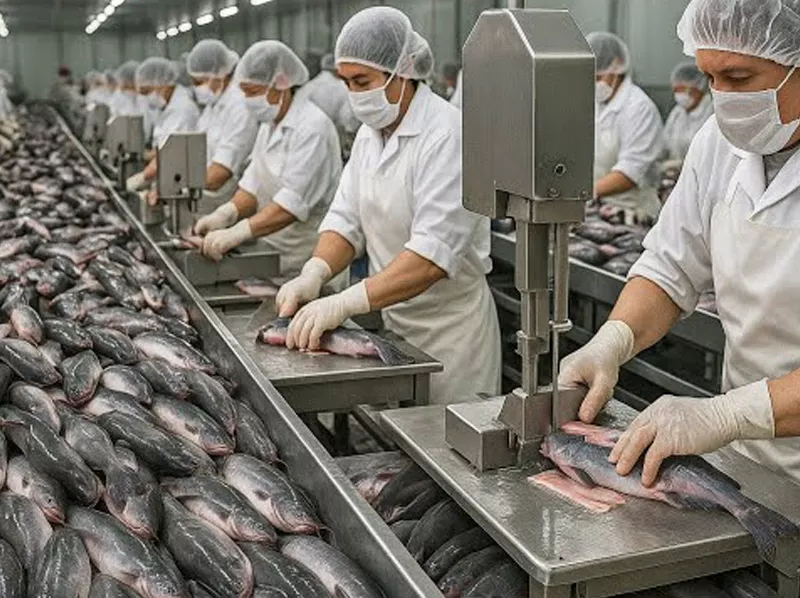
The main sources of malodorous gases in fish canning production include raw material thawing, pre-cooking/steaming, autoclave exhaust, and offal processing (fish meal).
Treated Airflow Rate: 45,000 Nm³/h(estimated to cover 3 production lines and the rendering facility).
Exhaust Gas Composition:
-
-
-
Odor Components: Trimethylamine (TMA, fishy smell), Hydrogen Sulfide (H2S, rotten egg smell), Mercaptans, Ammonia.
-
Physical Characteristics: Temperature 40-60℃, Relative Humidity >90%(saturated vapor), containing oil/grease mist.
-
-
Emission Standard: Required to meet stringent “No Odor at Property Line” standards (Odor Concentration < 500 OU).
II. Core Process Selection: 3rd Generation Rotary RTO
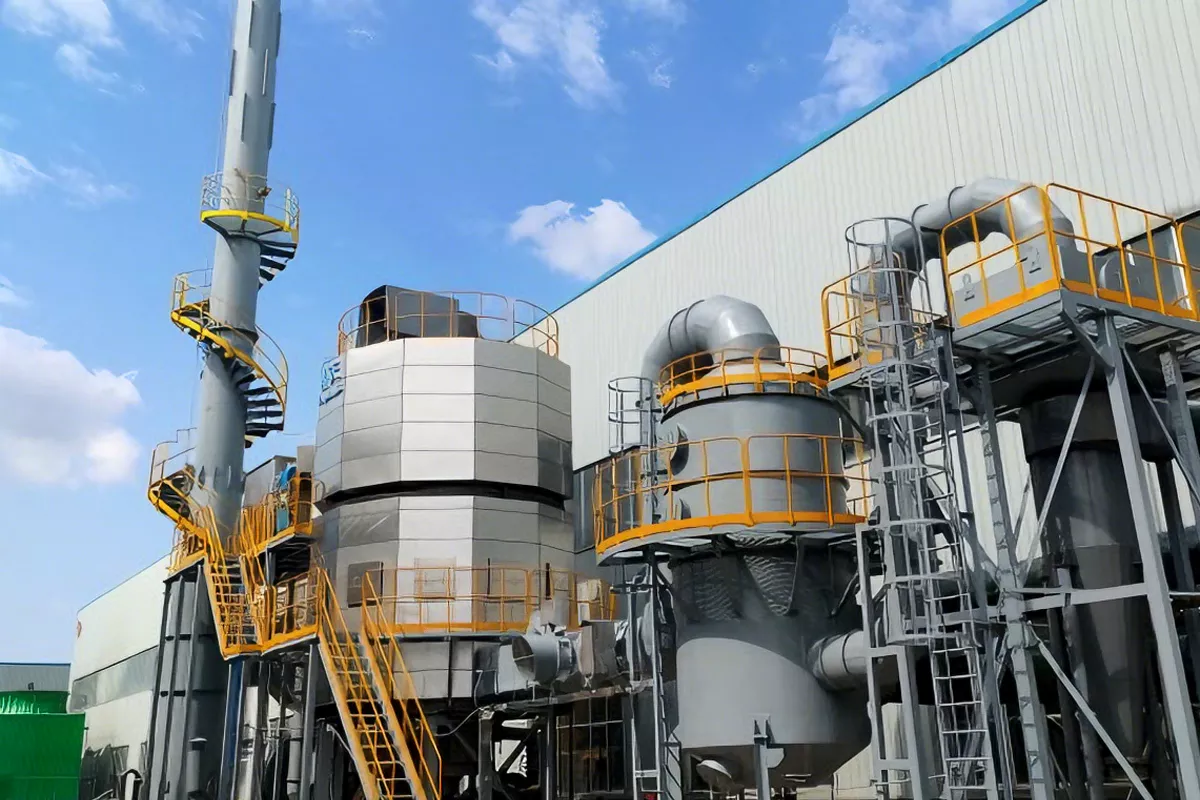
Selecting the 3rd Generation Circular Rotary RTO is crucial for this proposal. Compared to a traditional 3-tower RTO, it offers irreplaceable advantages in a fish canning environment:
-
Zero Pressure Fluctuation: Traditional RTOs generate pressure pulses of up to ± 300 Pa during valve switching, potentially causing back-puffing of odors into the plant. The Rotary RTO’s continuous distribution valve ensures pressure fluctuation is limited to ± 20 Pa , maintaining stable negative pressure for the workshop capture system, preventing odor leakage.
-
Space Efficiency: The circular, integrated design typically requires only 60 % of the footprint of a traditional 3-tower RTO, suitable for congested food processing facilities.
Process Flow Diagram
Pre-treatment (De-oiling/De-watering/De-sulfurization) →3rd Generation Rotary RTO (Incineration/Oxidation) → Waste Heat Steam Boiler (Energy Recovery)→ Compliance Stack
 EN
EN  ZH
ZH  ES
ES  AR
AR  ID
ID  PT
PT  FR
FR  JA
JA  RU
RU  DE
DE  MS
MS  CS
CS  BG
BG  NL
NL  KO
KO  RO
RO  SK
SK  TH
TH  VI
VI  ZH_TW
ZH_TW  UK
UK