
Regenerative Catalytic Oxidizer (RCO)
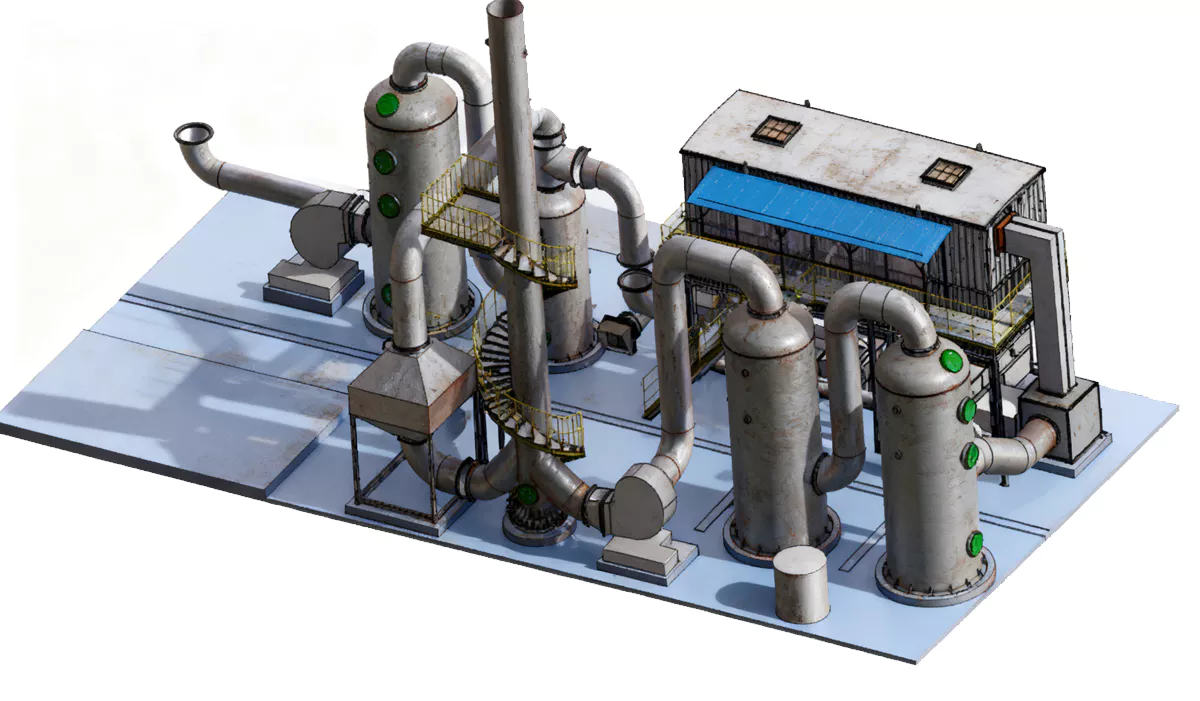
Regenerative Catalytic Oxidation (RCO)
Experience highly efficient and energy-saving VOC treatment. Our RCO system achieves up to 99% purification efficiency and 95% heat recovery, drastically reducing your operational costs.
View Product DetailsWhat is RCO (Regenerative Catalytic Oxidation)?
RCO (Regenerative Catalytic Oxidizer) is a waste gas treatment device that combines high-efficiency heat recovery with low-temperature catalytic oxidation technology. It is specifically designed for removing low to medium concentrations of volatile organic compounds (VOCs), organic odors, and other oxidizable harmful gases, and is widely used in chemical, pharmaceutical, coating, printing, and electronics industries.
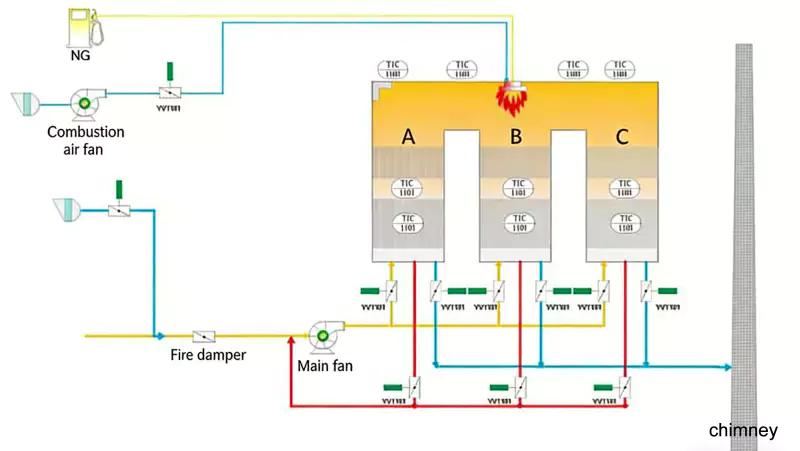
The core of RCO lies in the dual mechanism of “heat storage + catalysis”:
Preheating Stage
VOC-containing waste gas first enters the ceramic regenerative bed, where it is preheated to near the reaction temperature (typically 250–400°C) by the high-temperature ceramic body. Simultaneously, the purified gas discharged stores heat in another set of ceramic beds, achieving a heat recovery efficiency of up to 90–95%.
Catalytic Oxidation Stage
The preheated waste gas enters the catalytic reaction zone. Under the action of noble metal or transition metal catalysts (such as Pt, Pd, MnO₂, etc.), VOCs are completely oxidized to CO₂ and H₂O at temperatures far below traditional combustion temperatures.
Switching Cycle
The airflow direction is periodically switched via valves, causing the ceramic beds to alternately absorb and release heat, maintaining the system’s self-sustaining operation and significantly reducing external energy requirements.
-1024x516.webp "Regenerative Catalytic Oxidizer (RCO)")
Main chemical reaction equations:
For volatile organic compounds, such as methane (CH₄) and benzene (C₆H₆), the oxidation reaction equations are as follows:
- Catalytic oxidation of methane:
Methane reacts with oxygen in the presence of a catalyst to convert it into carbon dioxide and water.
Catalytic oxidation of benzene:
Benzene is completely oxidized into carbon dioxide and water under the action of a catalyst.
Typical Applications of RCO
Pharmaceutical Industry
Electronics Manufacturing (Semiconductors & lithium Batteries)
Printing & Packaging
Coating & Surface Treatment
Chemical & Fine Chemical Industries
RCO’s Technical Features
Factors Affecting RCO Combustion Efficiency
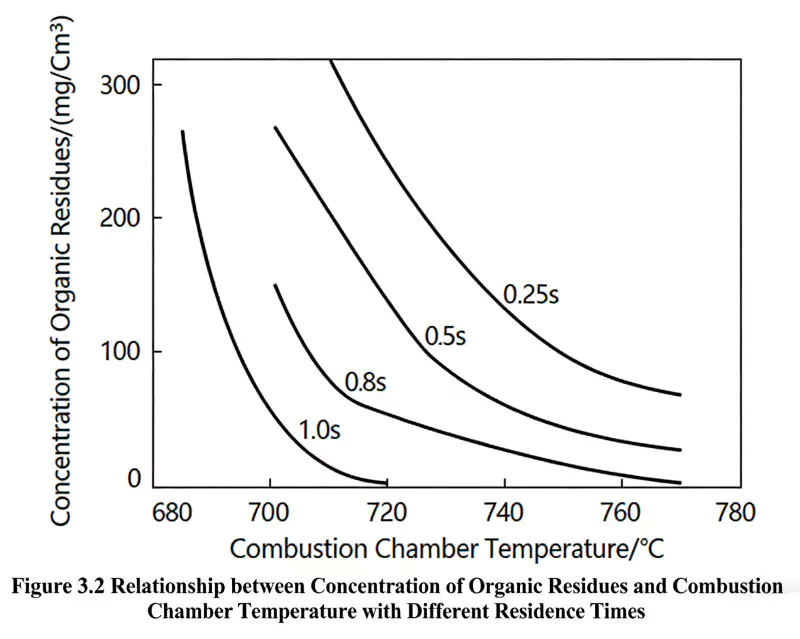
- Temperature
- Higher heat naturally speeds up the overall reaction process.
- Duration
- Allowing the gases to remain in the system for a longer period directly leads to a higher rate of purification.
- Agitation
- Inducing turbulence effectively stirs the mixture, maximizing the chances for combustible molecules to collide and react with oxygen or free radicals.
Composition of RCO system
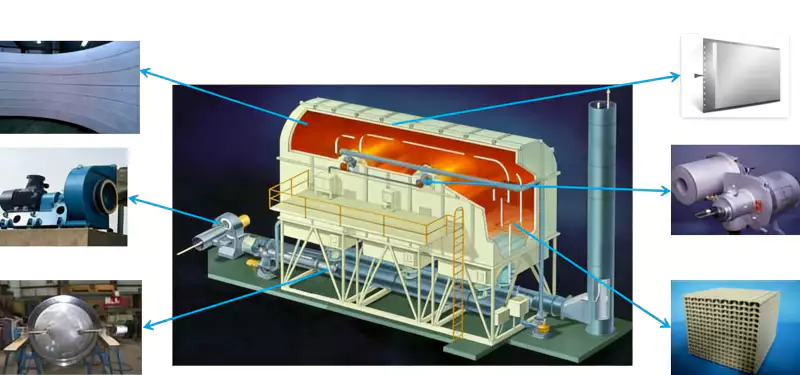

1. Insulation Cotton
High-alumina aluminum silicate fiber modules (up to 300mm thick) offering superior insulation compared to standard materials.
- High Efficiency: Low thermal conductivity and excellent stability.
- Seamless Fit: Compressed fibers expand post-installation to eliminate gaps.
- Durability: High compressive strength and resistance to thermal flow scouring.
- Safe Setup: Quick installation with secure internal anchoring.
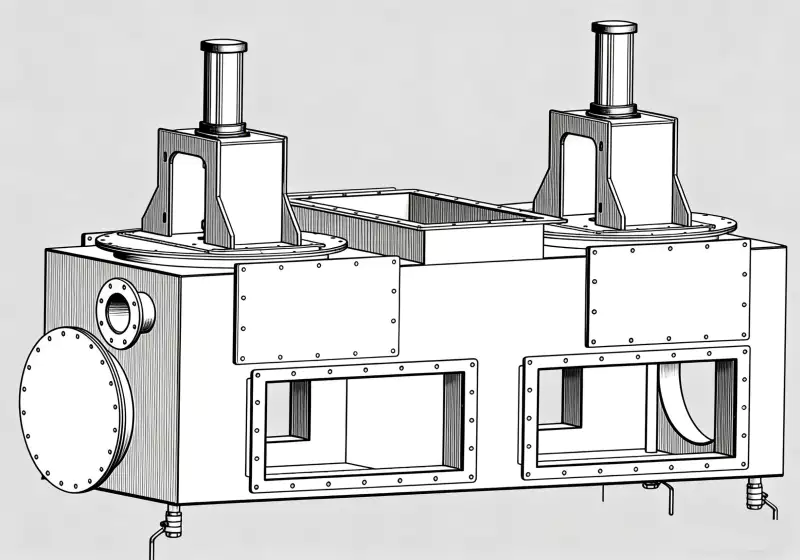
3. Valve System
High-quality poppet valves built for precision, featuring minimal leakage (≤1%), rapid operation (≤1s), and a lifespan of up to 500,000 cycles.
- High Stability: Gravity aligns with the cylinder's operating direction, eliminating the need for additional sliding support on the valve shaft.
- Superior Sealing: The 12mm thick valve plate utilizes its own self-weight to enhance the seal and minimize structural deformation.
- Fail-Safe Protection: Automatically closes under its own weight during power or gas outages, guaranteeing a physical closure for the system.
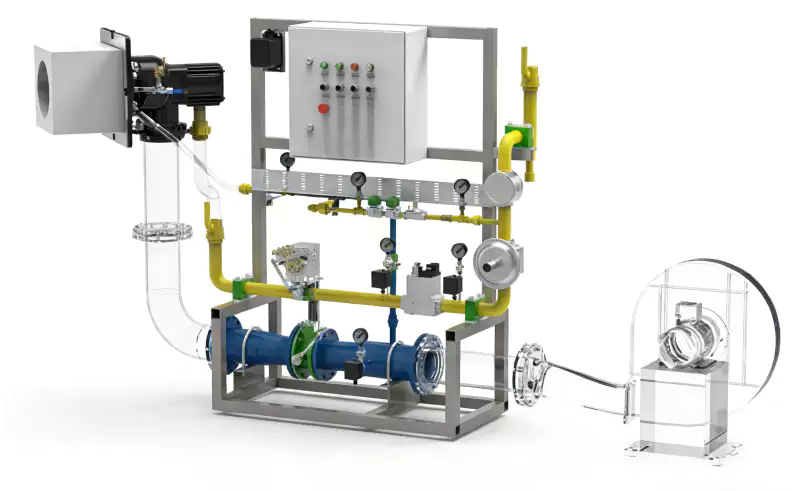
5. Burner
A low-pressure proportional regulating gas burner fueled by natural gas, featuring high-pressure ignition and an impressive 30:1 continuous regulation range.
- Dynamic Efficiency: The proportional regulating valve adjusts its opening based on furnace temperature needs, synchronizing fuel and combustion air to save fuel and ensure stable combustion.
- Comprehensive System: Fully equipped with a combustion air fan, high-pressure ignition transformer, UV flame detector, and a complete fuel supply pipeline system.
- Fail-Safe Protection: Features automated high and low-pressure protection functions. The automatic shut-off valve instantly cuts fuel and stops the burner if gas pressure drops too low or exceeds limits due to blockage.
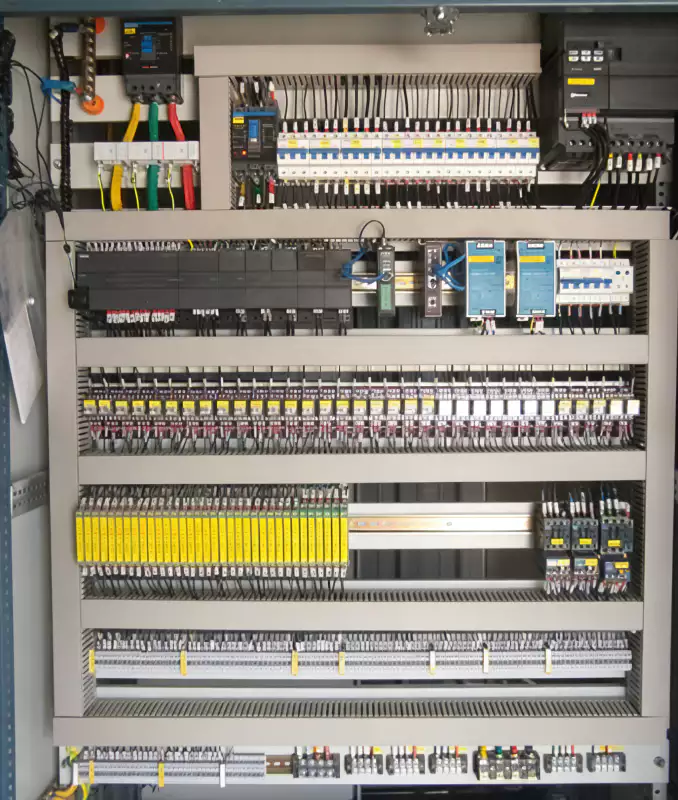
8. Electronic Control System
An advanced PLC (Programmable Logic Controller) system designed for the comprehensive management and automation of waste gas treatment.
- Real-Time Monitoring: Provides total visibility through equipment condition monitoring, process screens, and detailed parameter and alarm displays.
- Comprehensive Data Management: Fully equipped with integrated software for receiving, displaying, transmitting, and securely storing operational data.
- Automated Safety: Features automatic interlock protection and a dedicated emergency shutdown function to ensure absolute system safety under all conditions.
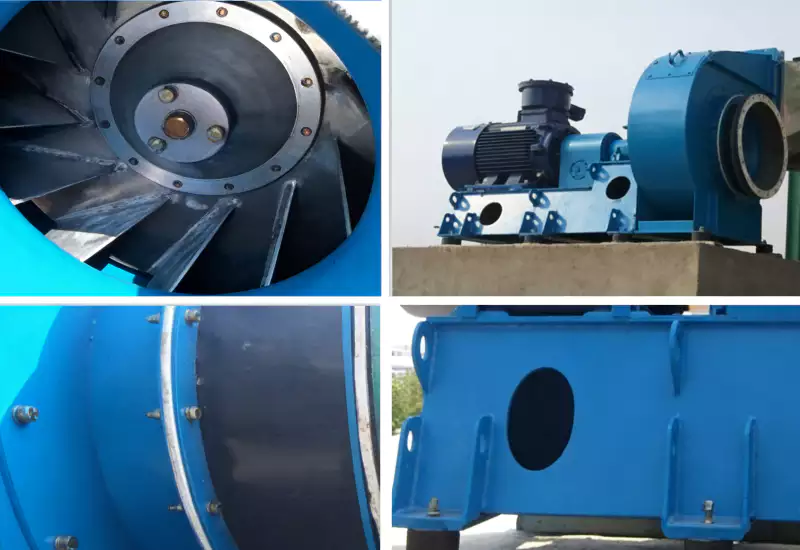
2. Fan System
High-performance exhaust fans designed for safe and consistent operation in demanding industrial environments.
- Fire-Resistant Design: Features copper-inlaid suction inlets and cast aluminum impellers for optimal safety in flammable and explosive settings.
- Consistent Performance: Engineered to operate reliably at specified flow rates and operating temperatures.
- Fully Equipped: Comes standard with flexible connections, shock pads, and dedicated maintenance holes for easy servicing.

4. Bursting Disc
A critical safety device consisting of an explosion venting disc and a holder, installed on both the RTO furnace and related fan equipment.
- Automatic Venting: Instantly activates under abnormal conditions when pressure sharply increases from a fan or RTO malfunction.
- Equipment Protection: Limits equipment damage by immediately releasing the pressure medium.
- Precise Activation: Actuates exactly when a predetermined pressure difference and temperature are reached, per hG/T20570.3 standards.

6. Regenerative Body
Also known as the regenerative filler, this crucial component acts as a highly efficient heat exchanger to maximize thermal recovery within the device.
- Cold Cycle (Releasing Heat): When cold exhaust gas enters, the hot regenerator releases its stored heat, raising the gas to the required preheating temperature while the regenerator itself cools down.
- Hot Cycle (Absorbing Heat): After combustion, the hot purified gas passes through the cooled regenerator. The regenerator absorbs this waste heat, cooling the gas before it exits while reheating itself.
- Continuous Efficiency: This alternating cycle ensures optimal energy conservation by repeatedly capturing and reusing the system's thermal energy.

9. Catalyst
The core of the system. It utilizes porous materials to significantly lower the required combustion temperature (300~450°C), accelerating the complete oxidation of harmful gases into CO2 and H2O.
- High Activity: Carefully designed active materials and porous physical shapes ensure maximum gas adsorption and the highest possible chemical conversion rate.
- Thermal Stability: Consistently maintains purification performance by adapting well to fluctuating exhaust gas temperatures.
- Strength & Longevity: Engineered to withstand high temperatures, vibration, and heavy airflow without cracking or wearing down, guaranteeing a long and cost-effective service life.
RCO Customized Design
Tailor-made for your exhaust gases
We understand that no two waste gases are exactly alike. Fluctuating concentrations, complex compositions, and varied operating conditions—general-purpose equipment often struggles to balance efficiency, safety, and cost. Therefore, we adhere to a customized design philosophy of “one solution for one plant,” providing highly adaptable, reliable, and economical RCO systems based on your specific waste gas characteristics, site conditions, and emission targets.
Exhaust Gas Composition Analysis
Identify pollutant types, concentrations, and potential catalyst poisons
✅ Third-party test report or real-time monitoring data:
- VOC species and concentration (mg/m³ or ppm)
- Presence of halogens (Cl, F), sulfur (H₂S, SO₂), silicon, phosphorus, ammonia, heavy metals, etc.
- Particulate matter concentration (mg/m³)
- Oil mist, tar, or sticky substance content
Operating Condition Confirmation
Evaluate airflow, temperature, humidity, and operational pattern
✅ Exhaust system parameters:
- Airflow range (Nm³/h, including min/max)
- Inlet gas temperature (°C)
- Relative humidity (%) or dew point
- Operation mode (continuous / intermittent / cyclic)
- Risk of sudden VOC spikes (e.g., during cleaning or drying cycles)
Site & Interface Conditions
Design equipment layout and integration plan
✅ On-site information:
- Available installation space (L × W × H)
- Inlet/outlet duct locations and dimensions
- Utility availability (power, compressed air, steam, etc.)
- Need for waste heat recovery (e.g., thermal oil, hot water)
Catalyst Compatibility Assessment
Prevent poisoning and ensure long-term performance
Lab-scale testing (optional but recommended):
- For complex or unknown gases, conduct catalyst activity & durability tests on collected samples
- Determine if pre-treatment is needed (e.g., scrubbing, adsorption, filtration)
System Configuration Customization
Optimize structure, materials, and control strategy
✅ Finalize based on verified data:
- Number of regenerative chambers (2-bed / 3-bed / rotary)
- Catalyst type and loading volume
- Material grade (carbon steel / SS304 / SS316L / corrosion-resistant lining)
- Safety features (explosion protection, condensation prevention, anti-clogging)
- Control functions (LEL monitoring, auto-dilution, remote diagnostics)
Performance Simulation & Validation
Digitally verify system feasibility
CFD and thermal modeling:
- Simulate temperature and flow distribution
- Validate thermal balance and self-sustaining operation capability
- Generate predicted reports on energy consumption and destruction efficiency
case-2.webp "0 RCO(Regenerative Catalytic Oxidizer)case (2)")
Case Study: High-Efficiency VOC Abatement for Pharmaceutical Manufacturer in Germany
- Client: Bi*P**a GmbH
- Location: Baden-Württemberg, Germany
- Industry: Pharmaceutical API (Active Pharmaceutical Ingredient) Manufacturing
Background
B*P**a GmbH is a mid-sized European pharmaceutical producer specializing in oncology and cardiovascular APIs. As part of its expansion and compliance with the EU Industrial Emissions Directive (IED) and German BImSchG regulations, the company needed to upgrade its existing carbon adsorption system, which struggled with fluctuating solvent emissions and frequent saturation during batch production cycles.
Their primary exhaust stream came from three synthesis reactors and a solvent recovery unit, emitting a mix of methanol, acetone, ethanol, and trace toluene at concentrations ranging from 300–2,500 mg/m³, with an average airflow of 8,000 Nm³/h.
Key Challenges
- Regulatory Pressure: German authorities required >99% VOC destruction efficiency and continuous emission monitoring (CEMS).
- Energy Costs: Natural gas prices in Germany were among Europe’s highest—traditional RTO would incur unsustainable operating expenses.
- Space Constraints: Limited footprint in the existing plant; no room for large thermal oxidizers.
- Safety Concerns: Low LEL (Lower Explosive Limit) margins during reactor cleaning cycles demanded explosion-proof design.
The client had evaluated both RTO and CO systems but found RTO too energy-intensive and standard CO too vulnerable to temperature swings and catalyst deactivation.
How They Found Ever-power
While researching “low-temperature catalytic oxidizers for pharma VOCs” online, BioPharma’s engineering team discovered Ever-power’s technical white paper on RCO applications in GMP environments. Impressed by the data on >98% efficiency at 320°C and integrated safety controls, they contacted Ever-power through the website’s inquiry form. After a virtual technical workshop and reference check with an Ever-power client in the Netherlands, they invited our team for an on-site audit.
Ever-power’s Customized RCO Solution
We delivered a fully engineered 2-chamber Regenerative Catalytic Oxidizer (RCO) with the following key features:
- Catalyst: Custom Pt-Pd formulation resistant to trace water vapor and minor oxygen fluctuations
- Thermal Design: 92% heat recovery efficiency; self-sustaining operation above 1,200 mg/m³ VOC
- Safety Integration: ATEX-certified explosion relief panels, LEL monitor with auto-dilution, and SIL2-rated PLC control
- Footprint: Compact skid-mounted design (6.5m × 3.2m), installed within existing utility bay
- Compliance: Integrated CEMS compatible with German TA-Luft reporting standards
- Pre-treatment: Coalescing filter + HEPA to protect catalyst from aerosol carryover
Installation was completed in 10 weeks, including commissioning and operator training.
Results After Implementation
✅ Destruction Efficiency: Consistently 99.2–99.6% (verified by third-party stack testing)
✅ Energy Savings: 58% less natural gas consumption vs. projected RTO baseline — saving ~€180,000/year
✅ Zero Downtime: Stable operation across 200+ batch cycles over 12 months
✅ Regulatory Approval: Full compliance with BImSchV and EU IED; no non-conformance notices
✅ Carbon Reduction: Estimated 420 tons CO₂e/year avoided due to lower fuel use
“Ever-power’s RCO gave us the perfect balance of compliance, reliability, and cost control. It’s now a benchmark for our other European sites.”
— Dr. Lena Weber, Environmental Compliance Manager, BioPharma GmbH
Global RCO Supplier Comparison
Competitor Analysis: RCO Technology Comparison
* CAPEX Index: Based on comparable 10,000 Nm³/h RCO system for pharma application (2024 market data). Lower = more cost-effective.
Why Customers Choose Ever-power?
While established European and American brands offer reliable technology, Ever-power delivers comparable—or superior—performance at significantly lower total cost of ownership, without compromising on quality or compliance:
- ✅ Faster project turnaround: Half the lead time of traditional suppliers
- ✅ Higher energy savings: Advanced ceramic packing + optimized catalyst = up to 60% fuel reduction vs. RTO
- ✅ True customization: Not “off-the-shelf with markup”—we engineer from your gas data
- ✅ Global-ready: Systems pre-certified for EU, US, and emerging markets
- ✅ Transparent pricing: No hidden licensing or proprietary software fees
Editor: Miya
 EN
EN  ZH
ZH  ES
ES  AR
AR  ID
ID  PT
PT  FR
FR  JA
JA  RU
RU  DE
DE  MS
MS  CS
CS  BG
BG  NL
NL  KO
KO  RO
RO  SK
SK  TH
TH  VI
VI  ZH_TW
ZH_TW  UK
UK