
RTO Solutions for Architectural Coil/Plate Coating
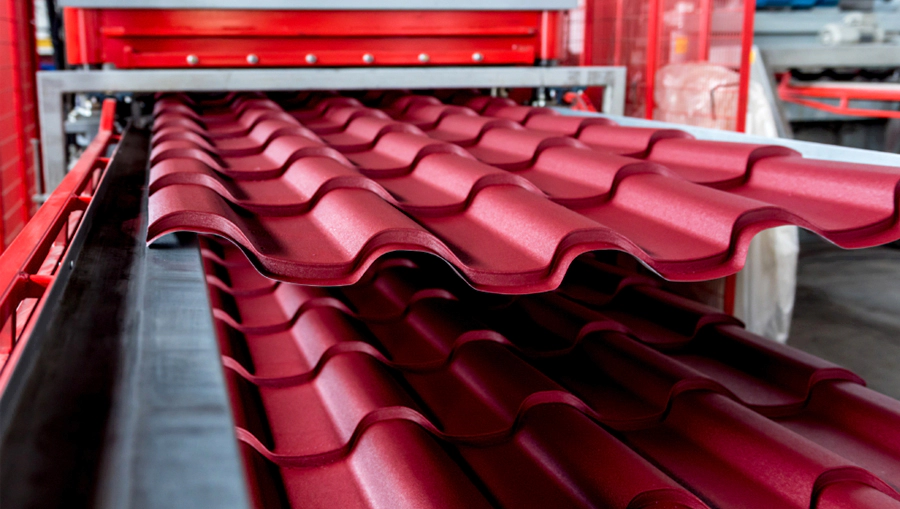
The architectural coating industry—specifically continuous coil coating for aluminum and steel sheets used in building facades, roofing, and structural components—is characterized by high throughput and highly consistent thermal processes. While the quality of these coatings is paramount, the resulting Volatile Organic Compound (VOC) emissions from the continuous curing ovens present a significant environmental and operational challenge. Successfully integrating environmental compliance with these high-speed, high-demand production lines is where the Regeneračný termálny oxidátor (RTO) proves its indispensable value.
Core Commitment: The Triple Win of Cost, Compliance, and Efficiency
Our RTO solutions, specifically tailored for the architectural coil/plate coating sector, deliver Destruction Rate Efficiencies (DRE) exceeding 99%. This not only ensures rapid, sustained regulatory compliance but, crucially, dramatically reduces long-term operating costs, particularly fuel expenditure.
Architectural Coil Coating: Understanding the Emission Fingerprint
Unlike batch coating, coil coating is a continuous, high-speed process. The primary source of VOCs is the curing oven exhaust, where volatile solvents flash off and thermally decompose. This steady, high-volume flow profile dictates the abatement technology choice.
Waste Gas Characteristics and Composition Analysis
The coating formulations (often polyesters, fluorocarbons like PVDF, or siliconized polyesters) are solvent-rich, leading to the following exhaust characteristics, which often fall under the “high-volume, low-concentration” category:
📍 Process Points
Primarily from the curing oven exhaust zones and solvent preparation areas.
🌬️ Airflow
Extremely high and constant (e.g., 40,000 to 100,000 SCFM) to maintain product quality and safety limits (LEL).
📈 Concentration
Low to moderate VOC concentrations (typically 300 to 1,500 ppmv) due to high dilution, though highly consistent.
🧪 Key Components
Often include Xylenes, Toluén, n-Butanol, and various Glycol Ethers a Acetates. Importantly, trace silicones (used in some coating types) and particulates can be present, requiring careful system design.
Coil Coating VOC Emissions Profile for Abatement Sizing
| Source | Typical Flow Rate (SCFM) | Primary VOCs | Concentration Range (ppmv) |
|---|---|---|---|
| Curing Oven Exhaust | 40,000 – 100,000+ | Xylene, Toluene, Acetates | 500 – 1,500 |
* SCFM = Standard Cubic Feet per Minute | ppmv = parts per million by volume
The Imperative of Abatement: Risk and Regulation
Uncontrolled emissions pose tangible risks to health, environment, and, critically, operational stability.
Environmental and Occupational Hazards
The persistent release of VOCs contributes directly to photochemical smog and localized air quality degradation. From an occupational standpoint, worker exposure to high concentrations of aromatic solvents like Xylene can cause immediate irritation and potential long-term systemic effects. A robust RTO system mitigates both public health and workplace risks.
Navigating Regulatory Headwinds
The coil coating sector faces continuous scrutiny, particularly in regions with established air quality mandates. Non-compliance often leads to costly litigation, operational restrictions, and mandatory shutdowns.
📋 Key Regulations at a Glance
United States (US EPA)
Compliance with the Zákon o čistom ovzduší and state-level permits, which often mandate MACT (Maximum Achievable Control Technology) standards for specific coatings HAPs. Penalties can reach tens of thousands of dollars per day of violation.
Germany/EU
Facilities must adhere to the Technical Instructions on Air Quality Control (TA Luft) and the Industrial Emissions Directive (IED). Limits are stringent, often demanding Total Organic Carbon (TOC) outlet concentrations below 20 mg/Nm³.
Čína
Strict VOC Emission Standards (e.g., specific GB standards for the coating industry) require high-efficiency control systems and real-time monitoring. Non-compliance frequently leads to public shaming and severe, costly production limitations.
RTO Technology: The High-Efficiency Answer
The RTO is the established workhorse for high-volume, low-concentration air streams like those found in coil coating. Its core principle—regenerative heat recovery—is what sets it apart.
Contaminated air is channeled through a ceramic media bed that has retained heat from the previous cycle, efficiently preheating the air. It then passes through a combustion chamber where the VOCs are destroyed (>99%) at temperatures typically around 1,500°F (815°C). Finally, the purified hot air passes through a second ceramic bed, transferring heat before exiting.
This thermal energy recovery (TER) process can achieve staggering efficiencies, often 95% or higher. For the continuous, energy-intensive coil coating line, this translates directly to a minimal auxiliary fuel demand, often achieving autothermal operation (self-sustaining combustion) at relatively low solvent concentrations.

RTO vs. Alternatives: The Economic Calculus
For high-flow coil coating lines, the decision often comes down to energy cost, DRE reliability, and resistance to minor fouling.
VOC Abatement Comparison for Continuous Coating Operations
| Technológia | Použiteľnosť | Výhoda | Disadvantage vs. RTO |
|---|---|---|---|
| RTO Regeneračný tepelný oxidátor |
Vynikajúce Ideal for high flow, variable VOC load. |
Highest thermal efficiency (>95%) Lowest long-term fuel cost. |
Higher initial CAPEX than some options. |
| RCO Regeneračný katalytický oxidátor |
Good, but risky for coating | Operates at lower temperature. | Highly susceptible to catalyst poisoning from silicones or phosphorous in coatings, requiring costly replacement. |
| TO Tepelný oxidátor |
Good for emergency/intermittent use | Simple, lowest CAPEX. | Extremely high fuel consumption due to 0% heat recovery; economically unfeasible for continuous operation. |
| Záver: Given the long operational hours and need for minimal catalyst risk in coil coating, the RTO’s robustness and efficiency make it the clear economic winner. | |||
Ever Power’s Unique RTO Design for Coil Coating Optimization
We don’t simply supply a generic RTO. Our systems are custom-engineered for the specific challenges of continuous coil coating:
Continuous Particulate Management
Since the continuous process generates trace particulate/sticky aerosols, our design includes an optimized inlet section with a durable pre-filter or a strategically placed bypass damper to mitigate media fouling. This prevents the pressure drop that can prematurely shut down a continuous line.
Integrated Hot-Side Process Heat Recovery
Unique to this sector, the purified hot exhaust (1,500°F or higher) from the RTO can be routed via a secondary heat exchanger back into the coil curing oven’s process air supply. This is a massive energy integration point, recovering heat for the process rather than just the RTO itself, maximizing your plant-wide thermal efficiency.
Automated Bake-Out Cycle
For facilities using harder coatings or PVDF solvents, which can leave trace residues, our software automatically initiates a high-temperature bake-out cycle to thermally clean the ceramic media, maintaining maximum performance without requiring a production stop.

Quantifiable ROI and Operational Savings
The investment in a high-efficiency RTO system is a calculated move that pays dividends through operational savings and risk avoidance.
1. Fuel Cost Reduction: The Efficiency Multiplier
A typical coil coating line operates 24/7. Moving from a non-regenerative system to an RTO with 95% TER results in a near-elimination of auxiliary fuel consumption once the system reaches autothermal operation (often achieved when the VOC concentration is as low as 5-8% LEL).
The savings often total hundreds of thousands to millions of dollars per year for large coil lines.
2. Avoiding Financial and Reputational Damage
In addition to fines, non-compliance can trigger mandatory production curtailments or public notices, severely impacting supply chains and stock prices. The RTO offers a secure defense against these costly penalties.
3. Simplified Payback Estimation
The investment calculus is clear. The payback period is primarily driven by fuel savings and avoided penalty costs.
(Annual Fuel Savings) + (Annual Penalty Avoidance)
For coil coating applications, RTO systems typically achieve full cost recovery within 3 to 5 years.

Success Stories: RTO Implementation in Coil Coating
Our expertise is validated by successful installations in demanding environments globally, ensuring continuous operation and compliance for our clients.
🇳🇱 Case Study 1: High-Speed Aluminum Coil Line (Netherlands)
Výzva
Major European Aluminum Facade Supplier needed to expand capacity while meeting strict IED directives for TOC emissions in a highly regulated zone.
Solution
Installed a high-flow, three-chamber RTO system (60,000 SCFM) with integrated secondary heat recovery.
Výsledky
- DRE: 99.8%
- Additional oven fuel saving: 15%
“The RTO is a workhorse. It handles our full production load efficiently, and the heat recovery feature was an unexpected bonus that significantly cut our energy costs.”
🇰🇷 Case Study 2: Prepainted Steel Coils (South Korea)
Výzva
Leading Asian Steel Plate Manufacturer facing government mandate to upgrade to latest MEE VOC standards with old inefficient system.
Solution
Compact custom RTO with specialized particulate filter array.
Výsledky
- Consistent compliance with new standards
- Autothermal operation: 90% of time
“The system was delivered and commissioned ahead of schedule, avoiding potential government penalties. It has proven to be extremely reliable.”
🇺🇸 Case Study 3: Architectural Aluminum Extrusion Coating (USA)
Výzva
Large North American Aluminum Extrusion Coater operating under strict NESHAP permit with problematic RCO system.
Solution
Replaced RCO with robust two-chamber RTO system.
Výsledky
- Eliminated annual catalyst maintenance
- Steady DRE: 99.9%
- Secured compliance with NESHAP
“The switch was a game-changer. Our maintenance budget for VOC control dropped dramatically, and we finally have a system that handles our full range of coatings without concern.”
Essential RTO Questions for Coil Coating Professionals
Common Inquiries on RTO Implementation
| Otázka | Expert Answer |
|---|---|
| Will the continuous, high air volume require excessive fuel consumption? | No, not with an RTO. Because of the constant VOC flow typical of coil coating, the system often runs autothermally, meaning the energy recovered from the VOC destruction is sufficient to maintain the reaction temperature, minimizing or eliminating auxiliary fuel use. |
| Can the RTO handle the high heat from the curing oven exhaust? | Yes, the RTO is designed for high-temperature service. Furthermore, our design can incorporate an oven exhaust gas damper to control the temperature entering the RTO, ensuring system longevity and efficiency. |
| What if we need to switch between solvent-based and water-based coatings? | The RTO handles both. While solvent-based coatings provide the heat needed for autothermal operation, the RTO is a robust thermal device that simply uses a bit more auxiliary fuel to destroy the VOCs from water-based coatings (which often have lower VOC concentrations). |
| Is pre-treatment necessary before the RTO? | Generally, only basic particulate pre-filtration is needed for coil coating. Unlike RCOs, RTOs tolerate the trace silicone and particulates without requiring complex and expensive chemical pre-treatment stages. |
| How do RTO systems handle the high throughput required by a continuous line? | We design large-scale, multi-canister RTOs (e.g., three- or five-canister systems) which minimize pressure drop and maintain the ultra-high flow rate required by continuous lines without disrupting the coil coating process. |
| What maintenance is required for the ceramic media? | Very little, usually just periodic inspection. The high-quality ceramic used has a long lifespan (15-25 years). Our automated bake-out cycles handle most minor fouling issues, minimizing manual maintenance. |
Let’s Secure Your Future Compliance and Efficiency
In the highly technical and regulated world of architectural coil and plate coating, you need an abatement solution that is as robust and reliable as your finished product. An RTO is more than environmental protection; it’s an integrated component of your thermal management strategy and a significant hedge against regulatory risk.
Don’t let a generic, off-the-shelf solution jeopardize your continuous operation or inflate your utility bills. Let our expertise in high-flow, high-DRE thermal oxidation and our deep understanding of coating chemistry design the optimal system for your facility.
 SK
SK  EN
EN  ZH
ZH  ES
ES  AR
AR  ID
ID  PT
PT  FR
FR  JA
JA  RU
RU  DE
DE  MS
MS  CS
CS  BG
BG  NL
NL  KO
KO  RO
RO  TH
TH  VI
VI  ZH_TW
ZH_TW  UK
UK