
Popis
VOC Treatment Process | RCO Regenerative Catalytic Oxidation
Destroy Volatile Organic Compounds (VOCs) at dramatically lower temperatures and slash your operating costs. The Ever-power RCO system guarantees a ≥ 99% purification efficiency while achieving up to 95% thermal heat recovery. Attain self-sustaining, zero-fuel operation at optimal VOC concentrations and eliminate environmental compliance risks instantly.
⚙️ Executive Engineering Brief
? Volumetric & Concentration Capacity
- ? Air Volume Range: 1,000 to 100,000 Nm3/h
- ?️ Applicable VOC Concentration: 1,000 to 10,000 mg/Nm3
- ? Flow Rate Elasticity: 30% to 120% adaptability
- ? Self-Heating Threshold: ~1.5 g/m3 (Toluene eq.)
? Purification & Efficiency
- ✅ Purification Efficiency: ≥ 99%
- ✅ Thermal Recovery Efficiency: Up to 95%
- ✅ Reaction Temperature: 300°C – 450°C
- ✅ Pressure Loss: ≤ 3000 Pa
?️ Core Safety & Components
- ⚙️ Switching Valves: Zero-leakage poppet valves (≤ 1s switch)
- ? Katalyzátor: High-activity precious metal / porous carrier
- ? Bezpečnosť: Integrated bursting discs & interlocks
- ?️ Izolácia: 300mm high-alumina silicate fiber
? Technical Parameters
The Ever-power RCO system is meticulously engineered to provide unparalleled thermal efficiency and VOC destruction at significantly lower temperatures than traditional RTO systems, drastically reducing your auxiliary fuel consumption.
| Parameter | Špecifikácia | Engineering Impact |
|---|---|---|
| Air Volume Range | 1,000 – 100,000 Nm3/h | Scalable for painting lines, chemical reactors, and printing press exhausts. |
| Catalytic Reaction Temp | 300°C – 450°C | Significantly lower than RTO (800°C+), extending equipment life and slashing fuel OPEX. |
| Tepelná účinnosť | Up to 95% | Ceramic regenerators effectively trap exhaust heat to preheat incoming cold VOC gas. |
| Pressure Loss | ≤ 3000 Pa | Aerodynamic ceramic beds and valve routing minimize restriction, lowering induced draft fan electrical loads. |
| Self-Heating Concentration | ≥ 1.5 g/m3 | Once this critical concentration is reached, the burner shuts off entirely. The VOC oxidation heat sustains the system natively. |
? Regenerative Catalytic Oxidation Process Introduction
Regenerative Catalytic Oxidation (RCO) technology is an advanced synergy of thermal recovery and catalytic science. The system heats organic waste gases to above 300°C. At this specific temperature threshold, volatile organic compounds (VOCs) pass through a highly active catalyst bed and are rapidly oxidized and decomposed into harmless Carbon Dioxide (CO2) and Water (H2O). This highly efficient molecular breakdown achieves a purification efficiency of up to 99%.
The high-temperature purified gas generated by this oxidation then flows through a specially crafted ceramic regenerator. The ceramic body absorbs this thermal energy, “storing heat” while simultaneously cooling the exhaust gas for safe discharge. During the next valve cycle, incoming cold, untreated waste gas passes through this already “heat-stored” ceramic bed. The ceramic rapidly transfers its heat to the incoming gas, preheating it to near-reaction temperatures before it even reaches the combustion chamber.
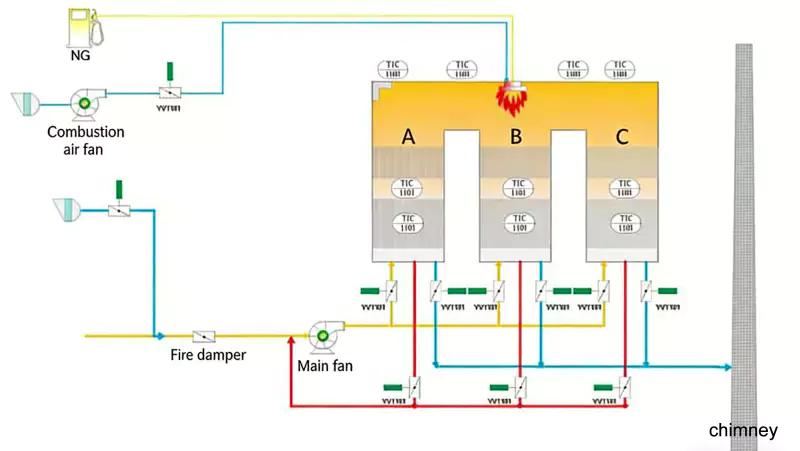
This continuous, alternating heat exchange cycle effectively utilizes the ceramic as a regenerative heat exchanger carrier, radically slashing the auxiliary fuel consumption required to maintain reaction temperatures. Operating costs are driven to the absolute minimum, achieving a thermal energy recovery rate of 95%.
? Factors Affecting RCO Combustion Efficiency
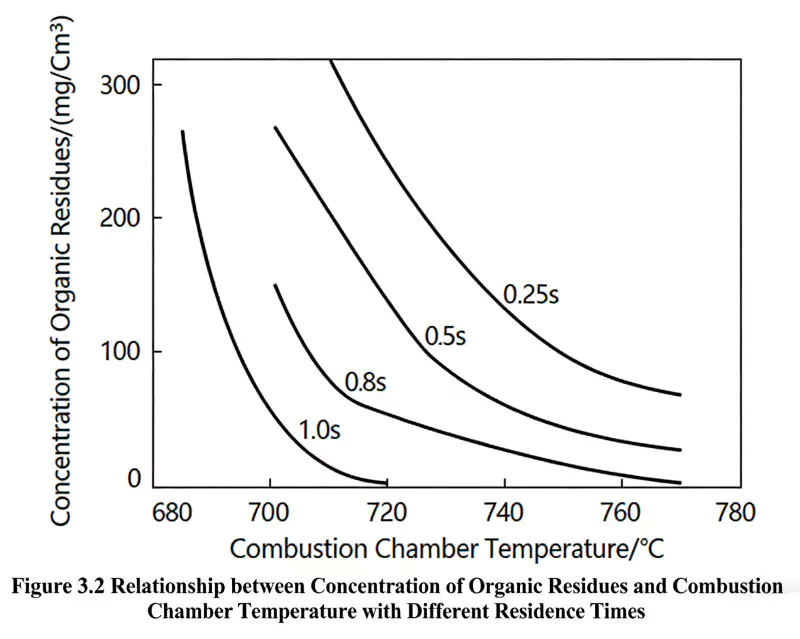
Reaction Temperature
Temperature is the primary driver of catalytic kinetics. Increasing the temperature within the optimal catalyst window accelerates the oxidation reaction, ensuring the complete destruction of complex organic chains.
Čas pobytu
The duration the VOCs remain in contact with the catalyst bed is critical. Our engineers precisely calculate chamber volumes to ensure adequate residence time (typically 0.25s to 1.0s), directly correlating to higher purification efficiencies.
Turbulent Mixing
Perfect oxidation requires uniform oxygen distribution. The purpose of turbulent mixing within the RCO chamber is to exponentially increase the collision opportunities between combustible VOC molecules, oxygen molecules, and free radicals across the porous catalyst surface.
? Applicable Conditions
- Optimal Air Volume: Ideally suited for mid-to-large flow rates ranging from 1,000 to 100,000 Nm3/h.
- Gas Components: Designed for exhaust streams containing complex, mixed VOC components that have no solvent recycling value and are difficult to reuse directly.
- Ideal Concentration: Highly effective for concentrations where 1,000 mg/Nm3 < Concentration < 10,000 mg/Nm3.
? Advantages of the RCO Device
- Low Energy Consumption: A low reaction temperature translates directly to minimal auxiliary fuel requirements, preserving your operational budget.
- High Adaptability: Easily handles waste gas with high air volumes and low-to-medium concentrations effectively.
- Flow Rate Elasticity: Exhibits significant operational elasticity, seamlessly managing flow rate fluctuations from 30% to 120% without system failure.
- Composition Resilience: Adapts automatically to sudden changes and fluctuations in VOC composition and concentration profiles.
- Dust Tolerance: Not highly sensitive to small amounts of particulate dust and solid particles entrained in the exhaust gas.
- Peak Thermal Efficiency: Features the highest thermal energy recovery in its class, reaching up to 95%.
- Self-Heating Operation: At appropriate exhaust gas concentrations (e.g., Toluene ≥ 1.5g/m3), the system achieves self-sustaining operation, running with zero added fuel.
- Highest Purification: Reaches an absolute purification efficiency of 99%, destroying the toughest VOC chains.
- Spoľahlivosť: Extremely low maintenance workload ensures safe, continuous, and reliable factory operation.
- Serviceability: Organic sediment can be periodically removed via bake-outs, and the thermal storage medium/catalyst is easily accessible for replacement.
- Low Fan Load: The entire device creates a remarkably small pressure loss (approx. 3000 Pa).
- Dlhovekosť: Engineered with heavy-duty materials for a remarkably long overall service life.
⚙️ RCO Components Breakdown
1. Insulation Cotton
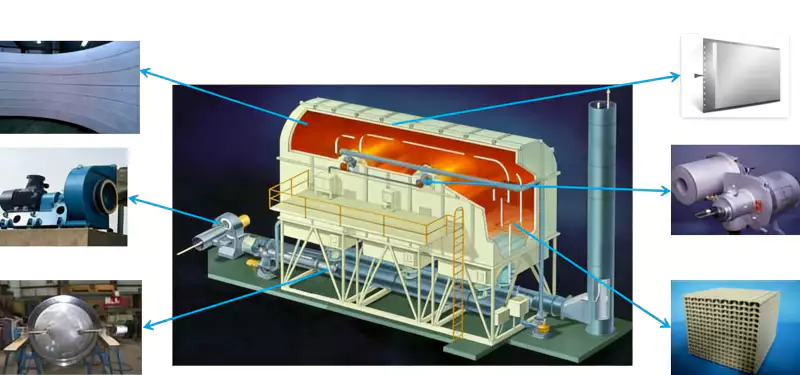
The RCO reactor box utilizes high-alumina aluminum silicate fiber insulation modules with a maximum thickness of 300mm. This provides vastly superior insulation performance compared to ordinary fibers. These modules feature low thermal conductivity, high compressive strength, and excellent resistance to thermal flow scouring. Their pre-compressed installation ensures no gaps exist in the furnace lining, locking heat inside and keeping casing temperatures safe.

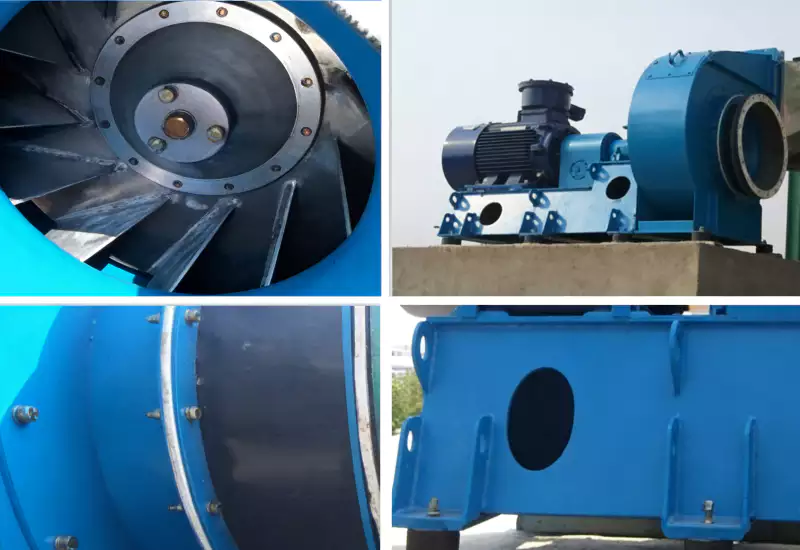
2. Fan System
The exhaust fan adopts critical fire-resistant designs, such as copper-inlaid suction inlets or cast aluminum impellers, drastically enhancing the safety of the system’s equipment in flammable and explosive environments. All fans are precisely matched to operate at specified flow rates and operating temperatures and are equipped with flexible connections, shock pads, and maintenance holes.
3. Valve System (Poppet Valves)
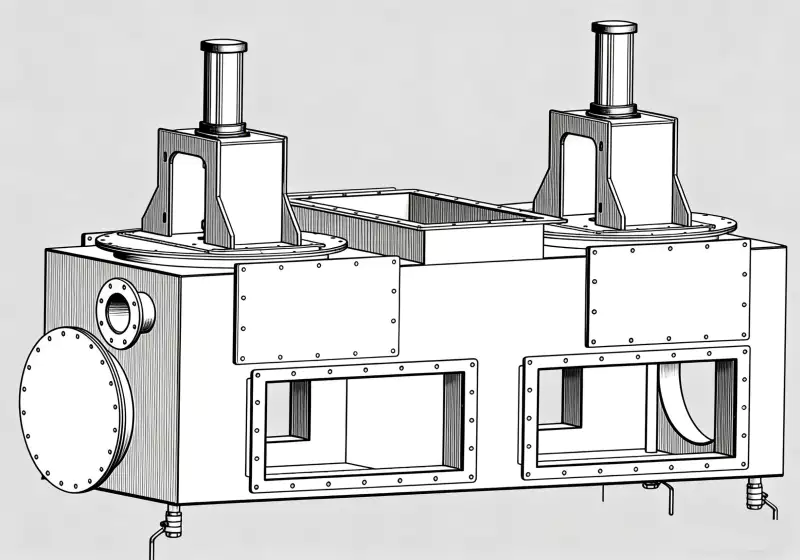
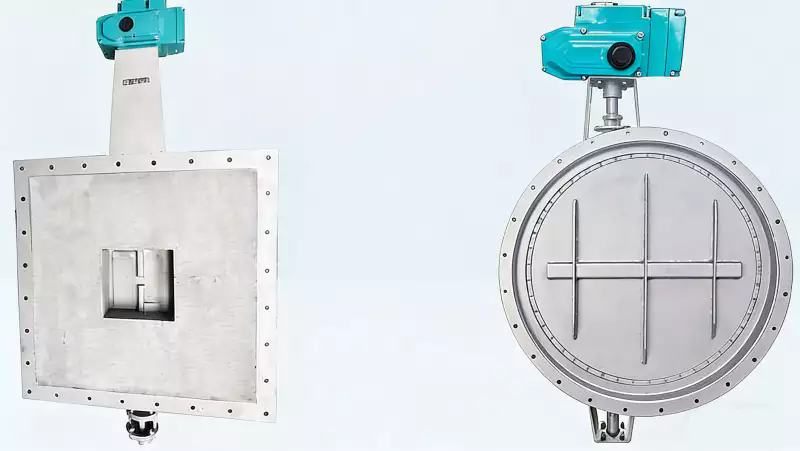
The flow-switching mechanism is the heart of an RCO. Ever-power utilizes heavy-duty lift poppet valves featuring high precision and minimal leakage (≤ 1%). Because the valve plate gravity aligns with the cylinder operating direction, no additional sliding support is needed for the valve shaft, ensuring maximum reliability. The 12mm thick valve plates resist deformation and provide rapid switching (≤ 1s). Crucially, in the event of power or gas cut-off, the valve plates close under their own weight, providing fail-safe physical closure protection.
4. Catalyst (The Core)
Catalysts are the absolute core of regenerative catalytic combustion. By utilizing porous carriers with massive specific surface areas, the catalyst allows organic gases and oxygen to adsorb and collide violently at temperatures as low as 300°C – 450°C. A premium catalyst must possess: High Activity (dictating the chemical conversion rate based on active materials and physical shape), Good Thermal Stability (adapting to exhaust temperature fluctuations without performance decline), High Strength (resisting cracking and wear from high temperature, vibration, and airflow), and a Dlhá životnosť to justify the investment in precious metals.

5. Regenerative Body
Acting as a regenerative heat exchanger, these ceramic honeycomb fillers capture intense heat from exiting purified gases during the “hot cycle” and release it to pre-heat incoming cold toxic gases during the “cold cycle.” This alternating mechanism achieves the staggering 95% thermal recovery rate.

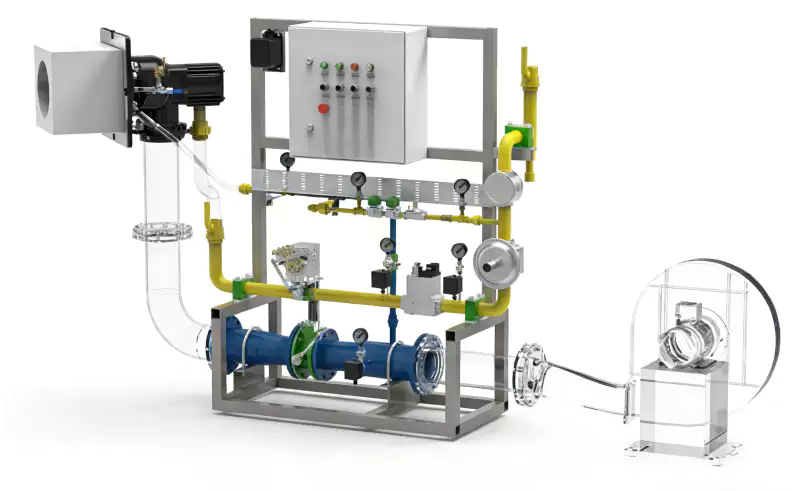
6. Burner
A low-pressure proportional regulating gas burner achieves continuous proportional regulation with a massive 30:1 range. Ignited at high pressure using natural gas, it synchronizes fuel and combustion air. The proportional regulating valve adjusts its opening based on furnace temperature demands, saving fuel. It includes vital low-pressure and high-pressure automatic fuel shut-off protections.
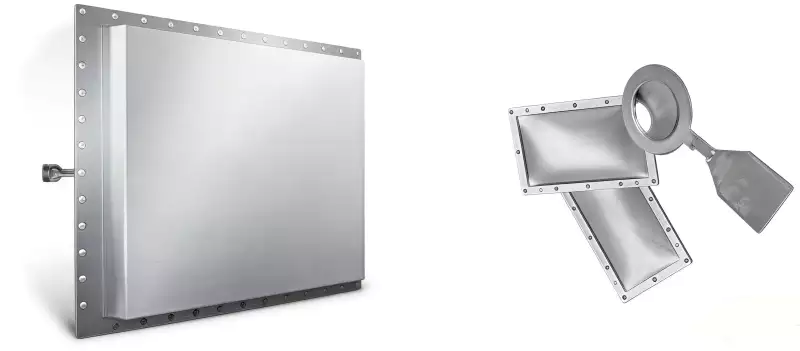
7. Bursting Disc & 8. Instrumentation/Control Systems
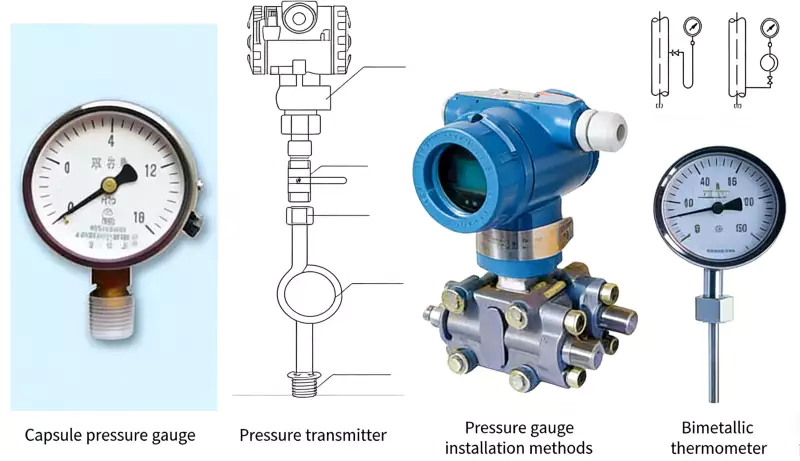
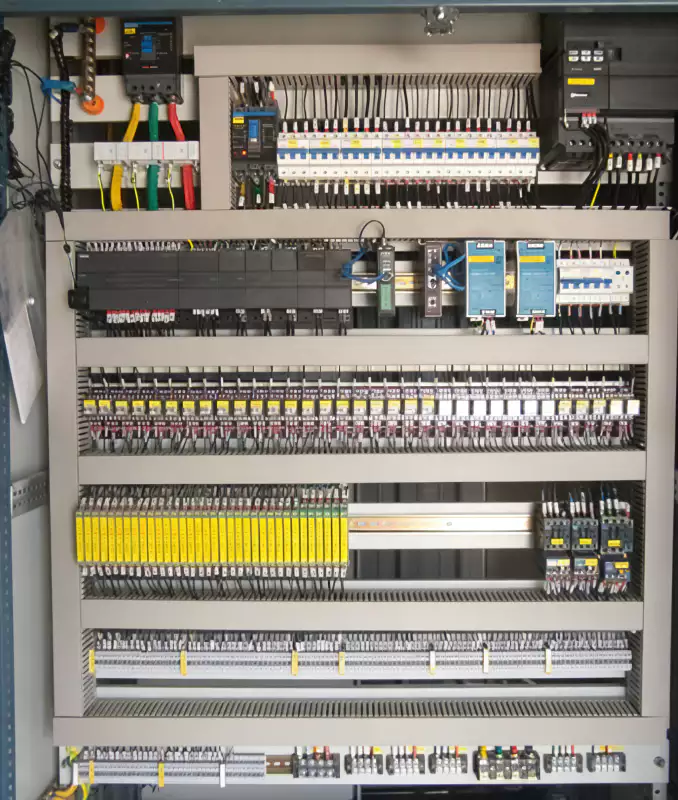
For critical safety, an explosion venting disc (compliant with HG/T20570.3) is installed. If an anomaly causes a sharp pressure difference reaching a predetermined value, the disc actuates immediately to release pressure and protect the system. Bimetallic thermometers, pressure transmitters, and thermal resistance sensors feed continuous telemetry to the PLC electronic control system, which manages equipment condition monitoring, alarms, automatic interlock protection, and emergency shutdown functions.
? RCO Switching Sequence
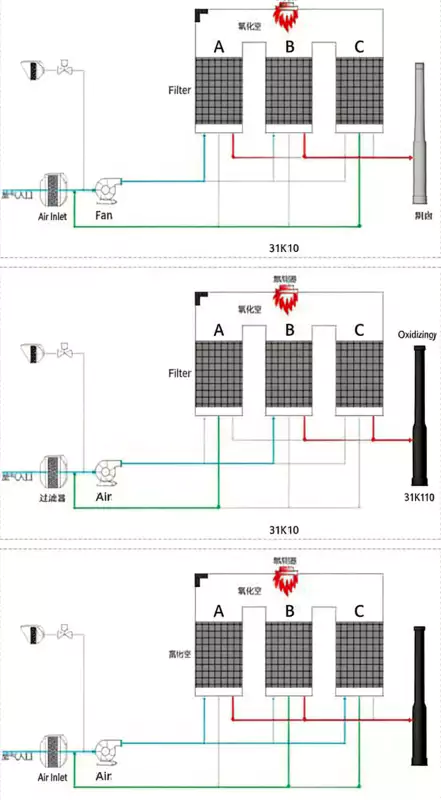
A typical 3-bed RCO system utilizes a precise valve switching sequence to ensure continuous VOC destruction, maximum heat recovery, and a critical “purge” step that prevents untreated gas spikes during valve transitions.
| Time Cycle | Bed A | Bed B | Bed C |
|---|---|---|---|
| Cycle T | Inlet (Heating) | Outlet (Cooling) | Purge (Cleaning) |
| Cycle 2T | Purge (Cleaning) | Inlet (Heating) | Outlet (Cooling) |
| Cycle 3T | Outlet (Cooling) | Purge (Cleaning) | Inlet (Heating) |
? Why Partner with Ever-power?
For over 20 years, Ever-power has been the premier engineering authority in heavy industrial air purification. Designing an RCO system requires mastering high-temperature thermodynamics, precision pneumatics, and advanced catalytic chemistry. It is a rigorous science we have perfected.
- ✔️ Full Value-Chain Integration: We are true EPC contractors. We deliver comprehensive Process Engineering ➔ Lean Manufacturing ➔ Turnkey Site Installation ➔ Intelligent Commissioning.
- ✔️ Proven by Industry Giants: Our bespoke BL Series VOC systems successfully safeguard the compliance of massive conglomerates, including major steelworks, chemical plants, and automotive coating lines globally (e.g., Shanshui Group, Huarun Power).
- ✔️ Uncompromised Quality Credentials: Fully ISO certified, holding multiple environmental technology patents, and fundamentally compliant with the strictest EPA regulations worldwide.
? Engineering Selection Guide: Architecting Your RCO
To engineer the precise RCO system for your facility, our technical team requires specific operational data to prevent catalyst poisoning and ensure stable autothermal operation. Prepare the following parameters:
1. Flue Gas Volumetrics & Flow Dynamics
Provide the Maximum Gas Volume (Nm3/h) and normal operating volume. Knowing the fluctuations (e.g., between batch processes) helps us design the Variable Frequency Drive (VFD) control for the main fan and the proper bypass routing configurations.
2. VOC Composition & Concentration (Crucial)
Provide a detailed breakdown of the VOC species (e.g., Toluene, Xylene, Ethyl Acetate) and the Total Inlet Concentration (mg/Nm3). Critical: We must identify any potential catalyst “poisons” present, such as heavy metals, sulfur, phosphorus, or silicon compounds, to select the correct precious metal catalyst type or recommend upstream pretreatment.
3. Target Emission & Utility Access
Confirm your local regulatory emission targets. Additionally, identify your available auxiliary fuel (Natural gas, LPG, etc.) required for the burner during cold startup sequences.
? Value Quantified: Return on Investment (ROI)
The Ever-power RCO system presents a transformational shift in plant economics by drastically lowering the energy penalty associated with thermal oxidation.
The Cost of Outdated Technology
- Fuel Bleed in TO/RTO: Direct Thermal Oxidizers (TO) and high-temp RTOs operate at 800°C+. If your VOC concentration is low, you will burn massive amounts of natural gas every hour just to maintain temperature, destroying overall plant profitability.
- Regulatory Fines: Utilizing cheap, low-efficiency activated carbon boxes leads to rapid bed saturation and sudden VOC emission spikes, resulting in automated regulatory fines and forced plant closures.
The Ever-power Upgrade ROI
- Self-Sustaining Operation: Because the catalyst lowers the oxidation threshold to ~300°C, a VOC concentration of just 1.5 g/m3 is enough to make the system run without any auxiliary fuel. The immense fuel savings alone often pay back the CapEx in 1-2 years.
- Absolute Compliance Guarantee: The 99% destruction efficiency ensures your facility remains online 24/7, completely immune to tightening environmental legislation.
? Global Case Studies: Proving Our Authority
?? Chemical Manufacturing (Germany)
Application: Chemical Reactor Vent Gas
Challenge: The plant emitted a complex mix of low-concentration solvents. Their existing direct-fired thermal oxidizer was consuming exorbitant amounts of natural gas, ruining process margins.
Riešenie: Installed the Ever-power RCO system. The low 300°C ignition threshold, combined with the ceramic 95% heat recovery, reduced their natural gas consumption by 85% while maintaining strict EU VOC compliance.
?? Electronics Coating Line (Vietnam)
Application: Automated Spray Painting Exhaust
Challenge: Large air volume (80,000 Nm3/h) with relatively low VOC concentrations (1500 mg/Nm3) made traditional RTOs too expensive to operate continuously.
Riešenie: Ever-power deployed a 3-bed RCO system. At 1500 mg/Nm3, the system achieved self-sustaining autothermal operation. The burner remained off during production, yielding zero fuel costs during normal coating operations.
?? Automotive Parts Facility (Brazil)
Application: Curing Oven Exhaust
Challenge: Required a highly reliable system that could handle sudden fluctuations in solvent loads without tripping the safety interlocks or bypassing raw gas.
Riešenie: Our heavy-duty poppet valves and advanced PLC control system effortlessly managed flow elasticity from 30% to 120%, ensuring 99% purification across all production shifts.
?? Flexible Packaging Print (USA)
Application: Printing Press Solvent Exhaust
Challenge: Needed an EPA-compliant solution with minimal downtime for a high-speed, 24/7 printing operation.
Riešenie: The Ever-power RCO utilized a highly durable precious metal catalyst. Scheduled catalyst bake-outs successfully removed organic sediment without manual cleaning, resulting in 99.8% system availability annually.
❓ Engineering & Operational FAQ
What is the exact difference between RTO and RCO?
An RTO (Regenerative Thermal Oxidizer) uses pure thermal incineration at high temperatures (>800°C) to destroy VOCs. An RCO (Regenerative Catalytic Oxidizer) uses a catalyst to initiate the oxidation at a much lower temperature (300-450°C). This allows the RCO to consume significantly less auxiliary fuel, making it far more economical for low-to-medium VOC concentrations.
What is “Catalyst Poisoning” and how is it prevented?
Catalyst poisoning occurs when certain chemicals (like sulfur, silicon, halogens, or heavy metals) bind permanently to the catalyst’s active sites, destroying its ability to oxidize VOCs. We prevent this by conducting a rigorous chemical analysis of your exhaust prior to design. If poisons are present, we either recommend specific poison-resistant catalysts or integrate an upstream pretreatment scrubber.
How long does the catalyst typically last?
Under normal operating conditions with clean VOC streams (no severe poisons or heavy dust), a high-quality precious metal catalyst in our RCO systems typically lasts 3 to 5 years. Routine thermal “bake-out” procedures help extend this lifespan by burning off temporary organic masking on the catalyst surface.
Why is a 3-bed system better than a 2-bed system?
In a 2-bed system, when the valves switch direction, a small “puff” of unpurified VOC gas sitting in the manifold escapes the stack. A 3-bed system introduces a third “purge” cycle. Before a bed becomes an exhaust bed, it is purged with clean air, ensuring that absolutely zero unburned VOCs bypass the system, pushing purification efficiency from ~95% up to a guaranteed 99%.
What happens if the VOC concentration spikes dangerously high?
If concentrations surge to dangerous levels (approaching the Lower Explosive Limit – LEL), the integrated PLC system instantly triggers the high-temperature bypass valves and opens the bursting discs if necessary. This safely vents the gas, protecting the reactor casing and the expensive catalyst bed from thermal runaway and structural damage.
? Comprehensive Plant Environmental Solutions
Beyond RCO, Ever-power architects industry-leading gas treatment systems for complex chemical, particulate, and organic emissions across all heavy industries:
- Advanced VOC Treatment Systems – Total lifecycle solutions for industrial organic emissions.
- RTO (regeneračný termálny oxidátor) – High thermal efficiency destruction of massive volume VOCs without catalyst.
- CO (katalytické oxidačné činidlo) – Direct catalytic oxidation for continuous, high-concentration streams.
- TO (Tepelné oxidačné činidlo) – Direct-fired high-heat incineration for extreme concentration liquid/gas waste.
- About Ever-power – Learn more about our legacy and engineering ethos.
- Ever-power Global Homepage
Eliminate VOCs & Slash Fuel Costs Today
Stop bleeding money on exorbitant natural gas bills with outdated thermal oxidizers. Let Ever-power’s senior engineering team design a bespoke RCO system that guarantees 99% VOC destruction, recovers 95% of thermal energy, and secures your plant’s profitability and environmental compliance.
 SK
SK  EN
EN  ZH
ZH  ES
ES  AR
AR  ID
ID  PT
PT  FR
FR  JA
JA  RU
RU  DE
DE  MS
MS  CS
CS  BG
BG  NL
NL  KO
KO  RO
RO  TH
TH  VI
VI  ZH_TW
ZH_TW  UK
UK