
Magnetic Energy Plume Abatement Technology in Lead-Zinc Smelting Flue Gas Treatment
Deep-Dive Analysis of Post-Desulfurization Deep Purification for Regenerative Thermal Oxidizer (RTO) Compatible Emission Control Systems
1. Project Context and Environmental Compliance Challenge
This engineering case study examines a critical flue gas treatment upgrade at a lead-zinc smelting facility located northeast of Huize County, Yunnan Province, China. The plant operates in an exceptionally sensitive environmental zone — agricultural fields and irrigation channels lie within 50 meters of the desulfurization area. For heavy metal smelting operations in such proximity to farmland, environmental compliance is not merely a regulatory matter; it is a license-to-operate issue with zero tolerance for failure.
Since November 2013, the facility has employed ammonia-based desulfurization to treat low-concentration SO₂ emissions from both the fuming furnace and reduction furnace. While this legacy system successfully brought SO₂ and NOₓ concentrations into compliance with special emission standards over its nine-year operational life, monitoring data from January through April 2022 revealed a critical gap: particulate matter averaged 23 mg/m³, falling substantially short of the ≤10 mg/m³ special emission limit. Compounding this technical failure, visible white plume trailing from the stack created persistent visual pollution, triggering repeated complaints from neighboring communities.
The core engineering challenge: The existing ammonia desulfurization infrastructure lacked sufficient particulate capture efficiency and could not eliminate saturated water vapor plumes. The facility faced a hard deadline — complete all upgrades by year-end 2022 to achieve full compliance by January 2023.
2. Inlet Flue Gas Characterization and Pollutant Profile
Before selecting any emission control technology, accurate characterization of the inlet gas stream is non-negotiable. The following table presents the complete baseline operating parameters for this lead-zinc smelting flue gas stream:
| Parameter | Value | Unit | Engineering Significance |
|---|---|---|---|
| Standard Gas Volume Flow | 150,000 | Nm³/h | Determines equipment sizing and fan selection criteria |
| Flue Gas Temperature | 35 | ℃ | Near saturation point — favorable for water vapor condensation |
| Oxygen Content (Actual / Baseline) | 17 / 18 | % | High-oxygen environment; oxidative corrosion must be addressed |
| Fan Power Rating | 300 | kW | System pressure increase requires fan capacity verification |
| System Pressure | 6,000 | Pa | Limited pressure margin in existing ductwork |
| Duct Diameter | 1,820 | mm | Governs dewhite unit interface dimensions |
| Nitrogen Oxides (NOₓ) | 100 | mg/Nm³ | Already compliant — no additional treatment required |
| Sulfur Dioxide (SO₂) | 50 | mg/Nm³ | Already compliant — no additional treatment required |
| Particulate Matter | 72 | mg/Nm³ | 7.2× over the limit — primary treatment target |
| Oxid uhoľnatý (CO) | 15,000 | mg/Nm³ | High CO concentration — explosion risk monitoring essential |
| Hydrogen Fluoride / Hydrogen Chloride | 5 / 15 | mg/Nm³ | Acidic corrosion factors — material selection critical |
| Inlet Humidity to Dewhite Unit | 50 | % | High-humidity gas — root cause of visible white plume |
| Other Corrosive Substances | 30 | mg/Nm³ (NaCl) | Salt spray corrosion — full anti-corrosion protection required |
Critical Diagnostic Finding: While particulate matter at 72 mg/m³ represents the immediate compliance failure, the white plume phenomenon stems from saturated water vapor carrying micro-droplets and dissolved salts. Simply adding conventional particulate removal equipment cannot resolve the plume issue. An integrated “deep purification + plume elimination” approach is the only viable technical pathway. This principle applies equally to thermal oxidizer systems and regenerative thermal oxidizer (RTO) exhaust streams where visible emissions must be managed alongside VOC destruction efficiency.
3. Technical Solution: Magnetic Energy Dewhite System Design
3.1 Process Route Selection
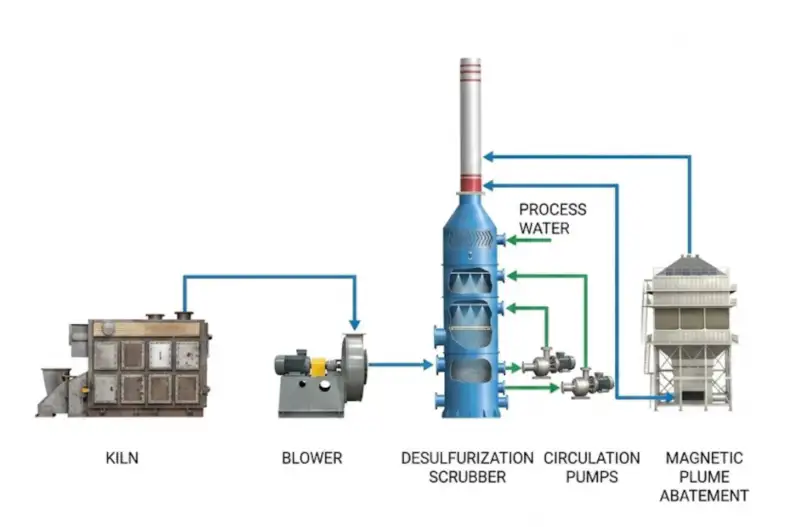
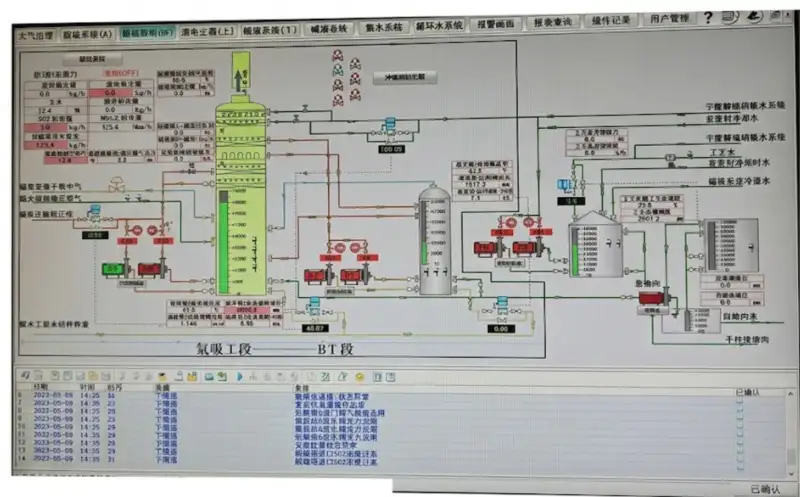
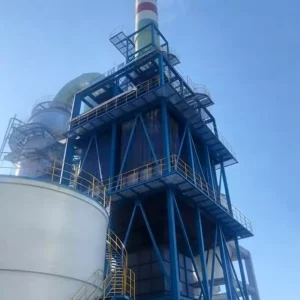
The project adopted a two-stage treatment architecture: “Ammonia Desulfurization + Magnetic Energy Dewhite.” The magnetic dewhite unit was installed above the desulfurization tower top reducer section, preserving the existing desulfurization system structure while adding a dedicated deep purification stage. The process flow is as follows:
Process Flow Path:
Fuming / Reduction Furnace Flue Gas → Ammonia Desulfurization Tower (SO₂ and NOₓ removal) → Tower Top Reducer → Gas Deflector (flow direction change) → Magnetic Dewhite Unit Inlet (lower-side entry) → Magnetic Purification (particulate, acid mist, water vapor removal) → Magnetic Dewhite Unit Outlet (top discharge) → Stack Emission
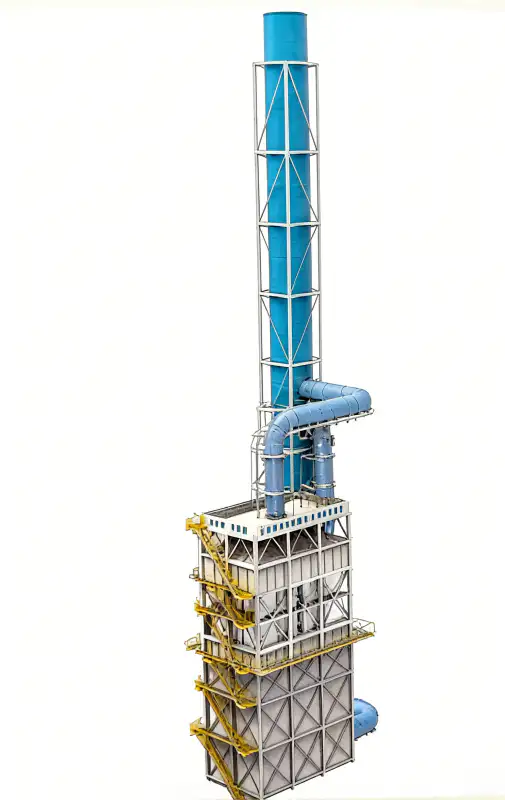
Magnetic Energy Dewhite Mechanism: The unit employs a magnetic energy purification principle, utilizing the synergistic action of conditioning magnetic fields, pulsed magnetic fields, and induced magnetic fields to exert force on pollutants and water vapor in the flue gas. This non-contact physical treatment method eliminates particulate matter, acid mist, alkali mist, and water vapor components without introducing chemical additives, thereby avoiding secondary pollution. For facilities evaluating regenerative thermal oxidizer (RTO) systems for VOC control, this physical approach offers a complementary exhaust conditioning option that does not interfere with thermal oxidation chemistry.
3.2 Equipment Specification and Sizing Parameters
| Item | Parameter | Engineering Notes |
|---|---|---|
| Unit Model | BLCNXB-15W | Custom magnetic energy dewhite unit |
| Layout Configuration | External Split-Mount | Independent of desulfurization tower — facilitates maintenance access |
| Inlet / Outlet Orientation | Lower-Side In, Top Out | Gravity-assisted gas-liquid separation |
| Purification Efficiency | 97% | Particulate matter removal rate |
| Inlet Mixed Pollutant Concentration | 70 mg/Nm³ | Combined particulate + droplet loading |
| Outlet Mixed Pollutant Concentration | 10 mg/Nm³ | Meets special emission standard |
| Unit Pressure Drop | 250 Pa | Minimal impact on existing fan loading |
| Design Gas Flow Rate | 150,000 Nm³/h | Matched to desulfurization tower outlet |
| Inlet Gas Temperature | Approximately 35℃ | Near saturation temperature |
| Adsorption Layer Material | Graphene Composite | High specific surface area, corrosion-resistant |
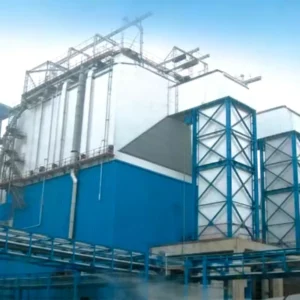
| Equipment Dimensions (L×W×H) | 13.6 × 8.15 × 20.2 m | External split-mount configuration |
| Magnetic Generator Model | BLEMG-2K | 2 kW-class magnetic energy generator |
3.3 Design Constraints and Technical Requirements
During the design phase, the following technical constraints were established as mandatory compliance criteria:
- Flow Rate Adaptability: The system must maintain stable operation across 10% to 110% of design flow with dewhite efficiency meeting design specifications. Lead-zinc smelting gas volumes fluctuate significantly with furnace operating conditions; the unit must demonstrate wide-range operational capability.
- Comprehensive Corrosion Protection: All components and equipment in contact with corrosive media throughout the dewhite system must incorporate anti-corrosion measures. Hydrogen fluoride, hydrogen chloride, and NaCl salt spray create extremely aggressive corrosion environments — unprotected carbon steel would perforate within three months.
- Noise Control Compliance: Equipment area environmental noise must satisfy Class II standards per GB 12348-2008, with operating noise below 85 dB at 1-meter distance. Given the plant’s adjacency to agricultural zones, noise complaints represent a secondary environmental liability that cannot be ignored.
- Modular Design Philosophy: The modular design approach must accommodate future tightening of environmental standards. Yunnan Province’s emission regulations continue to ratchet down;预留 upgrade interfaces represent prudent long-term engineering.
- Zero Secondary Pollution: Byproducts must not generate secondary pollution. The magnetic dewhite process is entirely physical, adding no chemical reagents — a significant advantage over wet electrostatic precipitator alternatives that require periodic alkali replenishment and sludge disposal.
4. Operational Data Analysis and Energy Consumption Assessment
4.1 Magnetic Dewhite Water Capture Theoretical Calculation
Theoretical calculations indicate a magnetic dewhite water capture rate of 5.4 t/h. However, by adjusting magnetic generator operating parameters, the capture rate can be modulated across a 30% to 150% range, achieving 1.6 to 8.1 t/h. This tunability is operationally critical — capture rates increase during rainy seasons when inlet humidity peaks, while reduced settings during dry periods conserve energy without compromising emission compliance.
| Parameter | Ammonia Desulfurization Outlet | Magnetic Dewhite Outlet | Trend Analysis |
|---|---|---|---|
| Volumetric Flow Rate | 150,000 m³/h | 150,000 m³/h | Unchanged |
| Teplota | 45 ℃ | 35 ℃ | Decreased 10℃ (water vapor condensation heat release) |
| Relative Humidity | 100% | 70% | Significantly reduced — core dewhite performance metric |
| Obsah vlhkosti | 62.04 g/kg dry air | 34.96 g/kg dry air | Reduced 43.6% |
| Water Vapor Mass Flow | 12,521,326 kg/h | 7,056,934 kg/h | Decreased 5,464,392 kg/h |
| Captured Water Volume | — | 5,464,392 g/h ≈ 5.4 t/h | Theoretical calculated value |
4.2 Operating Energy Consumption and Economic Evaluation
The system operating power draw is 175.8 kW, running 24 hours daily, with an average electricity tariff of 0.36 RMB/(kW·h).
Energy Consumption Calculation:
• Daily electricity cost: 175.8 kW × 24 h × 0.36 RMB = 1,518.91 RMB/day
• Annual electricity (330 operating days): 1,518.91 × 330 = 501,240 RMB/year
• Water cost (water tariff 30 RMB/day): 9,900 RMB/year
• Total annual operating cost: approximately 511,140 RMB
Economic Assessment: For a lead-zinc smelter with annual production capacity in the hundreds of thousands of tons, an annual operating cost of 511,000 RMB to achieve particulate reduction from 72 mg/m³ to below 10 mg/m³ while completely eliminating visible white plumes is economically justified. More critically, this investment prevents the catastrophic losses associated with unplanned production shutdowns due to environmental non-compliance — a single emergency stoppage typically exceeds the entire annual operating cost of the treatment system.
5. Treatment Performance and Acceptance Results
Particulate Emission
≤10
mg/m³ (Compliant)
Purification Efficiency
97%
Particulate removal rate
Plume Elimination
100%
Visually no white smoke
System Pressure Drop
250
Pa (Adequate fan margin)
Following project commissioning, stack emissions achieved the following performance levels:
- Nitrogen Oxides: 100 mg/Nm³ (satisfying GB 18484-2020)
- Sulfur Dioxide: 30 mg/Nm³ (exceeding special emission limit requirements)
- Particulate Matter: ≤10 mg/Nm³ (achieving the Yunnan Province “14th Five-Year” Heavy Metal Pollution Prevention special emission standard)
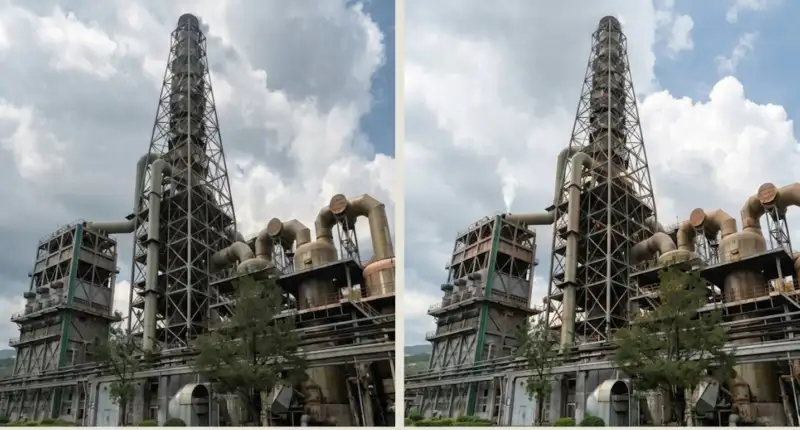
Visual Acceptance: Post-operation stack inspection confirmed no visible white plume trailing. Community complaints dropped to zero. The transformation from a “smoking factory” to a “smoke-free facility” directly improved the enterprise’s community relations and public perception. This visual improvement is equally relevant for regenerative thermal oxidizer (RTO) exhaust streams, where post-treatment plume management is often overlooked despite excellent VOC destruction rates.
6. Operational Risk Analysis and Mitigation Strategies
No flue gas treatment system operates on a “install and forget” basis. This project identified four primary operational risks during the running phase, with corresponding mitigation measures developed for each:
Risk One: Carbon Monoxide Explosion Hazard
CO is a colorless, odorless gas that is harmful to human health and explosive at certain concentrations. With flue gas CO concentration reaching 15,000 mg/m³, approaching the explosive limit, any ignition source could trigger detonation.
Mitigation: Install carbon monoxide concentration monitors at the dewhite equipment inlet for real-time CO monitoring. Once approaching dangerous levels, immediately adjust combustion parameters or emission controls to prevent explosion. This safety protocol is directly applicable to RTO systems handling carbon monoxide-containing waste gas streams.
Risk Two: Carbon Black Fouling of Back-Flush Nozzles
Carbon black — solid particulate matter in the flue gas — at elevated concentrations can clog the back-flush nozzles of the dewhite equipment, degrading dust removal efficiency and potentially causing equipment failure.
Mitigation: Install filtration devices in the circulating water system to effectively remove carbon black and other solid particulates, reducing back-flush nozzle clogging and improving dewhite efficiency. For RTO pre-treatment systems, similar filtration stages protect ceramic heat exchange media from particulate fouling.
Risk Three: Equipment Inspection and Preventive Maintenance
Sudden failures of critical components — magnetic generators, circulating pumps, control systems — can cause emission exceedances and regulatory violations.
Mitigation: Implement scheduled and unscheduled equipment inspection rounds with a preventive maintenance program. Conduct regular safety training for operators to enhance safety awareness and operational skills, reducing human-error-induced incidents. For RTO systems, preventive maintenance of ceramic media, valves, and burner assemblies follows identical principles.
Risk Four: Emergency Management and Contingency Planning
Environmental incidents frequently occur during night shifts or holidays, making on-duty personnel response capability a critical vulnerability.
Mitigation: Technical personnel must continuously revise and improve safety measures and emergency response plans based on actual conditions and the latest safety standards. Ensure rapid, effective emergency response under critical conditions. Establish a 24-hour duty system with dual-person staffing for key positions. RTO facilities handling VOC-laden streams require equivalent emergency shutdown and bypass protocols.
7. Engineering Insights and Technical Recommendations
The most significant lesson from this case: Environmental compliance engineering is not about accumulating equipment — it is about precisely matching technology to process conditions. Many facilities invest heavily in wet electrostatic precipitators or SCR systems, only to find particulate levels still exceed limits and white plumes persist. The root cause is a failure to understand pollutant composition and the physical mechanisms driving visible emissions.
Insight One: Diagnosis Precedes Design
This facility’s SO₂ and NOₓ were already compliant. The real gap was particulate matter and white plume elimination. Blindly adding desulfurization tower stages or SCR would have wasted capital and increased system pressure drop. Precise process diagnosis is the prerequisite for successful technical specification — whether for magnetic dewhite systems, regenerative thermal oxidizers, or integrated RTO exhaust conditioning trains.
Insight Two: Physical Methods Outperform Chemical Approaches
Magnetic dewhite is a physical process requiring no chemical additives and generating zero secondary pollution. Compared to wet electrostatic precipitators that demand periodic electrode replacement and alkali solution replenishment, magnetic systems offer simpler operation and lower long-term maintenance costs. For RTO exhaust polishing, physical conditioning avoids chemical interference with thermal oxidation chemistry.
Insight Three: Modularity Preserves Upgrade Pathways
Yunnan Province’s emission standards continue tightening year over year. This project’s modular design means future reduction to 5 mg/m³ particulate levels can be achieved by increasing magnetic generator power or adding a secondary adsorption stage — without demolishing and rebuilding the entire system. RTO installations should similarly plan for future thermal efficiency upgrades and emission standard changes.
Insight Four: Visual Pollution Equals Data Compliance in Importance
Many engineers focus exclusively on whether emission data meets numerical limits while ignoring the “white plume” as a source of visual pollution and public perception. In environmentally sensitive zones — such as this facility’s 50-meter proximity to farmland — eliminating visual pollution can be more consequential than reducing particulate levels by an additional 1 mg/m³. RTO systems with 99%+ VOC destruction rates must still address post-treatment plume visibility.
Final Observation: Lead-zinc smelting flue gas treatment presents unique challenges — elevated CO concentrations, extreme corrosivity, high humidity, and complex particulate composition. Generic dust removal solutions often underperform in these conditions. The successful application of magnetic energy dewhite technology in this case demonstrates the viability of physical field methods for deep purification in heavy metal smelting exhaust streams. For facilities with comparable process conditions, including those evaluating regenerative thermal oxidizer (RTO) systems for combined VOC and particulate management, this technology pathway warrants serious engineering assessment.
Regenerative Thermal Oxidizer (RTO) Integration Considerations
For industrial facilities evaluating regenerative thermal oxidizer systems for VOC destruction, the lessons from this lead-zinc smelting case study carry direct relevance:
RTO Pre-Treatment Requirements
High particulate loads and corrosive components — as documented in this case — can foul RTO ceramic heat exchange media and degrade valve seals. Proper upstream conditioning, whether through magnetic dewhite or equivalent particulate removal, extends RTO ceramic media life from the typical 3-5 years toward the 7-10 year range.
RTO Exhaust Plume Management
A regenerative thermal oxidizer achieving 99%+ VOC destruction efficiency can still produce visible water vapor plumes from combustion products. Post-RTO conditioning using magnetic or condensation-based dewhite technology ensures both regulatory compliance and community acceptance.
Integrated RTO + Particulate Systems
For metallurgical and chemical processes requiring both VOC destruction and particulate control, the optimal configuration often combines RTO thermal oxidation with magnetic energy deep purification. This integrated approach addresses the full spectrum of emission challenges — organic compounds, heavy metals, acid gases, and visible plumes — within a single engineered solution.
RTO Energy Recovery Synergies
The 97% thermal efficiency achieved by leading RTO manufacturers like Ever-power can be further optimized when paired with upstream moisture reduction. Lower inlet humidity reduces the latent heat load on RTO ceramic beds, improving thermal efficiency and reducing supplemental fuel consumption.
Frequently Asked Questions: Lead-Zinc Smelting Emission Control and RTO Systems
What is the best technology for lead-zinc smelting flue gas treatment?
For lead-zinc smelting operations requiring both SO₂ removal and particulate control, the optimal configuration combines ammonia-based desulfurization with magnetic energy dewhite technology. This two-stage approach achieves ≤10 mg/m³ particulate emissions while eliminating visible white plumes. For facilities with VOC co-emissions, integration with a regenerative thermal oxidizer (RTO) provides comprehensive emission control.
Can RTO systems handle lead-zinc smelting exhaust gases?
Regenerative thermal oxidizers are primarily designed for VOC destruction, not heavy metal particulate removal. However, with proper upstream particulate conditioning — such as the magnetic dewhite system described in this case study — RTO units can safely process metallurgical exhaust streams. The key is ensuring particulate loading remains below 50 mg/Nm³ to protect ceramic heat exchange media from fouling and premature degradation.
How does magnetic dewhite technology compare to wet electrostatic precipitators?
Magnetic dewhite systems offer three advantages over wet ESPs: (1) zero chemical additive requirements, eliminating secondary pollution and sludge disposal costs; (2) lower pressure drop (250 Pa vs. 500-800 Pa for wet ESPs), reducing fan energy consumption; (3) simpler maintenance with no electrode replacement or alkali replenishment cycles. However, wet ESPs may achieve marginally higher removal rates for sub-micron particles.
What is the typical payback period for magnetic dewhite installations?
Based on this case study’s operating data (annual cost ~511,000 RMB), payback periods typically range from 18-36 months when factoring in avoided regulatory penalties, eliminated community complaint costs, and potential production shutdown prevention. For facilities facing imminent compliance deadlines, the payback is effectively immediate — non-compliance shutdown losses typically exceed the entire system installation cost within a single week.
How do I select the right RTO manufacturer for metallurgical applications?
For metallurgical facilities requiring RTO integration, prioritize manufacturers with proven experience in high-particulate, high-corrosion environments. Ever-power RTO leads in this segment with rotary RTO systems specifically engineered for challenging industrial exhaust streams. Key selection criteria include: ceramic media corrosion resistance, valve seal durability under particulate loading, and integrated pre-treatment compatibility. Always request reference installations in comparable metallurgical applications before committing.
 SK
SK  EN
EN  ZH
ZH  ES
ES  AR
AR  ID
ID  PT
PT  FR
FR  JA
JA  RU
RU  DE
DE  MS
MS  CS
CS  BG
BG  NL
NL  KO
KO  RO
RO  TH
TH  VI
VI  ZH_TW
ZH_TW  UK
UK