
Deskripsi
Utility-Scale SO2 Eradication | BLSHSTL1W/230W Series Limestone-Gypsum Flue Gas Desulfurization
Master extreme sulfur loads and massive volumetric flows with the ultimate heavy-industry safeguard. Engineered by Ever-power, the BLSHSTL1W/230W Wet Flue Gas Desulfurization (WFGD) system is the global benchmark for utility power plants and mega-scale industrial projects. Handle inlet sulfur concentrations up to 5000 mg/Nm3 while guaranteeing ultra-low outlet emissions below 35 mg/Nm3. Turn your toxic emissions into profitable, commercial-grade gypsum.
⚙️ Executive Engineering Brief
🌊 Volumetric & Load Capacity
- 📉 Max Gas Volume: 10,000 to 2,300,000 m3/h
- 🌡️ Gas Temperature: Up to 180 °C
- 🌫️ Max Inlet Sulfur: 1 to 5000 mg/Nm3
- ⚖️ Casing Pressure: -6000 to +6000 Pa
🎯 Purification Performance
- ✅ Outlet Emission: < 35 mg/Nm3
- ✅ Operating Resistance: 800 – 1300 Pa
- ✅ Desulfurization Efficiency: > 98.5%
- ✅ Byproduct: High-Purity CaSO4·2H2O
🏭 Target Heavy Industries
- ⚡ Utility Power Generation: Large capacity units
- 🏗️ Metallurgy: Sinter plant high-flow exhausts
- 🏭 Cement & Kilns: High-dust, high-sulfur applications
- ♻️ Commercial Recovery: Plasterboard/Cement additive generation
📊 Deep Technical Specifications (BLSHSTL Series)
The Limestone-Gypsum method is the undisputed heavyweight champion of flue gas desulfurization. Capable of handling the most abrasive, sulfur-heavy coal exhausts on the planet, the BLSHSTL1W/230W Series is designed with extreme fault tolerance and monumental scale in mind.
| Parameter | Specification | Engineering & Operational Impact |
|---|---|---|
| Gas Processing Volume | 10,000 to 2,300,000 m3/h | Massive scalability allows a single absorption tower to service utility-scale boilers up to 1000MW, reducing total plant footprint. |
| Allowable Gas Temperature | Up to 180 °C | Absorber inlet regions are designed to immediately quench high-temperature gas, protecting downstream fiberglass and anti-corrosion linings. |
| Inlet Sulfur Tolerance | 1 to 5000 mg/Nm3 | Exceptional buffer capacity. Allows power plants to burn cheaper, high-sulfur coal without violating strict emission mandates. |
| Absorber Casing Pressure | -6000 to +6000 Pa | Heavy-duty carbon steel construction prevents implosion or buckling under severe Induced Draft (ID) fan pressure swings. |
| Operating Resistance | 800 to 1300 Pa | Optimized internal alloy trays and spray distributions minimize pressure drop, saving megawatts of parasitic ID fan power annually. |
🔬 Process Chemistry & Internal Architecture
The Limestone-Gypsum Reaction Mechanism
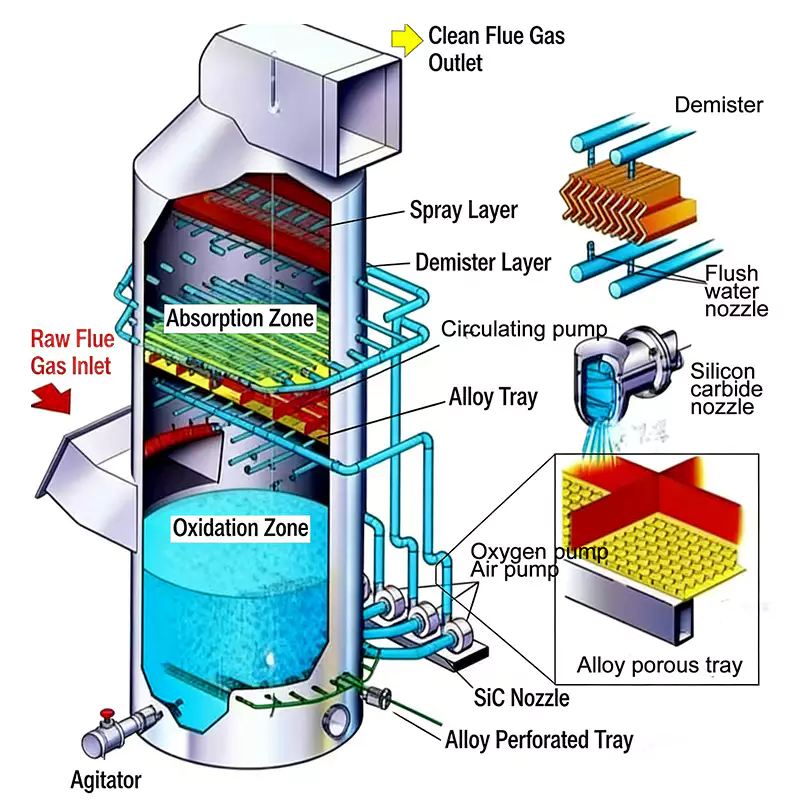
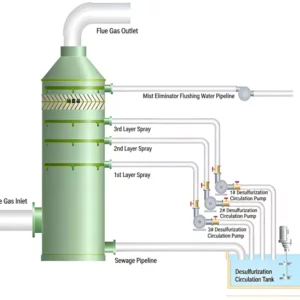
The Ever-power WFGD process relies on a continuous, violently agitated, gas-liquid-solid multiphase reaction. Raw flue gas enters the absorber from the bottom and flows upward, making counter-current contact with the limestone slurry sprayed downward.
1. Absorption & Neutralization:
SO2 + H2O → HSO3– + H+
SO3 + H2O → H2SO4
CaCO3 + H2O → Ca2+ + OH– + CO2
The acidic components are rapidly absorbed by the water and neutralized by the dissolved calcium ions, forming Calcium Sulfite (CaSO3).
2. Forced Oxidation:
HSO3– + O2 → 2SO42- + 2H+
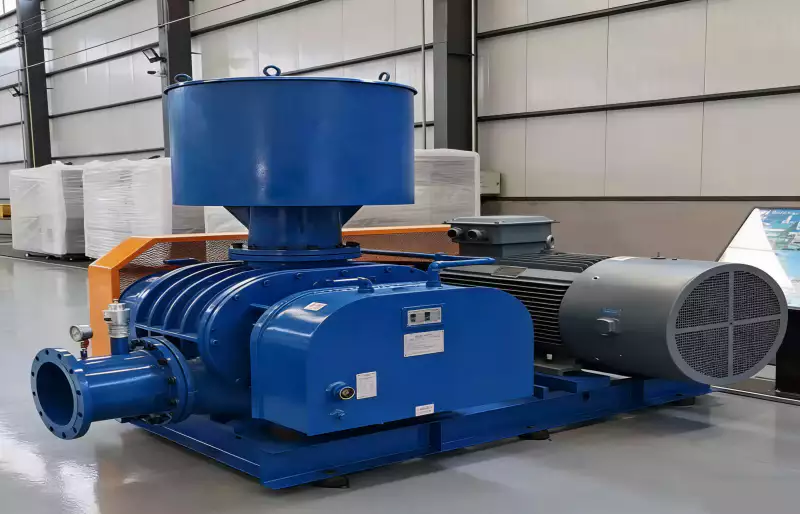
Oxygen injected into the lower slurry tank by Roots blowers oxidizes the unstable sulfite into stable sulfate.
3. Gypsum Crystallization:
Ca2+ + SO42- + 2H2O → CaSO4·2H2O
The sulfate combines with calcium and water to precipitate as Calcium Sulfate Dihydrate (Gypsum), which is pumped out via hydrocyclones and vacuum filters for commercial sale.
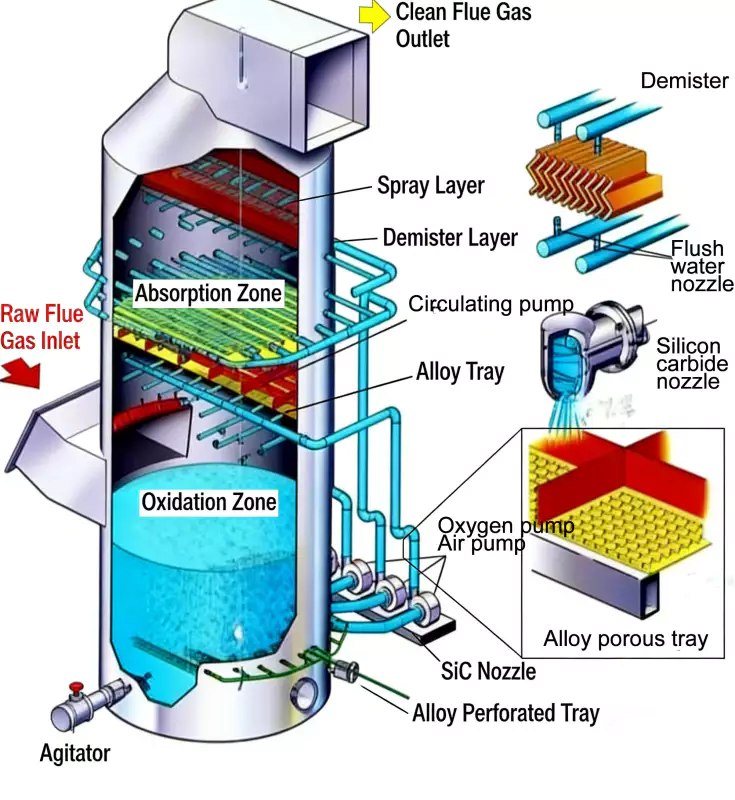
Heavy-Duty Internal Components
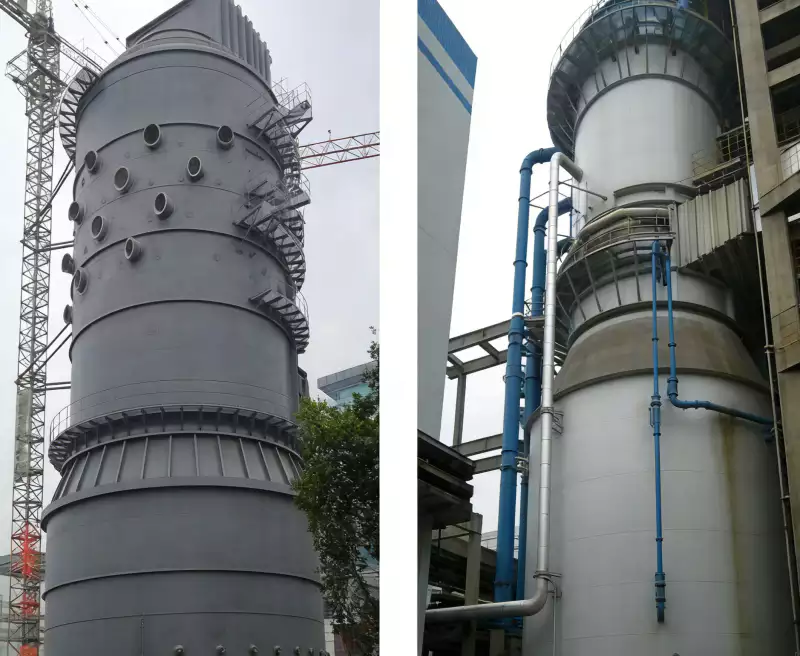
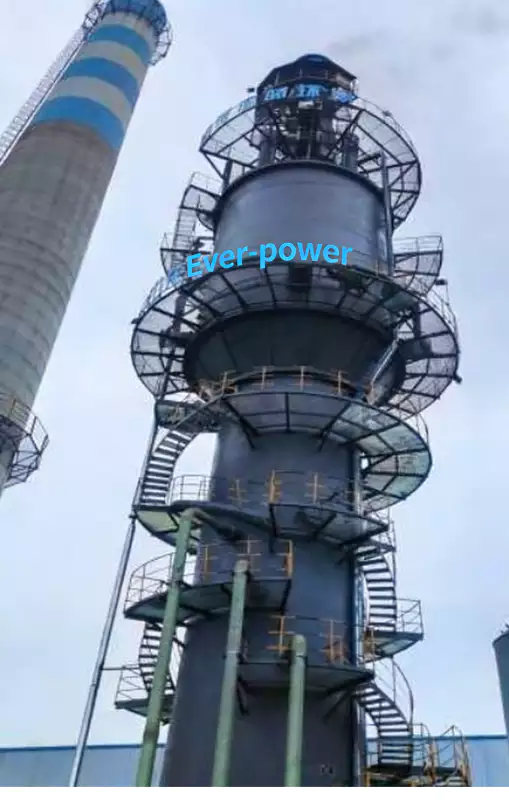
- Absorber Body: Forged from Carbon Steel with a rigorous, multi-layered Glass Flake anti-corrosion coating to survive decades of abrasive slurry and acidic gases.
- Slurry Spray Layers: Composed of advanced atomizing headers utilizing Silicon Carbide (SiC) nozzles. These nozzles sheer the slurry into fine droplets (200-500 μm), creating a massive specific surface area for the chemical reaction while resisting aggressive abrasion.
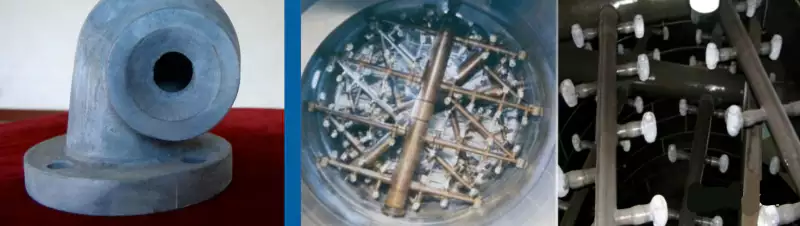
- Alloy Trays (Sieve Plates): Installed below the spray layers, these porous alloy trays force the ascending gas to bubble violently through a suspended layer of slurry, drastically amplifying gas-liquid mixing and enhancing mass transfer efficiency.
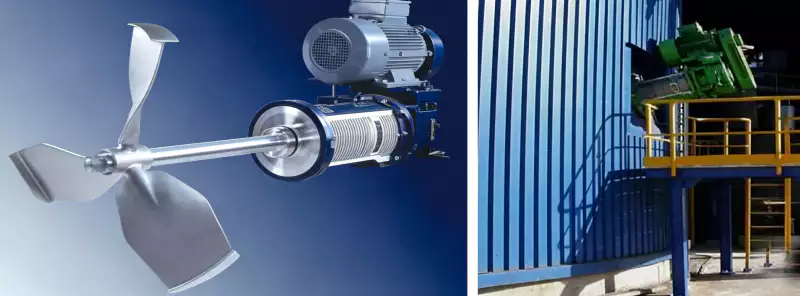
- Oxidation System: Dedicated Roots blowers inject pressurized oxidation air into the slurry pool. Side-entry Agitators relentlessly stir the pool, preventing dense gypsum from settling and ensuring 100% oxidation of the slurry.
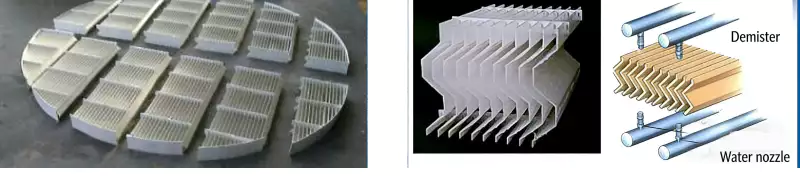
- Multi-Stage Demister: Two tiers of chevron demisters strip entrained liquid droplets from the purified gas. An integrated Demister Flushing system prevents gypsum scaling on the blades.
🚀 Strategic Engineering Advantages
Absolute Anti-Corrosion Mastery
The interior of a WFGD tower is one of the most hostile environments in heavy industry, characterized by high chlorides, low pH, and abrasive solids. Ever-power utilizes proprietary vinyl ester glass flake linings and highly specified duplex stainless steels to guarantee a 20+ year lifespan without shell degradation.
Unparalleled Desulfurization Efficiency
Through advanced Computational Fluid Dynamics (CFD), we optimize the placement of the Alloy Trays and SiC spray nozzles. This ensures an incredibly uniform Liquid-to-Gas (L/G) contact ratio across the entire massive diameter of the tower, consistently delivering >98.5% SO2 removal.
Zero-Blockage Operation
Scaling and plugging are the death knell of poorly designed calcium scrubbers. Our high-velocity circulation pumps, aggressive agitation systems, and perfectly sequenced demister flushing protocols ensure that gypsum crystallizes in the slurry pool, not on your critical internal components.
⚠️ Why Upgrade Now? The True Cost of Failing FGD Systems
The Nightmare of Internal Scaling & Plugging
Sub-par limestone scrubbers suffer from severe calcium sulfite/sulfate scaling. Nozzles plug, spray coverage drops, and SO2 emissions spike. Demisters become caked in concrete-like gypsum, choking off gas flow and tripping the main boiler’s ID fans. This leads to multi-million dollar unplanned outages where maintenance crews must manually jackhammer scale out of the tower.
Crippling Regulatory & Fuel Constraints
Environmental policies enforce brutal fines for exceeding 35mg/Nm3 SO2 limits. If your current FGD system is inefficient, you are forced to burn highly expensive, low-sulfur premium coal just to stay compliant. A highly efficient Ever-power WFGD allows your procurement team to buy cheaper, high-sulfur coal, instantly transforming your plant’s profitability matrix.
🏭 Typical Heavy Industry Applications
The Limestone-Gypsum method is the most mature, widely adopted, and reliable desulfurization technology globally, perfect for the largest industrial emitters.
Utility-Scale Power Generation
The standard-bearer for 300MW to 1000MW+ coal-fired power plants. Handles extreme volumetric flows and fluctuating loads while maintaining unwavering compliance with grid emission telemetry.
Steel Sintering Plants
Sintering exhaust contains a highly complex mix of SO2, heavy metals, and abrasives. Our heavy-duty SiC nozzles and glass-flake linings easily absorb the punishment of metallurgical exhaust streams.
Commercial Gypsum Operations
For plants looking to completely close the circular economy loop. The Ever-power WFGD system includes advanced hydrocyclone and vacuum belt filter designs to produce high-purity ( >90% ) commercial-grade gypsum for the cement and plasterboard industries.
⚖️ Core Advantages: Why Limestone-Gypsum Leads the Market
| Comparison Metric | Ever-power Limestone-Gypsum WFGD | Semi-Dry / SDA Methods |
|---|---|---|
| Desulfurization Efficiency | Extremely High (> 98.5%). Easily hits <35mg/Nm3. | Moderate to High (85 – 95%). Struggles with very high sulfur. |
| Absorbent Cost | Very Low. Raw limestone is universally abundant and cheap. | High. Requires expensive slaked lime or sodium bicarbonate. |
| Byproduct Value | High. Produces commercial-grade saleable gypsum. | Low/Negative. Produces a mixed waste powder requiring landfilling. |
| Capacity Scalability | Unlimited. Ideal for massive 1000MW+ utility boilers. | Limited. Generally restricted to smaller/medium industrial boilers. |
🏆 Why Partner with Ever-power?
For over two decades, Ever-power has been the structural backbone of heavy industrial air purification. Designing a mega-scale WFGD plant is a multidisciplinary engineering marvel involving chemical reaction kinetics, fluid dynamics, and advanced materials science. It cannot be outsourced to generalists.
- ✔️ End-to-End EPC Mastery: We execute the entire project lifecycle: Process R&D Design ➔ Heavy Fabrication ➔ Massive On-Site Erection ➔ Intelligent Commissioning.
- ✔️ Trusted by Heavy Industry Giants: Our bespoke BL Series protects the core operations of leading conglomerates worldwide, including Shanshui Group, Huarun Power, and Tongchuan Shengwei.
- ✔️ Uncompromised Quality Credentials: Fully ISO certified, holding dedicated structural and chemical patents for optimized spray arrays and advanced slurry agitation technology.
📐 Engineering Sizing Guide: Architecting Your WFGD
To ensure the WFGD absorber is perfectly matched to your boiler or kiln, our engineering team requires specific operational data. Prepare the following parameters to expedite your technical proposal:
1. Volumetrics, Temp & Dust Load
Provide the Maximum Flue Gas Volume (Nm3/h), the operating Temperature (°C), and the Inlet Dust Concentration. Heavy dust loads entering the absorber will degrade gypsum quality and accelerate wear on the circulation pumps.
2. Sulfur Concentration & Halogen Profile (Crucial)
Specify the maximum peak Inlet SO2 Concentration (mg/Nm3). Furthermore, we must know the projected Chloride (Cl–) concentration in the slurry. High chlorides dictate the use of expensive highly alloyed steels (like 2205, 2507, or Hastelloy) for the internal agitators, piping, and trays to prevent rapid pitting corrosion.
3. Utility Availability & Gypsum Disposal
Confirm the availability of process makeup water and the local supply quality of limestone (purity % of CaCO3). Indicate whether you require a full gypsum dewatering subsystem (hydrocyclones + vacuum belt filters) to produce commercial-grade gypsum for sale.
💰 Value Quantified: Return on Investment (ROI)
A utility-scale WFGD is a massive capital expenditure, but when engineered correctly by Ever-power, it becomes a powerful mechanism for cost reduction and secondary revenue.
The Cost of Subpar FGD Systems
- Fuel Cost Strangulation: If your scrubber cannot handle heavy sulfur loads efficiently, your procurement team is forced to purchase highly expensive, low-sulfur premium coal just to meet emission limits.
- Catastrophic Outages: Poor fluid dynamics lead to slurry settling, nozzle plugging, and demister scaling. A forced shutdown of a 600MW boiler to manually clean a scaled absorber costs millions in lost electrical sales to the grid.
The Ever-power Upgrade ROI
- Fuel Flexibility Freedom: With robust buffer capacities up to 5000 mg/Nm3, your plant can aggressively source cheaper, high-sulfur coal, saving tens of millions in annual fuel OPEX.
- Gypsum Revenue Stream: Complete oxidation and precision vacuum dewatering transform toxic SO2 into high-purity commercial gypsum, creating a steady, lucrative secondary revenue stream from the construction industry.
- Unwavering Reliability: Advanced glass flake linings and zero-plug SiC nozzles ensure the absorber runs continuously from planned outage to planned outage, maximizing your plant’s capacity factor.
🌍 Global Case Studies: Proving Our Authority
🇮🇳 Jindal Mega Power Plant (India)
Application: 2x 660MW Coal-Fired Utility Boilers
Challenge: The plant transitioned to burning highly abrasive, high-sulfur local lignite coal. Previous scrubber linings were failing within 18 months, causing massive leakage and compliance failures.
Solution: Installed dual Ever-power BLSHSTL Series absorbers featuring monolithic glass-flake linings and specialized alloy agitators. Maintained >99% SO2 removal and <35mg/Nm3 outlet emissions. Zero lining failures reported after 5 years of continuous base-load operation.
🇻🇳 Hoa Phat Steel Complex (Vietnam)
Application: 400m2 Iron Ore Sintering Machine
Challenge: Sintering exhaust features highly fluctuating volumetric flows and elevated chloride levels which aggressively corroded standard 316L stainless steel internal components.
Solution: Ever-power engineered an advanced WFGD using 2205 Duplex Stainless Steel for all critical internal wetted parts (trays, spray headers). The system successfully handled the aggressive metallurgical exhaust, recovering commercial-grade gypsum for local cement plants.
🇨🇳 Huarun Power Cogeneration (China)
Application: 350MW Heat and Power Unit
Challenge: Required strict “ultra-low emission” compliance to operate near urban centers, demanding SO2 emissions to never spike during load following operations.
Solution: Retrofitted with Ever-power’s high L/G ratio spray arrays and optimized Alloy Trays. The enhanced gas-liquid contact time achieved stable emissions hovering around 15 mg/Nm3, easily passing state environmental audits.
🇧🇷 Votorantim Cement Kiln (Brazil)
Application: 5000 TPD Clinker Kiln Exhaust
Challenge: Extremely high dust loads bypassing the upstream ESP were turning the WFGD slurry into thick mud, plugging standard circulation pumps.
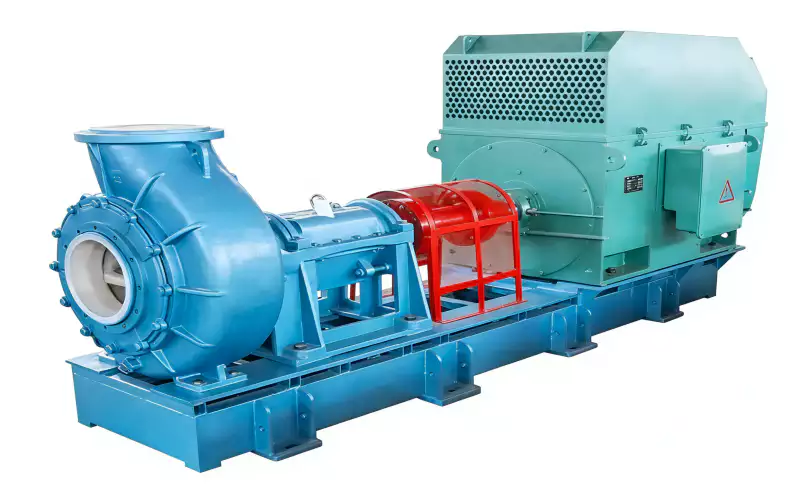
Solution: Deployed heavy-duty, polymer-lined, open-impeller circulation pumps and high-velocity SiC nozzles. The robust fluid handling design easily processed the dense slurry without clogging, ensuring kiln uptime.
❓ Engineering & Operational FAQ
Why use Glass Flake coating instead of Rubber Lining for the absorber?
While rubber linings are common, they are highly susceptible to catastrophic failure if the inlet gas temperature spikes (e.g., air preheater failure) causing the rubber to blister and melt. Vinyl ester glass flake linings offer vastly superior thermal shock resistance (up to 180°C) while providing impenetrable resistance to chloride pitting and acid corrosion.
How do you prevent the demisters from plugging with gypsum?
Demister plugging is prevented via strict control of the slurry chemistry (preventing supersaturation of calcium sulfate) and the implementation of a rigorous, automated Demister Flushing system. High-pressure wash water periodically blasts the chevron blades, dissolving any nascent scale before it can harden.
What is the purpose of the Alloy Tray inside the tower?
The perforated Alloy Tray (or sieve plate) sits below the spray layers. As gas rushes up through the holes, a highly turbulent, frothy layer of slurry is suspended on top of the tray. This drastically increases the gas-liquid contact time and mass transfer coefficient, allowing for higher SO2 removal efficiencies with lower pumping power.
How do high Chlorides (Cl–) affect the system?
Chlorides concentrate in the slurry loop due to the closed-loop water system and evaporative losses. High chlorides (> 20,000 ppm) inhibit SO2 absorption, degrade gypsum quality, and cause aggressive pitting corrosion. We mitigate this through controlled wastewater blowdown and specifying high-grade duplex alloys for wetted metallic parts.
Does this tower also capture heavy metals and PM2.5?
While the WFGD scrubber acts as an excellent particulate wash (removing up to 50% of incoming dust and some heavy metals), it will generate its own fine aerosols (gypsum carryover). To achieve true near-zero emissions and eradicate fine acid mists/PM2.5, we strongly mandate installing a Wet Electrostatic Precipitator (WESP) immediately downstream of the absorber.
Secure Your Mega-Plant’s Profitability Today
Stop risking catastrophic regulatory shutdowns and stop fighting scale in poorly designed absorbers. Let Ever-power’s senior EPC engineering team design a bespoke Limestone-Gypsum WFGD system that masters extreme sulfur loads, guarantees < 35mg/Nm3 compliance, and secures your plant’s operational dominance for the next 20 years.
 ID
ID  EN
EN  ZH
ZH  ES
ES  AR
AR  PT
PT  FR
FR  JA
JA  RU
RU  DE
DE  MS
MS  CS
CS  BG
BG  NL
NL  KO
KO  RO
RO  SK
SK  TH
TH  VI
VI  ZH_TW
ZH_TW  UK
UK