
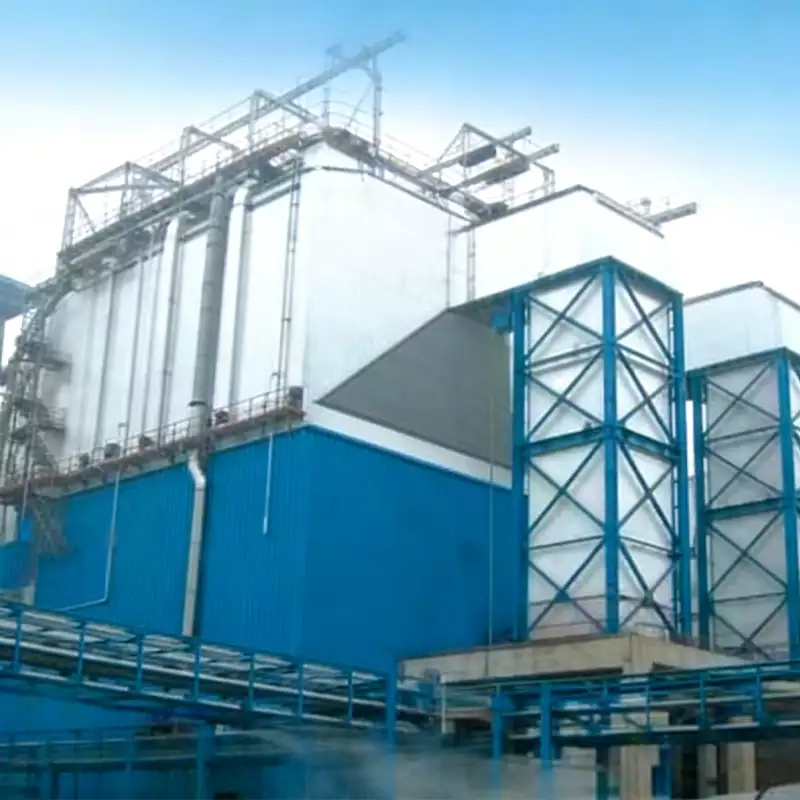
Deskripsi
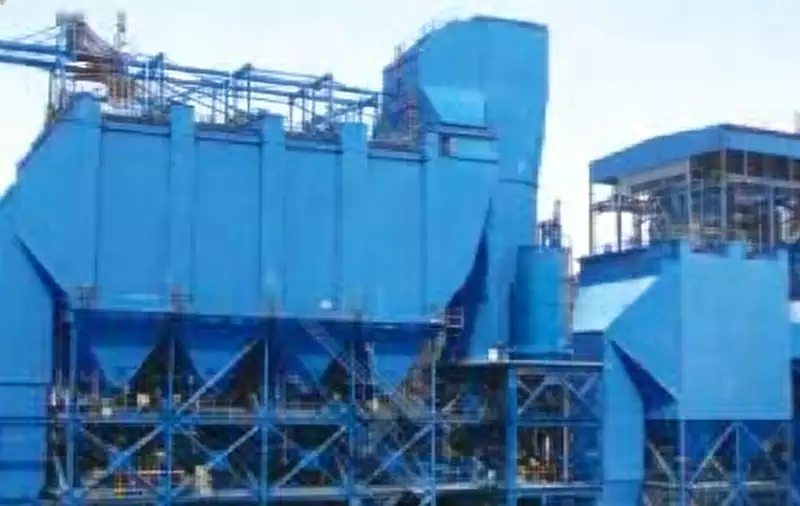
Advanced Flue Gas Purification | BLESP Series Electrostatic Precipitators
Eradicate compliance risks and minimize ID fan power consumption with Ever-power’s benchmark ESP technology. Specifically engineered for the global power generation sector, the BLESP series effortlessly manages massive gas volumes up to 2,500,000 m³/h and ensures ultra-low emissions (< 50mg/Nm³) for boiler and FGD applications.
⚙️ Executive Engineering Brief
⚡ Power Plant Boilers
- 🏭 Supported Units: 25~300 MW
- 📉 Max Gas Volume: 1,800,000 m³/h
- 🌡️ Temperature Range: 60 – 120 °C
- 🌫️ Max Inlet Dust: 12,000 g/Nm³
- 🌪️ Max Suction Pressure: -12,000 Pa
🌿 FGD ESP Systems
- 🏭 Supported Units: 50~1000 MW
- 📉 Max Gas Volume: 2,500,000 m³/h
- 🌡️ Temperature Range: 130 – 200 °C
- 🌫️ Max Inlet Dust: 80 g/Nm³
- 🌪️ Max Suction Pressure: -9,000 Pa
🎯 Core Performance
- ✅ Outlet Emission: < 50 mg/Nm³
- ✅ Operating Resistance: 200~350 Pa
- ✅ Casing Pressure Bearing: Up to 20,000 Pa
- ✅ Equipment Lifespan: 20+ Years
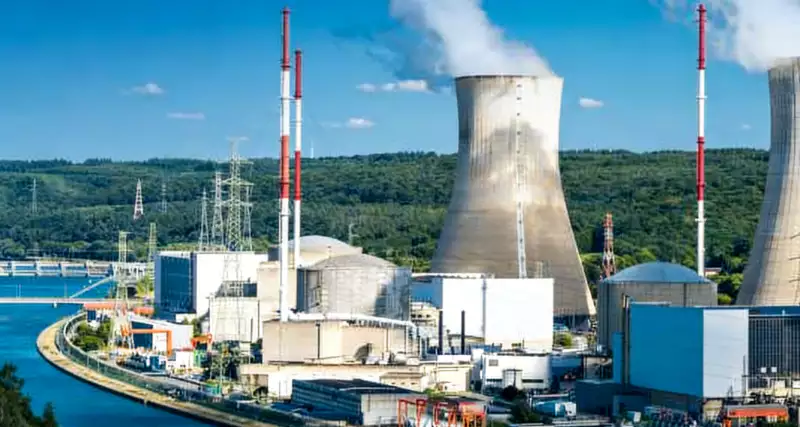
📊 Deep Technical Specifications
| Structural Parameter | Specification Range | Engineering Impact |
|---|---|---|
| Number of Chambers | 1 – 2 (pcs) | Allows parallel gas processing and prevents total system shutdown during modular inspections. |
| Passages Per Chamber | 9 – 40 (pcs) | Scalable design handles varying megawatt outputs seamlessly. |
| Height of Field | 5 – 15 (m) | Maximizes the specific collection area within a restricted terrestrial footprint. |
| Number of Fields | 1 – 6 (pcs) | Sequential charging ensures even the finest sub-micron particulate is captured. |
| Passage Space | 300, 400, 450 (mm) | Wide spacing diminishes spark-over potential and accommodates severe dust loads without bridging. |
| Cross Sectional Area | 10 – 494 (m²) | Precisely calculated to maintain optimal gas flow velocity for maximum precipitation. |
🔬 Process Mechanics & Internal Architecture
Working Principle
The Ever-power BLESP Series utilizes electrostatic force (Coulomb force) to aggressively separate particulate matter from the gas stream. This methodology offers extreme efficiency with virtually zero mechanical resistance.
- Gas Distribution: Flue gas passes through highly engineered distribution screens (X-type, square hole, or round hole) to ensure a perfectly uniform laminar flow.
- Ionization & Charging: High direct current is applied to the Discharge Electrodes (Cathodes) creating an intense electric field. This field ionizes the gas stream, and suspended dust particles are heavily charged by anions.
- Migration: Driven by Coulomb force, the negatively charged particles migrate swiftly toward the grounded Collecting Electrodes (Anodes) and adhere to the plates.
- Rapping & Disposal: Precisely sequenced mechanical rapping impacts the plates, dislodging the accumulated dust directly into the hoppers for safe disposal.
Core Internal Structure
The efficacy of our ESPs is dictated by our proprietary internal geometry:
- ZT24 Collecting Electrodes (CE): Our ZT24 profile plates offer excellent discharging performance and uniform current density. Crucially, they deliver a 10% larger effective dust collecting area compared to standard profiles within the same spatial dimension.
- Advanced Discharge Electrodes (DE): Tailored to the gas condition, we utilize B-type, V-type, and highly efficient Fishbone wires. These guarantee solidity, high endurance, non-breakability, and aggressive corona generation.
- Robust Rapping Systems: Utilizing Top Cam Lifting Mechanisms or Internal Vertical Driving Devices for the cathodes, and Side Driving Revolving-Arm Hammers for the anodes to eliminate sticky dust buildup.
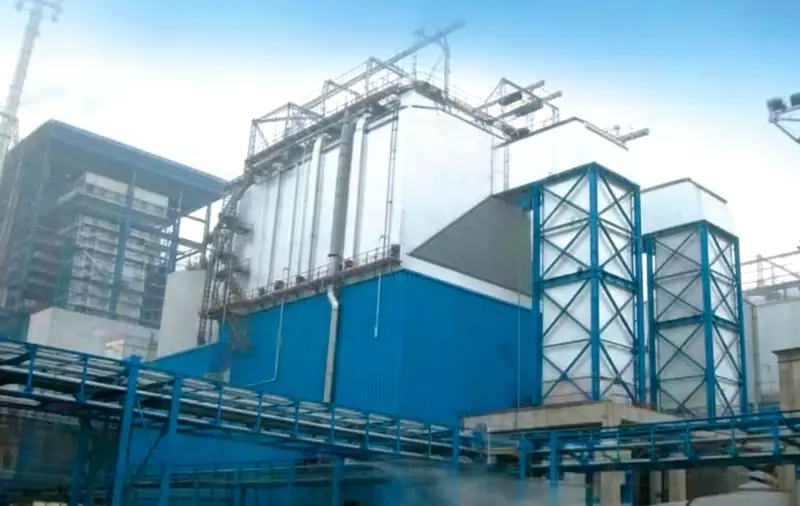
🚀 Strategic Design Advantages
Extreme Dust Tolerance
Engineered to master staggering inlet dust densities up to 12,000 g/Nm³ for boiler applications. Our wide plate spacing and rigorous structural grounding prevent internal short-circuiting under massive particulate loads.
Ultra-Low Operational Resistance
The aerodynamic internal design ensures a dynamic operating resistance of merely 200~350 Pa. This drastically reduces the workload on the power plant’s Induced Draft (ID) fans, slashing continuous auxiliary power consumption.
Heavy-Duty Housing Integration
Power plant suction pressures are brutal. Our casings are structurally reinforced to withstand pressures ranging from 2,000 Pa up to an astonishing 20,000 Pa, ensuring zero casing deformation over decades of operation.
⚠️ Why Upgrade Now? The True Cost of Inaction
Regulatory Strangulation
Environmental policies globally are enforcing strict < 50mg/Nm³ (and increasingly < 30mg/Nm³ or near-zero) emission limits for the power sector. Failing to meet these standards results in immediate operational suspensions, staggering daily fines, and severe reputational damage. Your dedusting system is no longer an accessory; it is your license to generate power.
The “Hidden” Profit Bleed
Legacy fabric filters force ID fans to fight through massive pressure drops (often 1500+ Pa), burning excess megawatts of electricity daily—power that should be sold to the grid. Furthermore, poor dust capture leads to rapid abrasion of downstream equipment, particularly the desulfurization towers and ID fan blades.
🏭 Typical Application Scenarios in Power Generation
The Ever-power BLESP780, BLESP780N, BLESP930, and BLESP2000 series are meticulously crafted for 50-1000MW power generation units.
Power Plant Boilers
Captures the abrasive fly ash generated directly from pulverized coal boilers. Designed to handle up to 1,800,000 m³/h gas volume at temperatures of 60-120°C, protecting downstream equipment and achieving sub-50mg/Nm³ emissions instantly.
FGD System Integration
Crucial for Flue Gas Desulfurization. Processes massive volumes up to 2,500,000 m³/h at temperatures reaching 130-200°C. Ensures the gas stream entering the scrubber is pristine, preventing slurry contamination and nozzle blockages.
⚖️ Ever-power ESP vs. Traditional Baghouse Systems
| Metric | Ever-power BLESP Series | Traditional Baghouse |
|---|---|---|
| Operating Resistance | 200 – 350 Pa (Extremely Low) | 800 – 1800 Pa (High fan load) |
| Continuous Temp Limit | Up to 400°C | Capped at ~250°C (Requires costly bags) |
| Consumables Cost | Zero. Steel internals last decades. | High. Thousands of bags replaced every 2-3 years. |
| Gas Moisture Tolerance | High. Resists condensation fouling. | Low. Moisture blinds bags (“mudding” effect). |
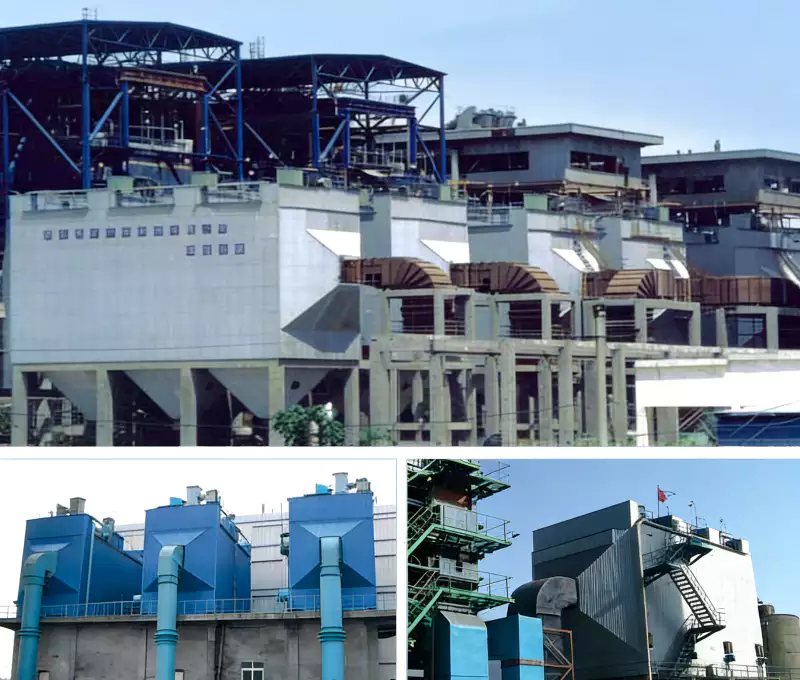
🏆 Why Partner with Ever-power?
For over two decades, Ever-power has been the backbone of heavy industrial air purification. The BL Series is not an off-the-shelf product; it is a technically honed benchmark forged through hundreds of complex projects.
- ✔️ Full Value-Chain Capability: We provide end-to-end integration: R&D Design ➔ Lean Manufacturing ➔ Engineering Installation ➔ Intelligent Commissioning.
- ✔️ Trusted by Industry Giants: Our systems successfully protect core operations for major power entities, including the Jiaozuo Huarun 135MW Plant and the Shanxi Yushe 300MW Plant.
- ✔️ Complete Qualifications: Fully ISO certified, holding multiple structural patents, and globally recognized environmental manufacturing credentials.
📐 Engineering Sizing Guide: Architecting Your Solution
To ensure the ESP is perfectly matched to your generation unit, our engineering team requires specific operational data. Prepare the following to expedite your quote:
1. Process Gas Parameters
Please provide the Maximum Gas Volume (m³/h), the continuous Operating Temperature (°C), and absolute peak temperature. This dictates casing design and thermal expansion allowances.
2. Dust Characteristics
Specify the Inlet Dust Concentration (g/Nm³) and coal type. Knowing the dust’s specific resistivity helps us choose between ZT24 plates and specific discharge wire configurations to prevent back-corona.
3. Site & Emission Targets
What is your local regulatory target? (< 50mg/Nm³, < 30mg/Nm³, etc.). Also, provide maximum allowable footprint dimensions, as ESPs require specific lateral space for multi-field sequencing.
💰 Value Quantified: Return on Investment (ROI) Analysis
The Cost of Inaction (Current State)
- Energy Penalty: Traditional fabric filters operating at 1500+ Pa resistance rob your plant of thousands of dollars monthly in wasted ID fan electricity.
- Consumables Bleed: Replacing thousands of high-temp filter bags every 2-3 years demands massive CapEx and extensive labor costs.
- Downtime Loss: Shutting down a 300MW unit for baghouse maintenance translates to immense lost grid revenue.
The Ever-power Upgrade ROI
- Auxiliary Power Slashed: Operating at ~300 Pa saves enough electrical power to often pay back the ESP investment within 3-4 years.
- Zero Consumables: Our rigid steel electrodes and plates are designed for a 20+ year lifespan. No bags to buy.
- Continuous Output: Modular multi-chamber design means maintenance can be done on one isolated section while the boiler keeps generating.
🌍 Global Case Studies: Proving Our Authority
🇨🇳 Shanxi Yushe Power Plant (China)
Application: 300MW Boiler FGD ESP
Challenge: Processing high-sulfur coal exhaust with extreme particulate loads before entering the desulfurization tower.
Solution: Installed the BLESP Series customized for FGD. Protected the scrubber and maintained outlet emissions strictly below the 50mg/Nm³ mandate, ensuring continuous grid compliance.
🇮🇳 Jindal Thermal Power (India)
Application: 600MW Coal-Fired Unit
Challenge: High electrical resistance of local Indian coal ash caused severe back-corona and spark-overs in their legacy electrostatic systems.
Solution: Ever-power deployed a 5-field ESP with ZT24 plates and advanced micro-pulse high-frequency power supplies. Reached 99.9% efficiency with zero electrode breakages.
🇧🇷 Eneva Thermoelectric (Brazil)
Application: 135MW Boiler Exhaust Upgrade (Similar to Huarun 135MW)
Challenge: Plant required an urgent upgrade from baghouses due to continuous filter blinding caused by moisture fluctuations.
Solution: Converted to the BLESP series. The low 300 Pa resistance immediately freed up 2.5 MW of ID fan power back to the grid, achieving ROI in under 36 months.
🇻🇳 Mong Duong II Power (Vietnam)
Application: Dual 500MW Units Pre-FGD ESP
Challenge: Required massive volumetric capacity (over 2,000,000 m³/h per unit) with strict spatial constraints.
Solution: Engineered a compact, 15m high-field multi-chamber ESP. The use of Fishbone wires maximized corona discharge, fitting ultra-high efficiency into a confined terrestrial footprint.
❓ Operational & Technical FAQ
What is the typical lifespan of the internal electrodes?
Because we use robust Fishbone wires and heavy-duty ZT24 plates, the internal components are designed for a lifespan exceeding 20 years, provided routine maintenance on the rapping mechanisms is performed.
Can we upgrade our current ESP internals to Ever-power specs?
Yes. We offer comprehensive retrofit services. We can replace outdated C-type plates with our ZT24 profile plates to increase the effective collecting area by 10% and upgrade your discharge systems without altering the existing outer casing.
How do you handle highly resistive fly ash?
High resistivity leads to back-corona. We counter this using high-frequency, micro-pulse power supplies that give the dust time to discharge. For extreme downstream cases, we offer integration with Wet Electrostatic Precipitators (WESP) for near-zero emissions.
How does the BLESP series affect our Induced Draft (ID) Fan?
Positively. Because the operating resistance is incredibly low (200-350 Pa) compared to mechanical fabric filters, the load on your ID fan decreases significantly. This extends the fan’s mechanical life and slashes auxiliary power consumption.
Does this equipment handle wet exhaust or acid mist after the scrubber?
The standard BLESP series is for dry dust upstream of the scrubber. For wet scrubbing exhausts containing acid mist and fine gypsum, you require our BLWESP Series (Wet Electrostatic Precipitator), which utilizes conductive honeycomb anode tubes.
Secure Your Grid Profitability Today
Stop risking regulatory suspensions and stop bleeding megawatts on fan energy. Let Ever-power’s senior engineering team design a BLESP system that guarantees sub-50mg/Nm³ emissions while aggressively cutting your operational expenditures.
 ID
ID  EN
EN  ZH
ZH  ES
ES  AR
AR  PT
PT  FR
FR  JA
JA  RU
RU  DE
DE  MS
MS  CS
CS  BG
BG  NL
NL  KO
KO  RO
RO  SK
SK  TH
TH  VI
VI  ZH_TW
ZH_TW  UK
UK