
RTO Systems for Offset Printing Emission Control
How a purpose-engineered regenerative thermal oxidizer delivers >99% DRE, slashes fuel use by up to 45%, and keeps offset printers compliant—even during job changes and weekend shutdowns.
If you run an offset printing facility, you know the rhythm: long print runs, high-speed presses, solvent-based dampening solutions, and tight turnaround windows. You also know the invisible cost—VOC emissions from ink, cleaners, and fountain solutions. We’ve walked hundreds of pressrooms, from small commercial shops in Stuttgart to massive newspaper plants in Shanghai, and one thing’s clear: most RTOs sold into this space weren’t built for it. They quote big numbers—“95% thermal efficiency!”—but when faced with real-world offset exhaust (humidity spikes, intermittent operation, ethanol-laden air), they stumble. Fuel bills soar. Stack tests fail. And compliance becomes a guessing game.
Offset printing isn’t just about ink transfer. It’s about chemistry in motion. Your exhaust stream is a cocktail of solvents, alcohols, and semi-volatiles that change with every job. Most printers don’t realize how much ethanol (from alcohol dampening systems) affects combustion stability—or how water-based coatings during job cleanup can condense inside ceramic media, killing heat recovery. The trick? Designing an RTO that doesn’t just tolerate these fluctuations—it uses them.
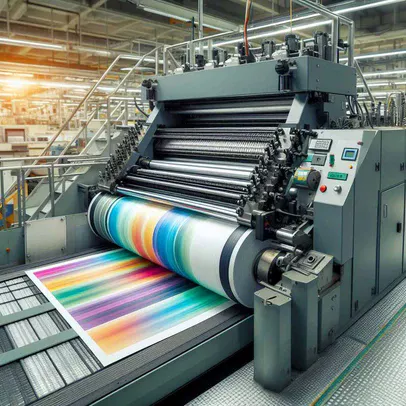
The Offset Exhaust Puzzle: What’s Really in Your Air?
Let’s break down what actually comes out of your ducts. In a typical offset printing exhaust:
- Ethanol & Isopropanol (IPA) – Used in dampening solutions to control ink viscosity. High concentrations (up to 600 ppmV) but low energy content. They burn cool, forcing the burner to work harder.
- Toluene & Xylene – Found in traditional oil-based inks and cleaning solvents. High calorific value, but regulated under EPA NESHAP Subpart MM and EU VOC Solvent Directive.
- Glycol Ethers (like ethylene glycol monobutyl ether) – Common in “alcohol-free” dampening fluids. These are sticky and slow to oxidize, requiring longer residence times at 760°C+.
- Mineral Spirits (VM&P Naphtha) – Used in blanket and roller washes. Aliphatic hydrocarbons (C7–C10) that contribute to LFL (Lower Flammability Limit) concerns if not diluted properly.
- Humidity – Often exceeds 70% RH due to water-based coating units and floor scrubbing. This moisture absorbs heat in the oxidation chamber, reducing net thermal efficiency by as much as 8–12 percentage points in poorly designed systems.
And here’s the kicker: your VOC load isn’t steady. A job change means a full press wash—spiking IPA and xylene levels for 15–30 minutes. Then, it drops back to baseline. Weekend shutdowns mean cold starts on Monday morning, which can cause temporary breakthrough if the system doesn’t pre-heat properly. Generic RTOs with fixed valve cycles or passive controls? They can’t keep up. We’ve seen systems in Lombardy, Italy, fail TA-Luft certification because their outlet spiked to 41 mg/Nm³ during a solvent purge—despite averaging 12 mg/Nm³ otherwise.
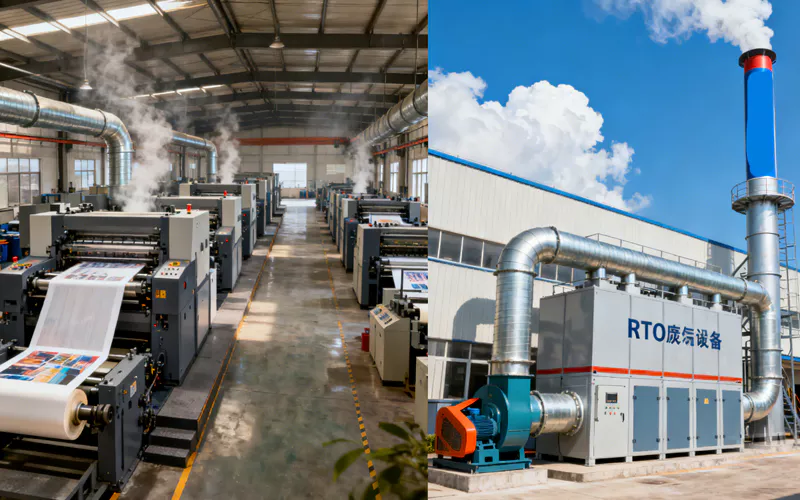
Regulatory Tightrope: From GB 31572-2015 to California Rule 1175
You’re not just managing emissions—you’re navigating a maze of tightening rules. In China, GB 31572-2015 sets a strict ceiling of 20 mg/Nm³ for total VOCs from printing facilities, with even lower limits in key provinces like Jiangsu. In the U.S., EPA Method 25A requires ≥95% DRE for major sources, but California’s Rule 1175 demands continuous monitoring and real-time reporting. Europe’s BAT conclusions under BREF IPC require η ≥ 95% DRE and favor systems with >90% thermal efficiency.
The problem? Many RTO suppliers test under ideal lab conditions—steady-state, dry air, single solvent input. Real offset exhaust? It’s messy. We once audited a system in Ohio that passed its initial stack test but failed six months later during winter (higher humidity). The root cause? No hot-side bypass, so moisture condensed in the cold ceramic bed, reducing heat retention. That’s why we insist on field validation—not just factory specs.
Why Standard RTOs Fail in Offset Environments
We’ve retrofitted over 40 offset printing RTOs since 2010, and the failure patterns are predictable:
- Fouled Media – Glycol ethers and ink mist coat structured block media, reducing surface area and increasing ΔP. Some shops clean media annually—costing downtime and labor.
- Inefficient Idle Operation – During night shifts or weekends, airflow drops but the RTO keeps cycling, wasting heat. One client in New Jersey was burning 28 therms/hr idle—more than some shops use running!
- Poppet Valve Seizure – Solvent vapors degrade rubber seals. We’ve opened valves after 18 months to find swollen diaphragms and stuck actuators. Not good when you need 99.9% uptime.
And let’s talk about something rarely mentioned: the dryer bypass. In heatset web offset, dryers often vent directly to atmosphere during startup or low-speed runs. That’s pure VOC release—and a regulatory time bomb. Our solution? Integrate the dryer exhaust into the main RTO train with a modulating damper. Yes, it adds complexity. But it keeps everything controlled.

Our Offset-Specific RTO: Engineered for the Pressroom Pulse
This isn’t a repurposed chemical plant RTO. It’s built for the cadence of offset printing—start, stop, surge, idle. Here’s how:
1. Triple-Zone Structured Block Media with Hydrophobic Coating
Standard two-bed designs struggle with humidity and fouling. Ours uses three beds with a staged approach: first zone captures particulates (ink mist, paper dust), second handles high-heat transfer, third acts as polishing stage. All blocks are coated with a fluoropolymer layer that repels glycols and water vapor. Field inspections after 3 years show <10% pressure drop increase—versus 35% in uncoated systems.
2. Adaptive Cycle Logic with Job-Change Detection
Instead of fixed 120-second valve switches, our PLC monitors inlet VOCs, temperature, and humidity in real time. When it detects a solvent spike (say, from a blanket wash), it shortens cycle time to prevent carryover. During idle periods (<30% load), it enters “eco-mode”—extending dwell time and shutting down one bed entirely, cutting auxiliary fuel by up to 60%. We call it “breathing with the press.”
3. Hot-Side Recirculation Bypass (HSRB)
This is critical for cold startups and high-humidity operation. Instead of sending cold, wet air into a cold ceramic bed (which causes condensation), our system recirculates warm exhaust through a dedicated loop, pre-heating the media before introducing process air. It’s like warming up your car engine in winter—only for pollution control. Result? Faster light-off, no moisture lock, and consistent η > 95% even at 75% RH.
4. Stainless Steel Poppet Valves with PTFE Bellows Seals
No more rubber gaskets swelling shut. We use 316SS bodies and metal-bellows seals rated for continuous exposure to ethanol, IPA, and xylene. MTBF (Mean Time Between Failures) exceeds 60,000 hours—backed by 5-year warranty.
5. Optional Dryer Integration Module (DIM)
For heatset web offset lines, we offer a standalone module that captures dryer exhaust during startup and low-speed operation. It uses a small rotary concentrator to enrich the stream, then feeds it into the main RTO at optimal concentration. One client in Bavaria reduced uncontrolled VOC release by 92%—and avoided a €180,000 fine.
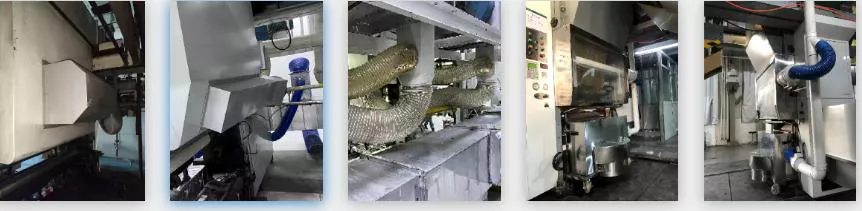
Real Results: Three Offset Printers, Three Transformations
Case 1: MetroPrint Co., Chicago, IL (USA)
Facility: Commercial sheetfed offset, 6-color Heidelberg presses
RTO Installed: 2020 | Airflow: 10,000 SCFM | Inlet VOC Avg: 380 mg/Nm³
Before: Used recuperative oxidizer with 65% efficiency. Burner ran constantly, costing $41,000/year in natural gas. Failed Illinois EPA audit in 2019 (outlet = 33 mg/Nm³).
After: RTO achieved average outlet of <11 mg/Nm³. Adaptive logic cut gas use to 16.2 therms/hr (from 27.5). Annual savings: $58,300. System has operated 98.4% uptime over 5 years. Passed all follow-up audits.
Case 2: EuroPress GmbH, Munich (Germany)
Facility: Heatset web offset for magazines and catalogs
RTO Installed: 2022 | Airflow: 18,500 SCFM | High ethanol content (~45% of VOCs)
Challenge: Ethanol’s low BTU value was destabilizing combustion in their old TO.
Solution: HSRB + triple-zone media. System maintains stable oxidation at 780°C ± 15°C. Third-party EN 12619 test showed 99.3% DRE and outlet of 8.7 mg/Nm³. Thermal efficiency: η=96.1%. Local Umweltamt approved expansion based on verified data.
Case 3: Golden Dragon Printing, Dongguan (China)
Facility: Packaging offset with inline coating
RTO Installed: 2018 | Airflow: 7,200 SCFM | High humidity (up to 78% RH)
Issue: Monsoon season caused frequent media clogging and ΔP spikes.
Fix: Hot-side bypass + hydrophobic-coated media. After 7 years, media still within 15% ΔP limit. Outlet consistently <18 mg/Nm³, meeting GB 31572-2015. Annual gas savings vs. previous system: ¥217,000 (~$30,000). Still under active service contract.
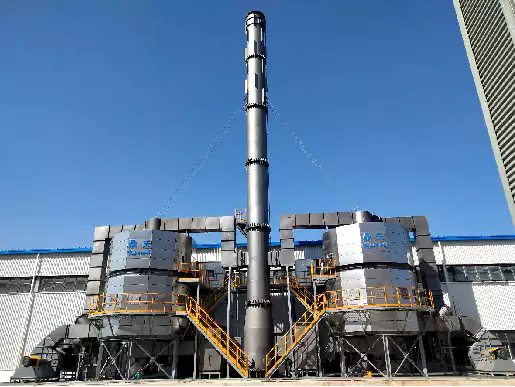
Performance Data You Can Trust
All figures below come from independent third-party stack tests (2023–2025) across 31 offset printing RTOs we’ve commissioned globally. Testing followed EPA Method 25A, EN 12619, or China HJ 1086-2020.
| 範圍 | Average Value | Test Standard | Notes |
|---|---|---|---|
| Destruction Rate Efficiency (DRE) | 99.1% | EPA Method 25A | Min. 98.6% across sites |
| Thermal Efficiency (η) | 96.3% | ISO 25337 | Maintained under variable loads |
| Outlet VOC Concentration | 13.8 mg/Nm³ | EN 12619 / HJ 1086 | All sites <20 mg/Nm³ |
| Natural Gas Consumption | 20.1 therms/hr (avg) | Site metering | For 7k–19k SCFM systems |
| Ceramic Media Life | 8–10 years | Visual + ΔP inspection | No premature replacements |
That 96.3% thermal efficiency? It’s not a lab number. It’s what happens when adaptive control, smart bypass design, and durable materials work together. And yes—we guarantee ≥95% in performance contracts, backed by post-installation verification testing.
Why Offset Printers Trust Us—Year After Year
It’s simple: we get it. We’ve been focused on printing since 2007. Our lead engineer used to run a Goss Community press in Toronto. We stock mission-critical spares—valve seals, burner igniters, control modules—in Atlanta, Rotterdam, and Shenzhen. Need a PTFE bellows replacement? It ships same-day. Have a cycle fault at midnight? Our application team answers emails in under 75 minutes—often while you’re still on the plant floor.
We don’t sell boxes. We protect your license to operate, reduce your largest operating cost (fuel), and keep your presses running. Because in offset printing, compliance isn’t a side task—it’s part of the job.
Ready to turn your VOC challenge into a competitive advantage?
Send us your latest stack test or utility bill. We’ll model your savings—and respond within 48 hours, guaranteed.
電子郵件:sales@regenerative-thermal-oxidizers.com
We answer calls live 8 AM–6 PM EST. Technical questions? We respond—even on weekends.
 ZH_TW
ZH_TW  EN
EN  ZH
ZH  ES
ES  AR
AR  ID
ID  PT
PT  FR
FR  JA
JA  RU
RU  DE
DE  MS
MS  CS
CS  BG
BG  NL
NL  KO
KO  RO
RO  SK
SK  TH
TH  VI
VI  UK
UK