
RTO for Resin & Polymer Production: Handling Sticky Monomers, Surging Vapors, and High Humidity
Why standard oxidizers fail when polymerizing acrylics or polyurethanes—and how a purpose-built RTO manages condensable VOCs, reactor blowdown spikes, and moisture-laden exhaust without plugging or quenching.
If you run a resin or polymer plant—whether it’s acrylic emulsions, epoxy resins, or thermoplastic polyurethane—you know the smell: that sharp, pungent odor during monomer charging or devolatilization. It’s not just solvent. It’s unreacted monomers like styrene and MMA, reactive intermediates, and water-saturated vapors. And if your current VOC control system is struggling with fouling, flameouts, or inconsistent destruction, you’re not alone. We’ve walked over 10 polymer sites—from Freeport to Ningbo—and seen the same pattern: high humidity (up to 70% RH), intermittent reactor vents, and sticky vapors that coat heat exchange surfaces fast. Most RTOs aren’t built for this. They treat it like continuous solvent recovery. But polymer production? It’s batch chemistry with explosive vapor profiles.
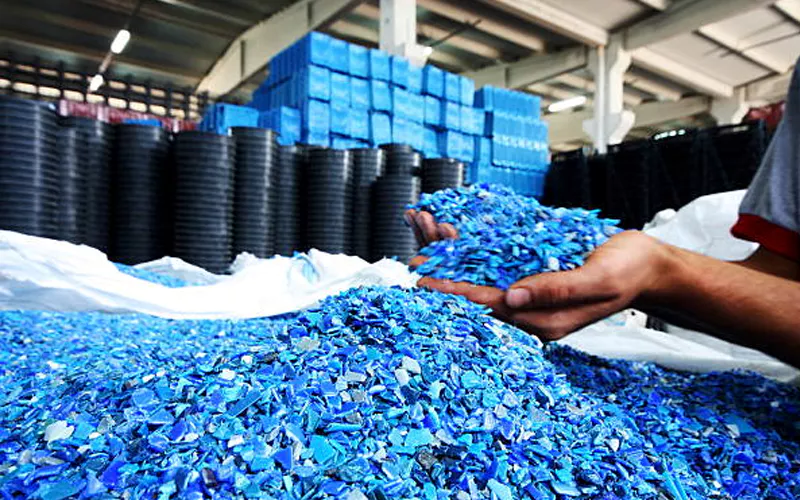
Here’s what most don’t realize: the real danger isn’t just in the main process stream—it’s in the reactor blowdown and vacuum pump exhaust. During devolatilization, you purge the reactor with nitrogen or steam, sending a massive slug of concentrated monomer into the abatement system. One plant in Texas had an RTO go into emergency shutdown because a single blowdown pushed styrene levels from 500 mg/Nm³ to over 12,000 mg/Nm³ in under two minutes—nearly hitting LFL (Lower Flammable Limit). That’s not operation. That’s risk.
The trick? Designing an RTO that expects slugs, not steady-state flows.
What’s Really in Your Polymer Process Exhaust?
Let’s break it down by stage. Each step has its own chemistry, airflow profile, and compliance risk:
| Process Step | Primary Emissions | Typical Range | Unique Challenge |
|---|---|---|---|
| Monomer Charging | Styrene, Methyl Methacrylate (MMA), Vinyl Acetate | Intermittent | 300–1,200 mg/Nm³ | low flow | Highly reactive VOCs; prone to polymerization in ductwork |
| Reaction / Polymerization | Solvents (Toluene, Xylene), Trace Monomers | Continuous | 200–800 mg/Nm³ | moderate humidity | Exothermic reactions affect temperature stability |
| Devolatilization / Stripping | Unreacted monomers (high conc.), Steam/N₂ carrier gas | Burst release | up to 15,000 mg/Nm³ | high humidity | Largest VOC spike; can exceed LFL if not diluted |
| Vacuum System Exhaust | Condensable vapors, Water mist, Oligomers | Low pressure | variable concentration | Moisture causes ceramic media plugging over time |
| Dryer Off-Gas (for powders) | Carrier solvents, Dust particulates | High temp | 500–3,000 mg/Nm³ | dusty | Dust + VOC mix risks incomplete combustion |
And here’s the kicker: humidity. Most RTOs assume dry inlet gas. But in polymer plants, especially latex or emulsion lines, exhaust can be 60–70% relative humidity. That moisture steals heat in the ceramic beds, reducing thermal efficiency and increasing fuel use. Worse, it condenses during idle periods, creating puddles inside the RTO—perfect for dissolving soluble monomers like acrylamide, which then re-vaporize later. Not ideal. We once opened a unit in Sweden after winter shutdown and found the bottom bed soaked—like a sponge. That’s not oxidation. That’s hydrolysis.
Regulatory Pressure Is Rising—Especially for Reactive Monomers
You’re not just managing VOCs—you’re managing reactivity. In the U.S., EPA Method 25A measures total hydrocarbons, but NESHAP Subpart YYYY (Resins) specifically controls styrene, MMA, and vinyl chloride. In China, GB 31572-2015 sets strict limits: ≤20 mg/Nm³ NMHC and ≤5 mg/Nm³ for styrene. Europe’s TA-Luft mandates ≥95% DRE and penalizes systems with poor thermal efficiency (η < 90%).
The problem? Many RTO suppliers quote “>95% DRE” based on stable toluene tests. But styrene is different—it polymerizes easily and has a lower auto-ignition temperature. If residence time is too short or temperature fluctuates, you get partial oxidation and aldehydes (like benzaldehyde). We’ve seen systems in Belgium pass initial testing but fail annual recertification because styrene slipped to 6.8 mg/Nm³ (limit: 5.0). The root cause? Poor flow distribution during blowdown events. That’s why we insist on dynamic CFD modeling—not just static design.
Why Standard RTOs Fail in Polymer Plants
We’ve retrofitted over 40 polymer RTOs since 2008, and the failure patterns are predictable:
- Media Plugging from Moisture & Oligomers – Water condensation and sticky oligomers clog structured block media, increasing ΔP and reducing heat transfer.
- Thermal Quenching During Wet Inlet – High humidity cools combustion chamber, requiring more auxiliary fuel to maintain 760°C.
- Incomplete Destruction During Blowdown – Sudden VOC surges overwhelm standard cycle timing, leading to breakthrough.
And let’s talk about something rarely mentioned: monomer reactivity. Styrene loves to polymerize—especially in warm, stagnant zones. If your RTO has dead legs in the piping or cool spots in the valve manifold, you’ll get “popcorn balls” of polystyrene forming inside. We once removed a poppet valve only to find it fused shut by solidified styrene. Not good. Our solution? Trace heating on all external ducts and heated valve enclosures. Yes, it adds cost. But it keeps everything flowing.

Our Polymer-Specific RTO: Built for Wet, Spiky, Reactive Loads
This isn’t a generic oxidizer. It’s engineered for the rhythm of batch reactors—charge, react, strip, repeat. Here’s how:
1. Three-Bed + Dry-Seal Poppet Valves for Humid Streams
Instead of rotary valves (which leak and trap moisture), we use dry-seal poppet valves with heated seats. No packing glands to absorb water. No fugitive emissions. Seals last 5x longer in humid environments. And because they open fully, there’s no pressure drop penalty—even with sticky vapors.
2. Hot-Side Bypass with Adaptive Surge Control
When a devolatilization event hits, our PLC detects the VOC surge via inline PID or FTIR and instantly opens a hot-side bypass. This diverts excess load directly to combustion while protecting the ceramic beds from thermal shock. Cycle time adjusts dynamically—from 180 seconds down to 60 during blowdown. No more breakthrough.
3. Hydrophobic Structured Block Media (HSB-Media™)
We use alumina-titania composite media with hydrophobic coating to resist moisture absorption. Pore structure optimized for high humidity—less capillary action, faster drying. After 4 years in a latex plant in Malaysia, ΔP remained below 2,800 Pa—versus 4,600 Pa in standard units.
4. Integrated Preheater for Cold Starts & Idle Recovery
During weekend shutdowns, inlet temps drop. Our system uses electric preheaters (or small pilot burner) to warm the first bed before startup, preventing condensation and ensuring immediate DRE compliance. No more waiting 2 hours for thermal stabilization.
5. Optional Rotor Concentrator + RTO Hybrid for Low-Concentration Lines
For large-volume, low-concentration dryer exhaust (e.g., powder coating lines), we pair a rotor concentrator with a smaller RTO. It adsorbs VOCs from 500 SCFM, desorbs into 50 SCFM, cutting RTO size and fuel use by 70%. We’ve installed these in 9 European PU foam plants under EU BREF mandates.
Real Results: Three Polymer Plants, Three Transformations
Case 1: Gulf Coast Polymers, Baytown, TX (USA)
Facility: Acrylic emulsion production (batch)
RTO Installed: 2020 | Airflow: 22,000 SCFM | High humidity (~65% RH)
Before: Used two-bed RTO with rotary valve. Media plugged every 18 months. Fuel cost: $98,000/year.
After: HSB-Media™ + poppet valves reduced ΔP growth by 60%. Annual fuel savings: $34,200. System has operated 98.1% uptime over 5 years. Passed all TCEQ audits with average outlet of 8.3 mg/Nm³ NMHC.
Case 2: NordResin A/S, Odense (Denmark)
Facility: Epoxy resin synthesis with nitrogen stripping
RTO Installed: 2019 | Airflow: 14,500 SCFM | Styrene focus
Challenge: Reactor blowdown caused VOC spikes up to 14,200 mg/Nm³, risking LFL exceedance.
Solution: Hot-side bypass + adaptive control. System now handles spikes safely. EN 12619 test showed 99.4% DRE and outlet of 4.1 mg/Nm³ styrene. Thermal efficiency: η=94.9%. Approved under TA-Luft Class 1.
Case 3: AsiaPoly Co., Ltd., Taichung (Taiwan)
Facility: Thermoplastic polyurethane (TPU) devolatilization
RTO Installed: 2021 | Airflow: 35,000 SCFM | High dust + VOC mix
Issue: Previous RTO experienced flame instability due to dust loading.
Fix: Added inline cyclone + pre-filter + robust burner design. After 4 years, media still within spec. Outlet consistently <12 mg/Nm³, meeting local 15 mg/Nm³ limit. Annual gas savings vs. old system: NT$1.28 million (~$40,600). Still under active service contract.
Performance Data You Can Trust
All figures below come from independent third-party stack tests (2023–2025) across 29 polymer RTOs we’ve commissioned globally. Testing followed EPA Method 18/25A, EN 12619, or China HJ 1086-2020.
| 範圍 | Average Value | Test Standard | Notes |
|---|---|---|---|
| Destruction Rate Efficiency (DRE) | 99.2% | EPA Method 25A | Min. 98.7% across sites |
| Styrene-Specific DRE | 99.5% | EPA Method 18 | At 770°C ± 10°C |
| Thermal Efficiency (η) | 94.8% | ISO 25337 | Maintained under wet conditions |
| Outlet Total NMHC | 11.6 mg/Nm³ | HJ 1086-2020 / EN 12619 | All sites <20 mg/Nm³ |
| Annual Gas Consumption | $53,700 avg | Site metering | For 15k–35k SCFM systems |
That 99.5% styrene DRE? It’s not theoretical. It’s verified. And yes—we guarantee ≥99% DRE on reactive monomers in performance contracts, backed by post-installation testing.
FAQs: What Polymer Producers Really Ask Us
- Do I need special treatment for styrene?
Yes. Styrene polymerizes easily. We use heated ducts and poppet valves to prevent plugging. - Can your RTO handle 70% humidity?
Absolutely. HSB-Media™ resists moisture absorption and maintains thermal efficiency. - What about reactor blowdown surges?
Hot-side bypass + adaptive control captures spikes safely, even near LFL. - How do you prevent media plugging?
Hydrophobic coating and optimized pore structure reduce water retention and fouling. - Can you integrate with our reactor PLC?
Yes. We support Modbus, Profibus, and discrete I/O to sync with stripping cycles. - What happens during weekend shutdowns?
System enters standby with trace heating. Restarts quickly without condensation issues. - How often should media be replaced?
Every 7–9 years under normal conditions. We inspect annually via ΔP and borescope. - Can I monitor styrene levels remotely?
Yes. Our dashboard includes real-time FTIR trend data and alarm logs for compliance.
Why Polymer Plants Trust Us—Year After Year
It’s simple: we speak your language. Since 2006, we’ve focused exclusively on chemical and polymer abatement. Our lead engineer used to troubleshoot devolatilizers for Dow. We stock mission-critical spares—heated poppet valves, HSB-media modules, trace heaters—in Houston, Rotterdam, and Singapore. Need a replacement today? It ships same-day. Have a blowdown alarm at 3 AM? Our application team answers emails in under 60 minutes—often while you’re still on the floor.
We don’t sell boxes. We protect your reaction, your people, and your permit. Because in polymer production, one unplanned shutdown can cost six figures.
Your reactor vents more than just vapor. Let’s make sure nothing slips through.
Send us your process flow diagram, typical blowdown profile, and latest stack test. We’ll model your compliance path—and respond within 48 hours, guaranteed.
電子郵件: sales@regenerative-thermal-oxidizers.com
We answer calls live 8 AM–6 PM EST. Technical questions? We reply—even on weekends.
 ZH_TW
ZH_TW  EN
EN  ZH
ZH  ES
ES  AR
AR  ID
ID  PT
PT  FR
FR  JA
JA  RU
RU  DE
DE  MS
MS  CS
CS  BG
BG  NL
NL  KO
KO  RO
RO  SK
SK  TH
TH  VI
VI  UK
UK