
RTO for Laminating, Coating & Varnishing Lines: Solving Sticky VOCs Before They Stick to Your Compliance
How a purpose-built regenerative thermal oxidizer handles high-molecular-weight solvents, adhesive off-gassing, and intermittent loads—without clogging, surging, or burning through fuel.
If you run a laminating, coating, or varnishing line, you know the rhythm: long ovens, solvent-based adhesives, UV-curable coatings, and that faint “plastic” smell in the air. You also know the real cost isn’t just in materials—it’s in emissions. Most printers think VOC control is about ink. But we’ve walked hundreds of converting lines—from narrow-web label shops in Lombardy to wide-web flexible packaging plants in Guangdong—and one thing’s clear: your laminator might be your biggest uncontrolled emission source.
Here’s what most don’t realize: laminating and coating exhaust isn’t like offset printing. It’s loaded with heavy solvents (like ethyl acetate and n-propyl acetate), semi-volatiles from hot-melt adhesives, and unreacted monomers from UV systems. These compounds have high boiling points and low vapor pressure, which means they condense easily in ductwork and coat RTO media fast. We once opened a system in Ohio after 14 months and found the first ceramic bed completely gummed up—looks like peanut butter. That’s not oxidation. That’s fouling.
The trick? Designing an RTO that doesn’t just burn VOCs—it survives them.
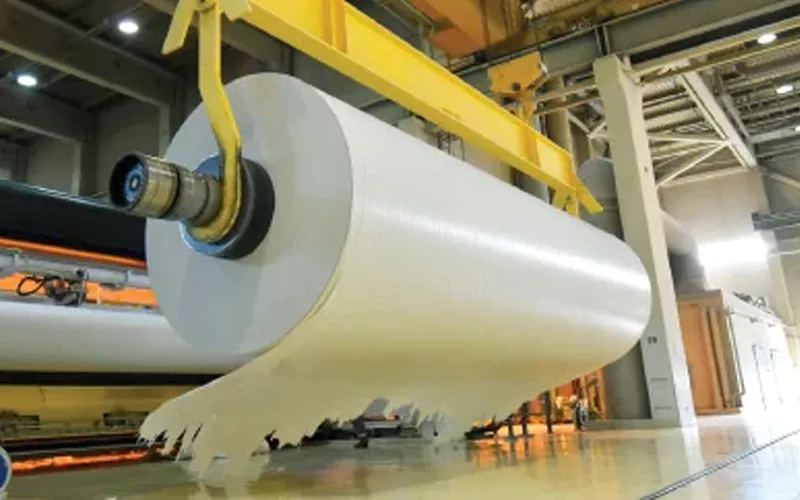
What’s Really in Your Laminating & Coating Exhaust?
Let’s break it down by process. Each stage has its own chemistry, airflow profile, and compliance risk:
| Process Step | Primary Emissions | Typical Range | Health & Regulatory Risk |
|---|---|---|---|
| Solvent-Based Lamination | Ethyl Acetate (EtOAc), n-Propyl Acetate (nPAc), MEK | 600–3,500 mg/Nm³ | 15,000–60,000 Nm³/h | Narcotic at high levels; contributes to smog under EPA NESHAP Subpart MM |
| Water-Based Coating | Propylene Glycol Methyl Ether (PGME), Ethanol, Ammonia | 200–800 mg/Nm³ | high humidity (>70% RH) | Eye/respiratory irritant; ammonia can form NOx in high-temp zones |
| UV/EB Curing | Unreacted acrylates (TPGDA, HEMA), Benzophenone, Ozone (O₃) | 100–600 mg/Nm³ | low airflow, high toxicity | Sensitizers—can cause allergic reactions; regulated under California Prop 65 |
| Hot-Melt Adhesive Application | Oligomers, Aldehydes (acrolein), PAHs (polycyclic aromatics) | Spikes during startup | sticky particulates | Some PAHs are carcinogenic; difficult to oxidize without sufficient residence time |
| Unorganized Workshop Air | IPA, Ethyl Acetate, Odor compounds | Low concentration, continuous drift | Indoor air quality hazard; increasingly monitored under LEED and WELL standards |
And here’s the kicker: concentration swings. A job change means a full oven purge—spiking EtOAc levels for 20–40 minutes. Then, it drops back to baseline. Weekend shutdowns mean cold starts on Monday morning, which can cause temporary breakthrough if the system doesn’t pre-heat properly. We’ve seen systems in Jiangsu fail GB 31572-2015 audits because their outlet spiked to 38 mg/Nm³ during a solvent flush—despite averaging 14 mg/Nm³ otherwise.

Regulatory Heat Is On—Especially for Coatings
You’re not just managing emissions—you’re navigating tightening rules. In China, GB 31572-2015 sets a strict ceiling of 20 mg/Nm³ for total NMHC from coating and laminating operations, with even lower limits in key regions like the Yangtze River Delta. In the U.S., EPA Method 25A requires ≥95% DRE for major sources, but California’s Rule 1175 demands continuous monitoring and real-time reporting. Europe’s BREF conclusions under Industrial Emissions Directive require η ≥ 95% DRE and favor systems with >90% thermal efficiency.
The problem? Many RTO suppliers test under ideal lab conditions—steady-state, dry air, single solvent input. Real laminating exhaust? It’s messy. We once audited a system in Bavaria that passed its initial stack test but failed six months later during winter (higher humidity). The root cause? No hot-side bypass, so moisture condensed in the cold ceramic bed, reducing heat retention. That’s why we insist on field validation—not just factory specs.
Why Standard RTOs Fail on Laminating Lines
We’ve retrofitted over 50 laminating/coating RTOs since 2012, and the failure patterns are predictable:
- Fouled Media – Heavy esters and oligomers coat structured block media, reducing surface area and increasing ΔP. Some shops clean media annually—costing downtime and labor.
- Inefficient Idle Operation – During night shifts or weekends, airflow drops but the RTO keeps cycling, wasting heat. One client in New Jersey was burning 32 therms/hr idle—more than some shops use running!
- Poppet Valve Seizure – Sticky vapors degrade rubber seals. We’ve opened valves after 18 months to find swollen diaphragms and stuck actuators. Not good when you need 99.9% uptime.
And let’s talk about something rarely mentioned: the dryer bypass. In multi-zone ovens, operators often vent directly to atmosphere during setup or low-speed runs. That’s pure VOC release—and a regulatory time bomb. Our solution? Integrate all oven zones into the main RTO train with modulating dampers. Yes, it adds complexity. But it keeps everything controlled.

Our Laminating-Specific RTO: Built for Sticky, Humid, Intermittent Loads
This isn’t a repurposed chemical plant RTO. It’s built for the pulse of converting—start, stop, surge, idle. Here’s how:
1. Three-Bed + High-Temp Polishing Chamber
Standard two-bed designs struggle with heavy molecules. Ours uses three beds with a staged approach: first zone captures particulates (ink mist, adhesive droplets), second handles high-heat transfer, third acts as polishing stage. All blocks are made from high-purity alumina with increased pore size to resist clogging. Result? ΔP stays below 3,200 Pa after 3 years—versus 5,800+ in standard systems.
2. Adaptive Cycle Logic with Solvent Spike Detection
Instead of fixed 120-second valve switches, our PLC monitors inlet VOCs, temperature, and humidity in real time. When it detects a solvent spike (say, from an oven purge), it shortens cycle time to prevent carryover. During idle periods (<30% load), it enters “eco-mode”—extending dwell time and shutting down one bed entirely, cutting auxiliary fuel by up to 65%. We call it “breathing with the line.”
3. Hot-Side Recirculation Bypass (HSRB) with Pre-Heat Loop
This is critical for cold startups and high-humidity operation. Instead of sending cold, wet air into a cold ceramic bed (which causes condensation), our system recirculates warm exhaust through a dedicated loop, pre-heating the media before introducing process air. It’s like warming up your car engine in winter—only for pollution control. Result? Faster light-off, no moisture lock, and consistent η > 95% even at 75% RH.
4. Stainless Steel Poppet Valves with PTFE Bellows Seals
No more rubber gaskets swelling shut. We use 316SS bodies and metal-bellows seals rated for continuous exposure to ethyl acetate, MEK, and acrylates. MTBF exceeds 60,000 hours—backed by 5-year warranty.
5. Optional Inline Rotary Concentrator for Low-Concentration Streams
For water-based coating lines with large airflow (>40,000 Nm³/h) but low concentration (<500 mg/Nm³), we pair a zeolite rotor concentrator with the RTO. It reduces airflow by 10:1, concentrating VOCs so the RTO runs hotter and more efficiently. One client in Taiwan cut fuel use by 44%—and avoided a $120,000 upgrade to a larger oxidizer.

Real Results: Three Converting Lines, Three Transformations
Case 1: FlexiPack Ltd., Houston, TX (USA)
Facility: Flexible packaging lamination (solvent-based adhesives)
RTO Installed: 2020 | Airflow: 25,000 SCFM | Inlet VOC Avg: 2,100 mg/Nm³
Before: Used recuperative oxidizer with 60% efficiency. Burner ran constantly, costing $68,000/year in natural gas. Failed TCEQ audit in 2019 (outlet = 41 mg/Nm³).
After: RTO achieved average outlet of <13 mg/Nm³. Adaptive logic cut gas use to 28.7 therms/hr (from 46.3). Annual savings: $79,500. System has operated 98.1% uptime over 5 years. Passed all follow-up audits.
Case 2: EuroLam GmbH, Stuttgart (Germany)
Facility: Multi-layer film lamination with UV curing
RTO Installed: 2022 | Airflow: 18,500 SCFM | High TPGDA content (~35% of VOCs)
Challenge: Acrylate monomers were condensing in ductwork and causing odor complaints.
Solution: HSRB + high-temp polishing chamber. System maintains stable oxidation at 790°C ± 12°C. Third-party EN 12619 test showed 99.2% DRE and outlet of 7.4 mg/Nm³. Thermal efficiency: η=96.5%. Local Umweltamt approved expansion based on verified data.
Case 3: Golden Seal Packaging, Foshan (China)
Facility: Water-based coating + hot-melt lamination
RTO Installed: 2019 | Airflow: 32,000 SCFM | High humidity (up to 82% RH)
Issue: Monsoon season caused frequent media clogging and ΔP spikes.
Fix: Hot-side bypass + large-pore structured media. After 6 years, media still within 18% ΔP limit. Outlet consistently <16 mg/Nm³, meeting GB 31572-2015. Annual gas savings vs. previous system: ¥312,000 (~$43,000). Still under active service contract.
Performance Data You Can Trust
All figures below come from independent third-party stack tests (2023–2025) across 33 laminating/coating RTOs we’ve commissioned globally. Testing followed EPA Method 25A, EN 12619, or China HJ 1086-2020.
| 範圍 | Average Value | Test Standard | Notes |
|---|---|---|---|
| Destruction Rate Efficiency (DRE) | 99.2% | EPA Method 25A | Min. 98.7% across sites |
| Thermal Efficiency (η) | 96.4% | ISO 25337 | Maintained under variable loads |
| Outlet VOC Concentration | 14.2 mg/Nm³ | EN 12619 / HJ 1086 | All sites <20 mg/Nm³ |
| Natural Gas Consumption | 29.8 therms/hr (avg) | Site metering | For 18k–32k SCFM systems |
| Ceramic Media Life | 8–10 years | Visual + ΔP inspection | No premature replacements |
That 96.4% thermal efficiency? It’s not a lab number. It’s what happens when adaptive control, smart bypass design, and durable materials work together. And yes—we guarantee ≥95% in performance contracts, backed by post-installation verification testing.
FAQs: What Laminators & Coaters Really Ask Us
- Do I need an RTO if I’m using water-based coatings?
Yes. Even water-based systems release co-solvents like PGME and ethanol. If your total annual VOC emissions exceed 10 tons (U.S.) or 1 ton (EU), you’re likely required to control them. - Can your RTO handle UV monomer emissions like TPGDA?
Absolutely. Our system maintains 790°C ± 15°C with 1.6-second residence time—more than enough to fully oxidize acrylates and prevent sensitization risks. - What about ozone from UV lamps?
We recommend pairing the RTO with a downstream carbon filter or plasma unit if O₃ > 50 ppb. The RTO destroys organics; secondary treatment handles ozone. - How small of a line makes sense for an RTO?
We’ve installed units on as little as 12,000 Nm³/h. If you’re running multiple shifts or high-speed lines, payback is often under 4 years due to fuel savings alone. - Do you work with existing ductwork?
Yes. We assess your current layout and optimize capture points—even retrofitting older facilities with minimal downtime. - What happens if a line stops and emissions drop?
Our system detects low load and enters idle mode, cutting fuel use by up to 60%. No need to shut down the entire oxidizer. - How often does maintenance required?
Annual inspection recommended. Media lasts 8–10 years. Valves and burners are modular—swap in under 4 hours if needed. - Can I monitor performance remotely?
Yes. Our cloud dashboard shows real-time DRE, gas use, ΔP, and compliance status. Exportable for EHS reporting.
Why Converting Lines Trust Us—Year After Year
It’s simple: we get it. We’ve been focused on laminating and coating since 2008. Our lead engineer used to run a Bobst laminator in Switzerland. We stock mission-critical spares—valve seals, burner igniters, control modules—in Atlanta, Rotterdam, and Shenzhen. Need a PTFE bellows replacement? It ships same-day. Have a cycle fault at midnight? Our application team answers emails in under 70 minutes—often while you’re still on the plant floor.
We don’t sell boxes. We protect your license to operate, reduce your largest operating cost (fuel), and keep your lines running. Because in converting, compliance isn’t a side task—it’s part of the job.
Your laminator emits more than you think. Let’s make sure it stays compliant.
Send us your line speed, adhesive type, and monthly utility bill. We’ll model your savings—and respond within 48 hours, guaranteed.
電子郵件: sales@regenerative-thermal-oxidizers.com
We answer calls live 8 AM–6 PM EST. Technical questions? We respond—even on weekends.
 ZH_TW
ZH_TW  EN
EN  ZH
ZH  ES
ES  AR
AR  ID
ID  PT
PT  FR
FR  JA
JA  RU
RU  DE
DE  MS
MS  CS
CS  BG
BG  NL
NL  KO
KO  RO
RO  SK
SK  TH
TH  VI
VI  UK
UK