
描述
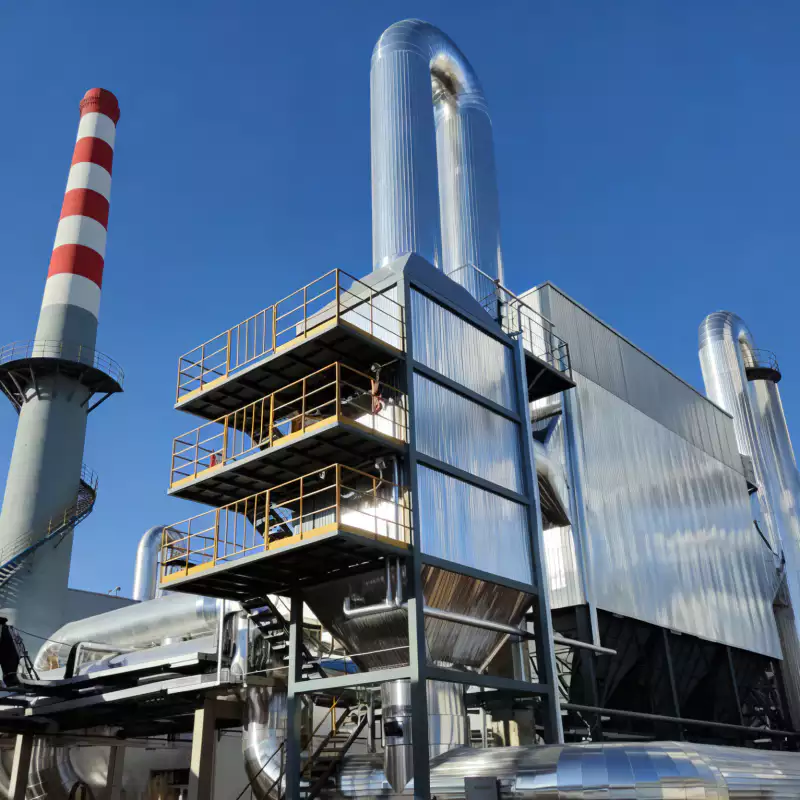
SCR Denitrification System Selective Catalytic Reduction | BLSCR1W/BLSCR230W Series
Achieve ultimate environmental compliance and eradicate Nitrogen Oxides (NOx) with > 95% efficiency. Engineered by 永恒的力量, our advanced SCR Denitrification systems utilize precision-engineered catalyst beds to neutralize toxic emissions at lower operational temperatures (180°C-400°C). Built for monumental scale, from massive utility power generation to heavy metallurgy, ensuring your facility remains online, compliant, and highly profitable.
⚙️ Executive Engineering Brief
? Volumetric & Thermal Capacity
- Gas Volume: 10,000 – 2,300,000 m³/h
- Allowable Gas Temp: 180 – 400 °C
- Application: Large Utility & Industrial Boilers
- Target Pollutant: NO, NO2
? Purification Performance
- Denitrification Efficiency: > 95%
- Ammonia Slip: Strictly < 3 ppm
- SO2 to SO3 Conversion: < 1%
- System Availability: > 99%
?️ Core Equipment Specs
- Lance Flow Rate: 20 – 100 L/h per nozzle
- Ammonia Water Pressure: 0.3 – 0.6 MPa
- Compressed Air Pressure: 0.3 – 0.6 MPa
- Catalyst Types: Honeycomb / Plate / Corrugated
? Main Technical Specifications
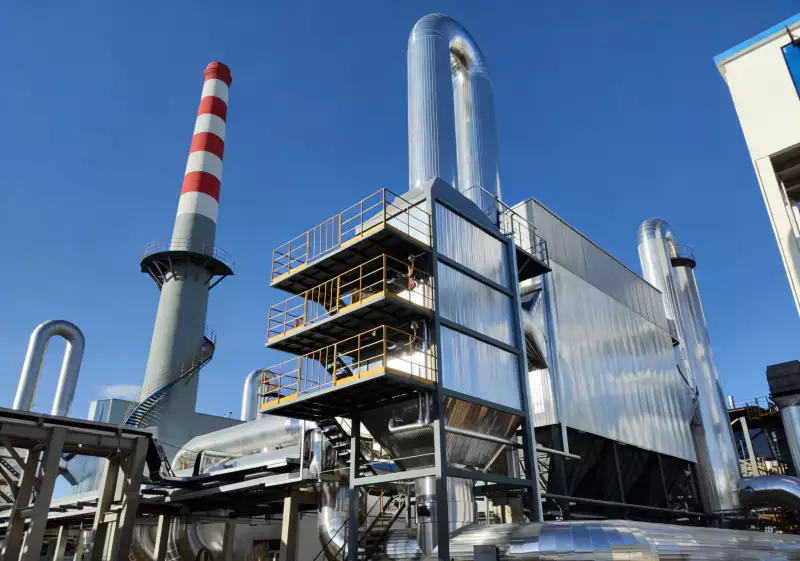
"(《世界人权宣言》) Ever-power BLSCR1W/BLSCR230W Series guarantees ultra-low emission compliance. Below are the standard operational metrics, highly customizable based on the exact fluid dynamics and exhaust chemistry of your specific facility.
| Technical Parameter | Specification Range | Engineering Impact & Plant Value |
|---|---|---|
| Gas Volume | 10,000 – 2,300,000 m³/h | Immense scalability. Easily handles the exhaust from massive utility boilers and large-scale industrial kilns. |
| Allowable Gas Temperature | 180 – 400 °C | Wide operational thermal window. Supports both standard high-temperature tail gas and specialized low-temperature SCR configurations. |
| Denitrification Efficiency | > 95% | Industry-leading removal rates. Secure absolute compliance with ultra-low emission standards globally. |
| Lance Flow Rate | 20 – 100 L/h | Precision reagent injection avoids excessive ammonia consumption and prevents downstream equipment fouling. |
| Ammonia / Air Pressures | 0.3 – 0.6 MPa | High-pressure atomization guarantees instantaneous reagent vaporization, preventing droplet impingement on the catalyst. |
? Denitrification Process Introduction
选择性催化还原(SCR) is the most robust, highly commercialized, and globally mandated NOx control technology for large-scale industrial emitters.
The SCR process involves injecting a reducing agent (primarily ammonia water, anhydrous ammonia, or urea) into the flue gas. In the presence of oxygen and a highly engineered 催化剂, the reducing agent “selectively” reacts with Nitrogen Oxides (NOx) rather than being oxidized by O2. This catalytic environment drastically lowers the required reaction temperature, converting toxic NOx into completely harmless nitrogen gas (N2) and water vapor (H2O).
Honed through decades of engineering implementation, the Ever-power BL series integrates R&D, precision manufacturing, and intelligent commissioning to provide an internationally advanced standard in operational stability and extreme >95% denitrification efficiency.
?️ Product Structure
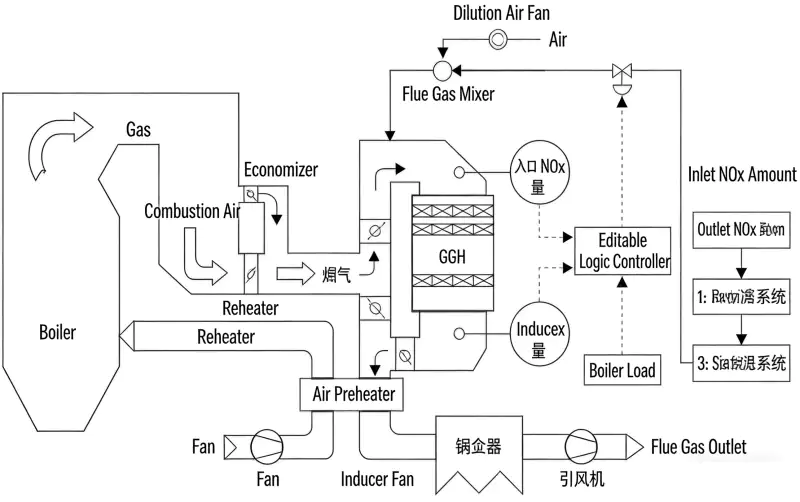
A heavy-duty SCR plant is a vast, meticulously coordinated array of subsystems designed to safeguard the delicate catalyst and ensure perfect gas-reagent homogenization. The complete Ever-power system includes:
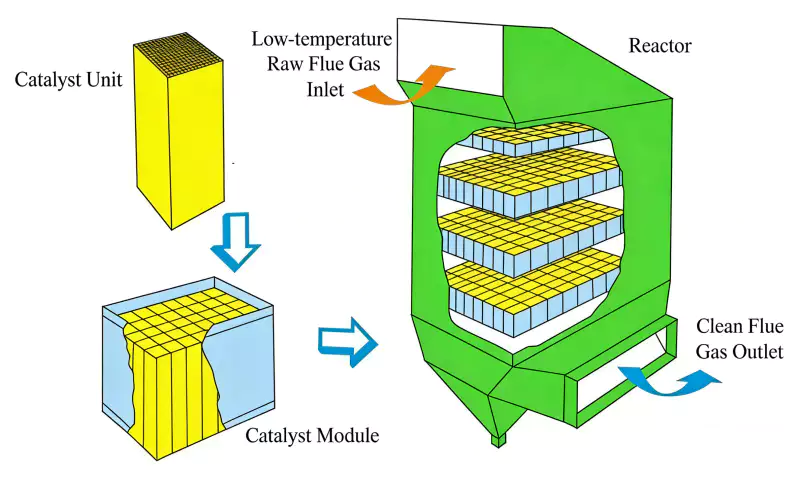
- 1. SCR Reactor: The core structural vessel that houses the catalyst baskets. It is meticulously engineered via CFD to provide optimal space, smooth flue gas flow, and perfectly uniform gas distribution.
- 2. Ammonia Unloading & Storage Module: Secure, pressure-regulated tanks and safety containment zones to handle bulk liquid ammonia or urea.
- 3. Metering & Distribution Module: Utilizes precision flow meters and variable-frequency pumps to continuously adjust the reagent feed rate based on live boiler load data.
- 4. Ammonia Injection Grid (AIG): A highly calibrated network of lances that sprays the atomized reagent evenly across the massive cross-section of the flue gas duct.
- 5. Compressed Air Module: Provides the kinetic shear force needed to atomize the reagent into a fine, instantly-evaporating mist.
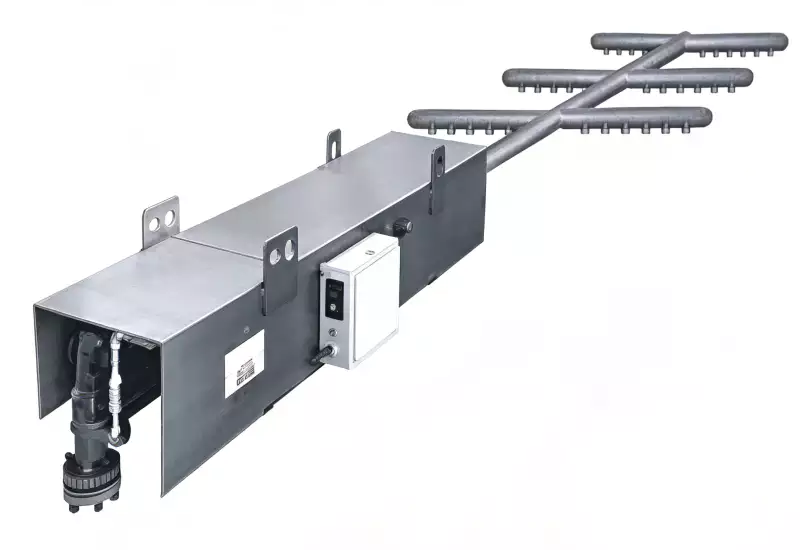
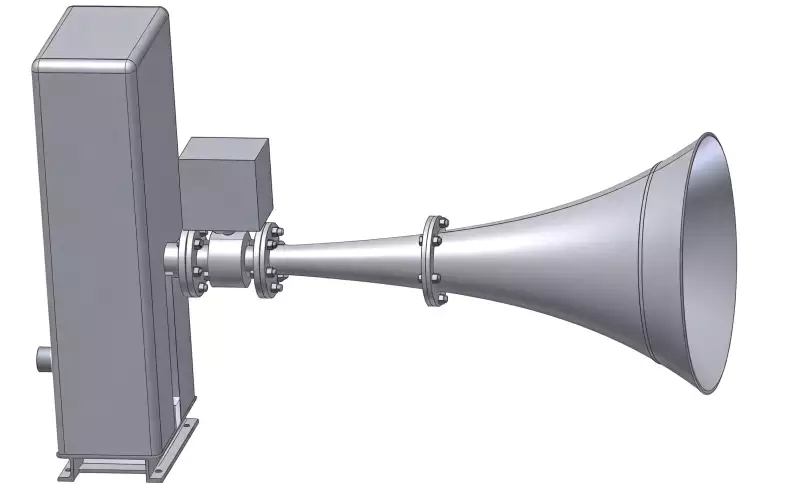
- 6. Soot Blowing System (Crucial): Utilizes sonic horns or steam blowers to continuously remove fly ash, dust, and ammonium salts from the catalyst pores, strictly preventing ash blockage and maintaining high denitrification efficiency.
- 7. Flue Gas Duct System: The heavily insulated bypass and main ductwork routing gas from the boiler, through the SCR, and to the air preheater.
- 8. Electrical & Control Module: Intelligent PLC and HMI interfaces managing automated interlocks, alarms, and emission tracking.
? Working Principle
The presence of Oxygen (O2) in the flue gas promotes the denitrification reaction and is an indispensable part of it. The main reducing agent is ammonia water (or urea pyrolyzed into ammonia), which is atomized and injected into the high-velocity flue gas upstream of the reactor.
Under the specific action of the catalyst within the 180-400°C window, the ammonia aggressively reduces the NOx in the flue gas to N2 和H2O.
Primary Reduction Reactions:
- 4NO + 4NH3 + O2 → 4N2 + 6H2哦
- 6NO + 4NH3 → 5N2 + 6H2哦
- 2NO2 + 4NH3 + O2 → 3N2 + 6H2哦
- 6NO2 + 8NH3 → 7N2 + 12H2哦
- NO + NO2 + 2NH3 → 2N2 + 3H2哦
Side Reaction Management: Under sub-optimal conditions (excessive ammonia slip or extreme temperature drops), side reactions can occur, such as:
SO3 + NH3 + H2O → NH4HSO4 (Ammonium Bisulfate).
This highly sticky compound severely fouls down-stream heat exchangers. Ever-power precisely calculates catalyst volumes and maintains strict thermal controls to effectively suppress these detrimental side reactions.
⚠️ Why is High-Efficiency Denitrification Imperative?
The Ecological & Health Toll of NOx
Nitrogen Oxides (NO and NO2) are prime contributors to severe environmental degradation. Reacting with volatile organic compounds under sunlight, they create suffocating ground-level ozone and photochemical smog. Furthermore, NOx generates acid rain, which aggressively acidifies waterways, destroys agriculture, and corrodes urban steel infrastructure.
Uncompromising Ultra-Low Emission Standards
To combat this, regulatory bodies worldwide (EPA, EEA, MEE) enforce ruthless continuous emission limits. In many major heavy-industry zones, limits have collapsed from 200 mg/Nm³ down to strict 50 mg/Nm³ or lower. Failing telemetry audits guarantees massive, compounding daily fines and legally mandated production halts. Relying on sub-par technology is an existential threat to your plant’s profitability.
? Catalyst Design Features & Advantages
The catalyst is the primary ongoing investment in an SCR plant. Ever-power meticulously selects the catalyst architecture based on your specific dust loading and gas chemistry to maximize lifespan and prevent poisoning.
| 特点 | Honeycomb Type (Market Dominant) | Plate Type (High Dust) | Corrugated Type |
|---|---|---|---|
| Specific Area / Volume | Very Large / Compact (100% baseline) | Low / Bulky (153%~176% relative volume) | Intermediate (130% relative volume) |
| 压力下降 | Medium (1.24 relative) | Lowest (1 baseline) | Highest (1.48 relative) |
| Poisoning / Clog Resistance | High (Susceptible to heavy ash bridging) | Excellent anti-clogging. Internal metal frame. | Medium (Poor wear resistance) |
| Market Share & Usage | > 65%. Best overall for standard coal/gas. | < 33%. Essential for heavy-dust environments. | < 5%. Niche gas-fired units. |
? Typical Application Scenarios & Industry Fit
Large Utility Boilers
The absolute standard for 300MW to 1000MW coal, oil, and gas-fired power plants. When massive gas volumes demand continuous, uncompromising >95% NOx removal to meet national grid requirements, SCR is the only viable option.
Cement Kilns & Glass Furnaces
While SNCR is popular, increasingly strict ultra-low emission zones demand the addition of SCR. We utilize specific Plate-Type catalysts and severe-duty acoustic soot blowers to ensure the massive dust loads of cement production do not blind the catalyst bed.
Coking & Metallurgy
Treating the complex exhaust from sintering plants and coke ovens. Ever-power implements low-temperature SCR variants to process these streams without requiring exorbitant energy to reheat the gas, providing highly economical compliance.
? Successful Case Showcase
Huarun Power (China)
Application: 600MW Utility Boiler
挑战: Demanded continuous <30mg/Nm³ NOx emissions across wildly fluctuating grid loads, with absolute minimum ammonia slip to protect downstream air preheaters.
Ever-power engineered a high-volume Honeycomb SCR reactor with precision Ammonia Injection Grids (AIG). Post-commissioning telemetry showed a stable 96.5% reduction efficiency with ammonia slip tightly locked below 2.5 ppm.
Shanshui Cement Group (China)
Application: Large Rotary Cement Kiln
挑战: Previous standard catalysts were blinding within weeks due to the extreme dust loads inherent to cement calcination.
We transitioned the facility to an Ever-power Plate-Type SCR system combined with an aggressive acoustic soot-blowing array. The system has now operated for 24 months without a single dust-bridging shutdown.
⚖️ Equipment Core Advantages vs. Traditional SNCR
| Comparison Metric | Ever-power SCR System | Standard SNCR Systems |
|---|---|---|
| NOx Reduction Efficiency | Massive. Reliably > 90% – 95%. | Moderate. Typically caps at 40% – 50%. |
| 工作温度 | Versatile. 180°C – 400°C (Catalyst Dependent). | Extremely High & Narrow. 850°C – 1050°C required. |
| Ammonia Slip Risk | Extremely Low. Catalyst ensures complete reaction. | High risk if boiler load shifts away from injection zone. |
| Regulatory Suitability | Meets the strictest ultra-low “Near-Zero” limits globally. | Fails to meet new ultra-low emission standards independently. |
? Selection Guide: Architecting Your SCR System
To engineer the precise SCR reactor, calculate the exact catalyst volume, and design the aerodynamic flow, our technical team requires detailed operational data. Please prepare the following:
1. Flue Gas Parameters
Provide the Maximum Gas Volume (Nm³/h) and the stable Operating Temperature Range (°C) at the proposed reactor insertion point. We must verify if the temperature supports standard catalysts or if customized low/high-temp catalysts are mandated.
2. Dust & Poison Profile
What is the Dust Loading Concentration (g/Nm³)? Crucially, are there significant amounts of alkali metals (K, Na), Arsenic (As), or heavy SO2/SO3 present? This data explicitly dictates whether we deploy Honeycomb, Plate, or Corrugated catalyst structures to prevent rapid poisoning and blinding.
3. Baseline NOx & Target Limits
State the current, untreated Baseline NOx Concentration (mg/Nm³) and your exact Regulatory Target Limit. This defines the required space velocity and the physical volume of catalyst layers needed within the reactor vessel.
? Value Quantified: Return on Investment (ROI)
The Cost of Sub-Par Denitrification
Crippling Fines & Curtailment: As environmental bureaus enforce “ultra-low emission” policies, failing to maintain <50mg/Nm³ NOx triggers automated, severe financial penalties and forced curtailment of your profitable baseload generation.
Air Preheater Destruction: Utilizing cheap SNCR in an attempt to reach SCR performance levels requires massive ammonia over-injection. The resulting “ammonia slip” creates ammonium bisulfate, which turns into a concrete-like sludge, entirely destroying downstream air preheaters and forcing multi-week plant outages.
The Ever-power SCR Upgrade ROI
Absolute Operational Security: An adequately engineered SCR system represents a heavy initial CapEx, but it entirely insulates your facility from regulatory risk. You purchase guaranteed, uninterrupted 24/7/365 production uptime.
Optimized Catalyst Lifecycle: Through precise CFD modeling, flow equalization, and integrated soot blowing, Ever-power extends catalyst life by years. By preventing premature blinding and poisoning, you delay replacement cycles, saving hundreds of thousands in ongoing mechanical OpEx.
? Global Client Scenarios
?? Texas Gulf Utility (USA)
Application: 800MW Coal-Fired Boiler
挑战: Escalating EPA scrutiny required NOx reduction far below the limits of their legacy SNCR setup. Ammonia slip was also aggressively fouling their APH.
“Ever-power executed the EPC retrofit seamlessly. The massive honeycomb SCR reactor dropped our NOx by 96% while effectively eliminating ammonia slip. We haven’t had an air preheater plugging issue since commissioning.” – Chief Plant Engineer
?? Rhine Valley Steel (Germany)
Application: Sintering Plant Exhaust
挑战: Heavy dust loads and low exhaust temperatures made standard SCR designs impossible without severe pressure drops and reheater costs.
“They designed a custom low-temperature SCR utilizing Plate-type catalysts. The anti-clogging performance is stellar. We maintained compliance with EU directives while keeping our fan energy costs stable.” – Environmental Director
?? Gujarat Heavy Cement (India)
Application: High-Capacity Rotary Kiln
挑战: Unprecedented dust loads inherent to cement calcination blinded previous attempts at catalytic reduction within weeks.
“Ever-power didn’t just sell us a reactor; they re-engineered the fluid dynamics. The integration of high-intensity acoustic soot blowers with the Plate catalyst means the bed stays clean. Incredible operational stability.” – Operations Head
?? Sao Paulo Petrochemicals (Brazil)
Application: Industrial Coking Facility
挑战: Strict local mandates required extreme reductions in both NOx and complex VOC slip from the coking process.
“We required an integrated approach. The combination of their heavy-duty SCR reactors with precise PLC-controlled ammonia injection gave us the absolute compliance edge we needed to avoid operational shutdowns.” – Facility Manager
❓ Engineering & Operational FAQ
How do you choose between Honeycomb and Plate-type catalysts?
It entirely depends on the dust loading of your flue gas. Honeycomb catalysts offer a massive specific surface area and smaller reactor footprint, making them ideal for standard power plants with upstream ESPs. However, in high-dust environments like cement kilns, honeycomb pores quickly plug. Here, Plate-type catalysts are mandatory as their internal metal frame structure and wider pitch offer robust anti-clogging and anti-erosion properties.
What causes Catalyst Poisoning, and how is it mitigated?
Catalyst poisoning occurs when elements like Arsenic (As), Alkali metals (Na, K), or Phosphorus bind to the active sites of the catalyst, permanently destroying its reactivity. We mitigate this by analyzing your fuel/gas composition pre-design. We can formulate custom catalysts doped with specific promoters (like Tungsten) to resist these specific poisons, extending operational life significantly.
What is the function of the Soot Blowing System in an SCR?
It is a critical defense mechanism. As flue gas passes through the catalyst, fly ash and potential ammonium salts naturally accumulate on the surface and within the pores. If left unchecked, this physically blocks the reaction and causes massive pressure drops. Integrated sonic horns or steam soot blowers periodically blast the catalyst layers to keep the aerodynamic pathways clear, ensuring sustained >95% denitrification efficiency.
Can SCR be used if the flue gas temperature is below 180°C?
Standard catalysts become inactive and suffer from severe ammonium bisulfate fouling below 300°C. However, Ever-power can engineer specialized Low-Temperature SCR systems utilizing distinct catalyst formulations designed to operate in the 180°C-250°C range. If temperatures are lower still, a gas-gas heater (GGH) or direct burner must be integrated to raise the gas back into the reaction window.
How does Ever-power ensure uniform ammonia mixing?
Improper mixing leads to both high NOx emissions and severe ammonia slip. Before cutting any steel, we run extensive Computational Fluid Dynamics (CFD) modeling of your exact ductwork. We design custom Ammonia Injection Grids (AIG) and static mixers that force deep, turbulent homogenization of the ammonia and flue gas before it ever reaches the catalyst bed.
? Why Partner with Ever-power?
Relying on our independent R&D, technological innovation, and extensive strategic cooperation with domestic and foreign partners since 2000, Ever-power has dominated the engineering of severe-duty environmental equipment. We possess profound technical expertise executing turnkey projects across massive steelworks, utility power plants, cement kilns, and petrochemical facilities globally.
- ✔️ Full Value-Chain Integration: Our professional business divisions handle the entire EPC lifecycle: Complete Engineering Design (CFD Modeling) ➔ Precision Manufacturing (Robotic Welding & Cutting) ➔ Overseas Logistics ➔ Intelligent Commissioning.
- ✔️ Advanced Control Capabilities: We manufacture and supply complete electrical control equipment and instrumentation. Our high/low voltage power supply and PLC control systems guarantee automated, highly reliable denitrification capable of tracking erratic boiler loads.
- ✔️ Uncompromised Quality Credentials: Operating rigorously under ISO 9001/14001 management systems, holding multiple environmental technology patents, and ensuring every system structurally and chemically meets global compliance standards.
? Comprehensive Plant Environmental Solutions
Beyond NOx abatement, Ever-power architects industry-leading gas treatment systems for complex chemical, particulate, and organic emissions across all heavy industries:
- Advanced VOC Treatment Systems – Total lifecycle solutions for industrial organic emissions.
- RTO(蓄热式热氧化器) – High thermal efficiency destruction of massive volume VOCs.
- RCO(再生催化氧化器) & 一氧化碳(催化氧化剂) – Low-temperature catalytic oxidation.
- TO(热氧化器) – Direct-fired high-heat incineration for extreme concentration waste.
- Learn more about our legacy and engineering ethos: About Ever-power.
- Visit our homepage: Ever-power Global.
Eradicate NOx & Protect Your Profitability
Stop risking catastrophic regulatory fines and production curtailments. Let Ever-power’s senior engineering team conduct a complete CFD analysis of your exhaust profile and design a bespoke SCR Denitrification system that guarantees unwavering >95% NOx compliance.
 ZH
ZH  EN
EN  ES
ES  AR
AR  ID
ID  PT
PT  FR
FR  JA
JA  RU
RU  DE
DE  MS
MS  CS
CS  BG
BG  NL
NL  KO
KO  RO
RO  SK
SK  TH
TH  VI
VI  ZH_TW
ZH_TW  UK
UK