RCO planning for printing starts at the dryer, not at the oxidizer
A flexible packaging production line can combine printing, drying, lamination, adhesive application, cleaning, and web handling. Each stage may contribute a different solvent profile or exhaust pattern. The practical question is not simply whether a regenerative catalytic oxidizer can treat printing VOCs. It is whether the actual collected gases, including peak recipes and nonproduction modes, fit a catalyst-based system with a clearly defined operating envelope.
Gravure and flexographic processes commonly use formulations that vary with ink, substrate, production speed, and print quality requirements. Even when two products use the same machine, their solvent emissions may differ because the ink system, coating weight, dryer settings, and operating schedule change. A technical review should connect each exhaust measurement to the product or recipe being run at the time, not report concentration without process context.
Map solvent release points
Separate capture from treatment
Protect the catalyst
Flexible packaging makes a useful example of why source capture and oxidation must be considered together. A treatment unit cannot solve every capture problem if uncontrolled emissions escape around the press or another solvent handling point. Conversely, excessive extraction can increase the amount of air that must be heated and moved through the system. Evaluate capture performance under workplace safety and process requirements before deciding which gas streams belong in an RCO design.
Review printing and coating exhaust fundamentals →
Why printing exhaust changes across a production shift
Start with a source map that distinguishes press units, individual dryer zones, laminator sections, make-up air, solvent storage interfaces, and any cleaning enclosure. The exact boundaries differ across plants. Record each source’s duct connection, expected temperature, airflow, solvent family, and operating schedule. A source map helps engineers avoid counting the same air twice and reveals equipment that contributes VOCs only during specific operations or maintenance tasks.
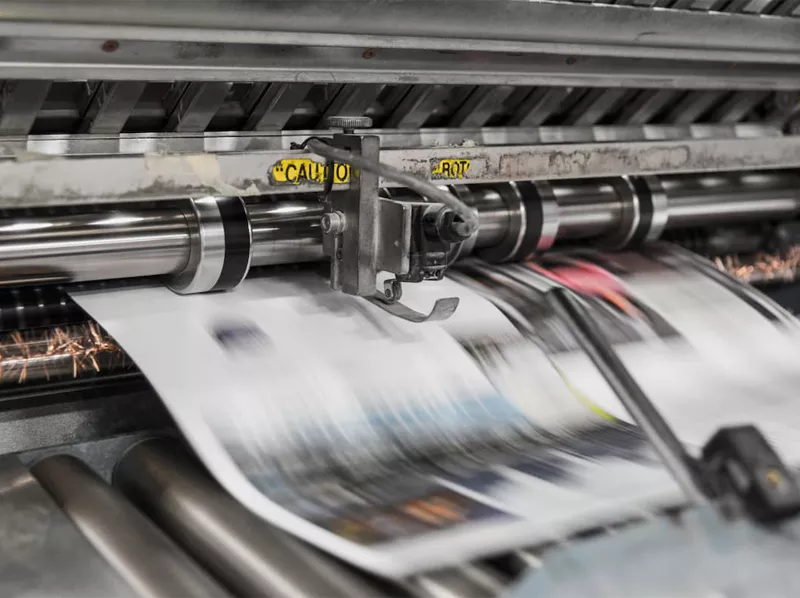
Dryer air is particularly important because it carries solvent released from the moving web. Temperature, recirculation arrangements, ventilation limits, and web speed affect the profile reaching downstream ductwork. Do not assume the solvent concentration is uniform across every drying zone. If measurements from separate branches are available, compare them with the overall header so design decisions reflect both local peaks and the mixed stream that reaches treatment equipment.
Printing schedules often involve changeovers that create a different emissions pattern from steady production. A solvent wash, ink-system flush, press stop, or startup can temporarily alter concentration or airflow. These modes deserve review even if their annual operating hours are small. They may affect flammability calculations, control permissives, catalyst suitability, and the method used to demonstrate emissions performance. The supplier should not infer the peak solely from an average.
Adhesive and lamination operations can introduce ingredients outside the ordinary printing-solvent list. Some substances may be carried as vapor, fine mist, or high-boiling material, depending on process conditions. Gather formulation information and suitable sampling evidence for these operations. A catalyst compatibility review needs more detail than a total-VOC result, especially when different adhesives or coatings may be introduced later under product development programs.

How to connect dryer capture with catalytic treatment
Ductwork should be evaluated as a real operating system rather than a drawing of straight pipes. Long runs, branch balancing, pressure losses, leakage, access doors, and condensate collection influence the exhaust arriving at the RCO. A branch added during a plant expansion may change the pressure balance and capture rate elsewhere. Confirm actual flow paths and fan operating behavior, and record whether the design assumes simultaneous or staggered line operation.
Heat recovery becomes attractive when the plant has continuous gas flow and a predictable thermal load, but operating conditions matter. A large printer may run several shifts with planned stops, while smaller presses may alternate short runs and cleaning periods. The energy estimate should identify which modes are included, what happens when only one line runs, and how startup energy is treated. Regenerative heat management does not eliminate the need to account for fan electricity and losses.
RCO introduces a specific dependency: the proposed catalyst must remain suitable for the actual solvent and additive mixture. Some compounds or particulate deposits may interfere with active surfaces. When the composition is uncertain, involve the catalyst supplier and arrange targeted testing or additional characterization. A generic promise that catalytic technology is appropriate for all printing emissions is not a substitute for a documented compatibility decision.
An emissions control objective must be defined against the applicable project or permit requirements. The plant should specify the compounds or measurements of interest, the approved operating states, and the test basis. A favorable result during a stable low-solvent print job does not necessarily demonstrate performance during another approved recipe. Confirm which conditions must be represented and ensure sampling ports and safe access are included in the final equipment scope.

| Printing source | Data to request | Why it changes RCO selection |
|---|---|---|
| Press or ink station | Solvent family, hood design, operating schedule | Identifies capture duty and catalyst compatibility questions |
| Dryer zones | Temperature, extraction flow, production speed | Defines gas conditions and variable thermal demand |
| Lamination or coating | Adhesives, additives, aerosol potential | Identifies pretreatment and chemistry risks |
| Cleaning and changeover | Duration, peak emissions, ventilation sequence | Tests transient loading and control assumptions |
| Common exhaust header | Flow balance, leakage, fan and duct pressure | Defines complete treatment load and operating boundary |
When combining several presses into one treatment header, determine whether the design assumes all machines can operate at their maximum emission rates simultaneously. Some plants have locked production schedules that limit concurrent operation; others require full flexibility. The assumption changes design flow, peak loading, control response, and commercial scope. Keep the schedule basis written and agree who can authorize a production change that exceeds it.
Upstream pretreatment may be needed if the stream contains particles, ink mist, sticky organic deposits, or condensable constituents. The correct arrangement is based on sampling, temperature, materials, and the selected catalyst. Specify how the condition of filters or separators will be monitored and how they can be serviced without unsafe exposure. Treatment capacity alone does not determine whether a candidate RCO can tolerate the physical contaminants.
Control integration should tie the oxidizer’s operating status to the production equipment without creating unsafe assumptions. Define what happens when a dryer fan fails, a press line stops, a flow measurement becomes unreliable, or the VOC loading moves outside the approved range. Use a documented cause-and-effect matrix and qualified hazard review. Avoid generic interlock diagrams that were not prepared for the installed capture system.
Examine RCO catalyst selection →
A six-step printing-line RCO feasibility checklist
Commissioning needs representative printing conditions, not only an equipment startup demonstration. A useful test plan records the press configuration, substrate, ink or adhesive system, operating speed, solvent profile, capture flow, and sampling method. Different process modes may require different test runs. The acceptance report should distinguish completed evidence from operating cases that remain untested rather than treating every possible recipe as automatically qualified.
Operators should know the conditions that trigger an engineering review. Changes to ink chemistry, coatings, cleaning agents, press speeds, dryer extraction, or duct configuration can affect both emissions and catalyst compatibility. Keep the original design envelope accessible to production engineers. A documented change-control trigger is more reliable than assuming that anything compatible with a printing machine is also compatible with its exhaust treatment system.
Maintenance planning must cover capture hoods, duct branches, fans, dampers, possible pretreatment, regenerative flow-management components, catalyst modules, instrumentation, and sampling access. Look for deposits and altered pressure trends before they become major operating problems. Set inspections based on the supplier’s procedures and actual exposure rather than copying a fixed schedule from another plant with different inks and production patterns.
Turn design assumptions into reliable operating routines
Training should connect the print production schedule with the exhaust-treatment system. Explain why a cleaning sequence can change gas loading, why bypass controls cannot be improvised, and what alarms or restrictions require escalation. When an operator understands the relationship between process changes and emissions treatment, a small production adjustment is less likely to create an unrecognized condition outside the design basis.
For expansion projects, review spare capacity and the consequences of adding another press. A nominally available fan margin may not cover a new high-solvent dryer or a different cleaning sequence. Assess the actual flow, compound mix, control system, duct balance, and acceptance basis before connecting additional branches. The engineering change should identify what must be revalidated and who approves the revised envelope.
Comparing competing proposals requires identical operating cases and scope boundaries. One supplier may include capture improvements, pretreatment, stack, controls, and emissions testing, while another prices only the oxidizer vessel. That is not a fair equipment comparison. Request a consistent list of included items and defined exclusions. Ask each supplier to explain its assumptions for peak solvent loading, airflow, energy consumption, catalyst service, and system availability.
Questions engineers and buyers often ask
Can one RCO handle several printing presses?
Why are dryer zones measured separately?
Are cleaning solvents relevant if they are used briefly?
Does regenerative heat recovery guarantee low fuel use?
What should a printing RCO RFQ contain?
A well-prepared RCO project package for printing should read like a process specification. It records the source map, production modes, solvent family, contaminant review, measured flow and temperature, capture arrangement, catalyst compatibility, control philosophy, and test requirements. This allows the supplier to explain what is feasible and where additional sampling is needed, rather than relying on broad industry labels.
The most useful next action is to collect representative data from the actual presses and dryers. Mark the process recipe for each sample and identify cleaning or upset modes separately. Then compare RCO with other suitable treatment options under the same operating and safety basis. A technology selection made this way is easier to commission, maintain, and reassess when the packaging product mix changes.
 ZH
 EN
 ES
 AR
 ID
 PT
 FR
 JA
 RU
 DE
 MS
 CS
 BG
 NL
 KO
 RO
 SK
 TH
 VI
 ZH_TW
 UK