
Case Specification Array
Tipping Paper Decoration & Rotogravure Printing
Dual 100,000 m³/h Hydrophobic Zeolite Rotors
Ethanol, Ethyl Acetate, n-Propyl Acetate Vapors
Structured Cordierite Monolithic Blocks
Shared 1.5 t/h Saturated Steam Boiler Setup
1. Project Overview & Operational Framework
Modern printing and consumer packaging facilities operate under strict regulatory conditions regarding volatile organic compound (VOC) emissions. High-speed tipping paper decoration, specialized rotogravure printing, and precise multi-layer lamination processes require specific solvent formulations to manage ink viscosity, facilitate rapid drying, and maintain sharp image resolution. These production steps generate complex solvent mixtures carried in both highly concentrated process exhaust and large volumes of low-concentration fugitive airstreams from the plant floor.
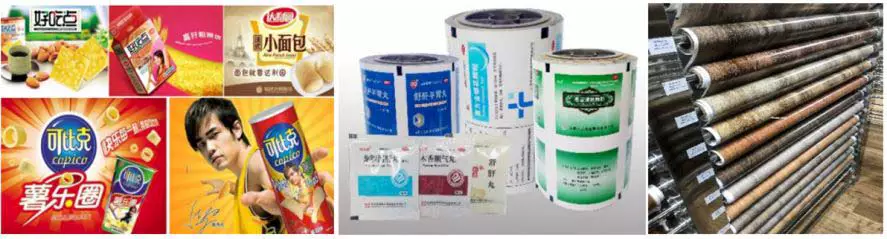
This technical case study examines the engineering design and performance data of a large-scale, integrated air pollution control installation commissioned on January 17, 2025. The system was designed for ValoPrint Specialty Packaging Group Group and its subsidiary production hub, SiennaPack Eco-Solutions Corp. (names desensitized for data privacy). The facility operates 8 high-speed tipping paper printing lines along with 3 wide-web rotogravure printing installations, generating a complex combination of organized and unorganized emissions.
Facing a strict regulatory compliance limit of ≤ 50 mg/m³ for Non-Methane Hydrocarbons (NMHC), the facility required an energy-efficient engineering solution capable of handling highly variable flow rates. To manage this demand without excessive fuel consumption, our team designed a custom system configuration. The finalized solution combines an automated Lower Explosive Limit (LEL) air reduction network with dual 100,000 m³/h hydrophobic zeolite concentration wheels, a parallel array of two 70,000 m³/h Rotary Valve RTO units, and a shared 1.5 metric ton-per-hour (t/h) saturated steam waste heat recovery boiler loop.
2. Exhaust Stream Characterization & Chemical Profiling
A precise understanding of the chemical and physical composition of the waste gas matrix is critical when engineering a high-efficiency RTO 시스템. Chromatographic characterization of the emissions at ValoPrint identified three primary volatile components requiring thermal destruction: 에탄올, Ethyl Acetate, and n-Propyl Acetate (n-Propyl Ester).
Chemical Kinetics & Thermal Properties
- Ethanol (C2시간5OH): Molecular Weight: 46.07 g/mol. Boiling Point: 78.37°C. Lower Explosive Limit (LEL): 3.3% v/v (33,000 ppmv). Net Calorific Energy: −1,300 kJ/mol. Ethanol is highly polar and miscible, requiring reliable temperature management in the filtration and concentration phases to prevent condensation in the collection lines.
- Ethyl Acetate (C4시간8영형2): Molecular Weight: 88.11 g/mol. Boiling Point: 77.1°C. Lower Explosive Limit (LEL): 2.0% v/v. Net Calorific Energy: −2,238 kJ/mol. This compound has low water solubility and a relatively high vapor pressure, making it well-suited for adsorption onto hydrophobic zeolites. It exhibits rapid thermal cracking kinetics at temperatures above 760°C.
- n-Propyl Acetate (C5시간10영형2): Molecular Weight: 102.13 g/mol. Boiling Point: 101.5°C. Lower Explosive Limit (LEL): 1.7% v/v. Net Calorific Energy: −2,880 kJ/mol. Due to its elevated boiling point, n-propyl acetate poses a higher condensation risk within uninsulated duct runs if gas velocities drop below minimum transport thresholds.
Source Profiling & Flow Segmentation
The manufacturing facility generates two distinct waste gas streams, which are captured independently to optimize processing efficiency:
| Parameter Description | Organized Process Emissions | Unorganized Fugitive Air |
|---|---|---|
| Source Points | Drying oven exhausts from 8 tipping paper printers and 3 rotogravure units | Ambient air from printing rooms, ink preparation kitchens, and waste storage areas |
| Volumetric Flow Rate | 9,200 m³/h baseline process volume | 192,000 m³/h combined maximum volume |
| VOC 농도 | 3,000 to 5,000 mg/m³ | 300 to 600 mg/m³ |
| LEL Percentage | 8.5% to 15.0% LEL (Requires monitoring) | < 2.5% LEL (Lean, low-energy stream) |
3. Integrated Process Flow & Mass Balance Optimization
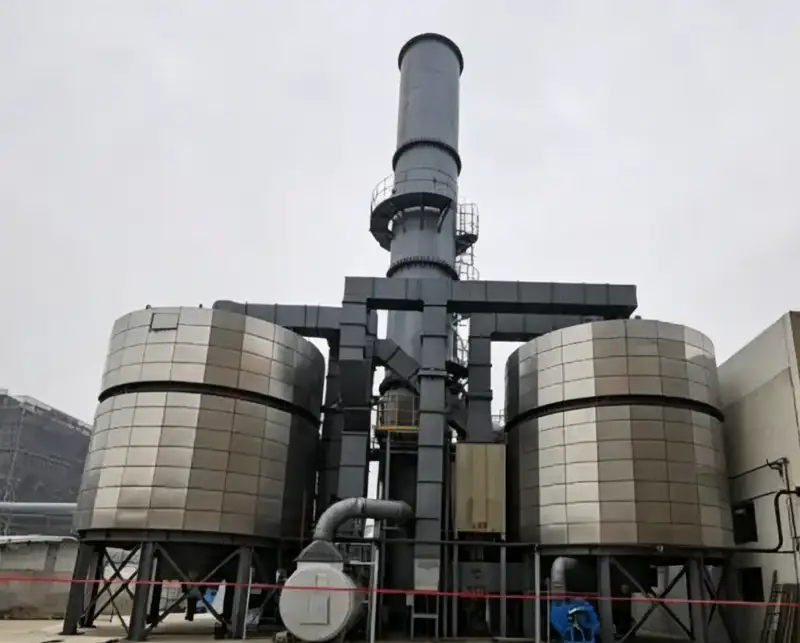
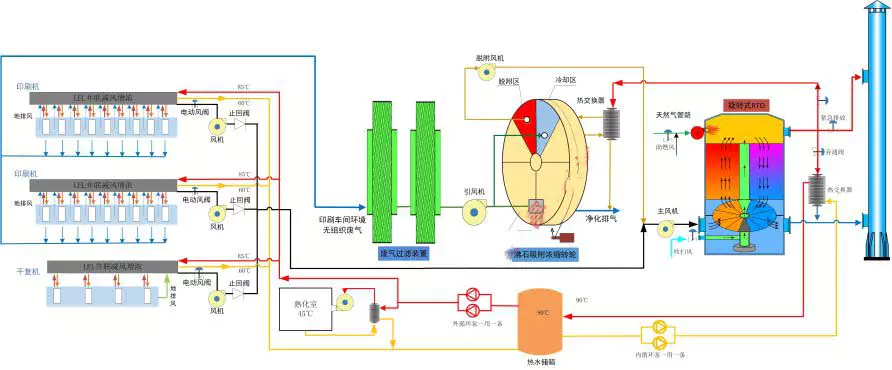
Directly treating a large 192,000 m³/h low-concentration stream in an RTO system would result in high capital costs and high natural gas consumption. To ensure an energy-efficient design, our application engineering team implemented a hybrid configuration that combines concentration and thermal destruction technologies. This approach uses Dual 100,000 m³/h Hydrophobic Zeolite Concentrator Rotors alongside a parallel array of two 70,000 m³/h RTO towers, maximizing thermal integration and efficiency.
Step-by-Step Air Flow Logistics Matrix
- LEL Air Reduction Transformation: High-concentration process exhaust from the printing ovens (9,200 m³/h at up to 5,000 mg/m³) undergoes an initial air volume reduction. This step consolidates the solvent mass and balances the internal energy profile prior to thermal treatment.
- Fugitive Collection & Pre-Filtering: The large 192,000 m³/h fugitive airstream from the press halls, ink storage rooms, and hazardous waste containment zones is drawn into a central manifold. It passes through automated multi-stage pre-filters (G4 + F7 + F9 ratings) to remove microscopic ink aerosols and particulates, protecting the downstream zeolite beds from fouling.
- Zeolite Matrix Concentration: The filtered fugitive air is divided evenly across two parallel 100,000 m³/h zeolite concentration rotors. The hydrophobic aluminosilicate matrix extracts the Ethanol, Ethyl Acetate, and n-Propyl Acetate vapors, allowing clean air to vent directly through the main exhaust stack.
- Continuous High-Temperature Desorption: A small desorption air loop, sized at roughly 10% of the primary adsorption volume (20,000 m³/h total), is heated to 190°C − 220°C using recovered heat from the clean RTO flue gas stack. This hot air stream passes through the counter-current desorption sector of the rotors, generating a concentrated, low-volume waste gas stream.
- Blended Thermal Oxidation Loop: The 20,000 m³/h concentrated desorption stream is blended directly with the process emissions. This creates a high-energy composite stream of approximately 30,000 to 40,000 m³/h, which is routed into the parallel dual 70,000 m³/h RTO array for complete thermal destruction.
- Secondary Energy Recovery: Clean flue gas from both 70,000 m³/h RTO units is collected and routed into a shared 1.5 t/h saturated steam waste heat recovery boiler, converting excess thermal energy into process steam for plant operations.
4. The Concentration System: Parallel 100,000 m³/h Zeolite Rotors
Traditional activated carbon beds can pose fire hazards when processing volatile printing solvents like ethyl acetate, due to localized exothermic reactions and heat accumulation within the carbon pores. To eliminate these safety risks, our RTO solutions for printing industry utilize inorganic aluminosilicate zeolite mineral matrices honeycomb-bonded onto a rigid structural rotor assembly.
The parallel configuration features two independent 100,000 m³/h rotor blocks. This design provides significant operational flexibility: during lower-capacity weekend shifts or partial maintenance shutdowns, one rotor can be isolated while the other continues to operate at peak efficiency. This approach avoids the energy penalties of running a single, large over-indexed concentration system under low-load conditions.
The zeolite wheels turn continuously via automated variable-frequency gearmotors at a slow rotational speed of 3 to 5 revolutions per hour. As the solvent-laden zeolite channels rotate into the high-temperature desorption sector, the hot air stream breaks the weak bonds holding the solvent molecules within the crystal framework. This releases the solvents into a concentrated, low-volume air stream. Immediately afterward, the regenerated sector passes into the cooling zone, where a small stream of ambient air lowers the structural temperature of the honeycomb matrix. This maintains optimal adsorption efficiency before the sector rotates back into the main process air stream.
5. Thermal Oxidation System: Dual 70,000 m³/h Rotary Valve RTO Array
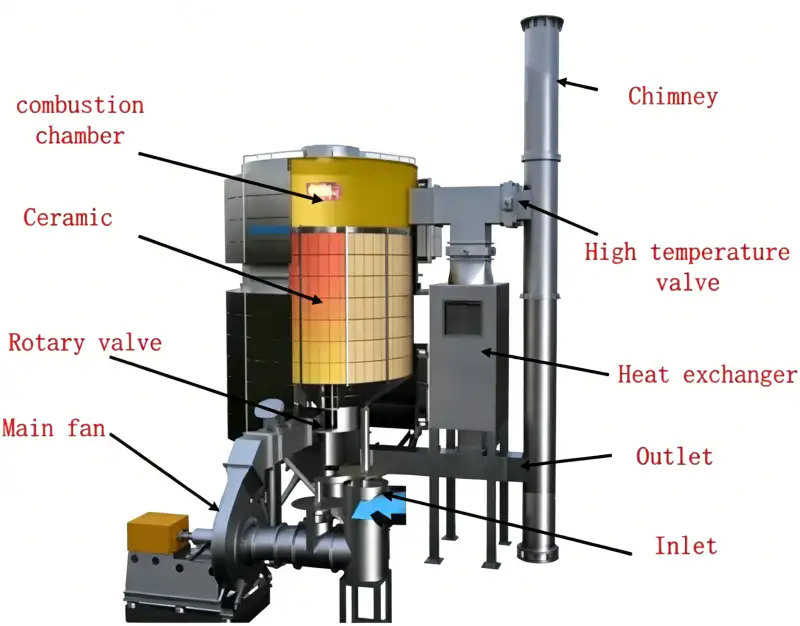
The core thermal oxidation stage consists of two parallel 70,000 m³/h industrial air pollution control systems. Traditional multi-bed systems rely on individual pneumatic poppet valves to alternate the directional flow of raw VOCs through split ceramic media beds. This switching process can cause brief volumetric pressure fluctuations and localized VOC bypass leakage during valve transition cycles. To eliminate these issues and consistently meet the strict ≤ 50 mg/m³ NMHC emission limit, ValoPrint installed a system utilizing a continuous rotary distribution valve.

Mechanical Design & Sealing Precision
The integrated rotary valve features a dynamically balanced distributor plate driven by an integrated servo motor. This design divides the underlying ceramic bed chamber into 12 separate trapezoidal sectors. At any moment, specific sectors handle the intake flow, others manage the clean exhaust release, and dedicated chambers undergo high-velocity purging with clean air. The valve surfaces are precision-machined with self-lubricating graphite composite mechanical seals, maintaining a strict internal leakage profile of < 0.1%. This design ensures smooth flow transitions, preventing upstream pressure variations that could disrupt web tracking or print registration on the flexographic production lines.
Ceramic Thermal Storage Configuration
Each 70,000 m³/h RTO tower contains premium Structured Cordierite Honeycomb Monoliths designed to optimize thermal storage and exchange performance:
- Cell Topology: 40 × 40 cells per square inch, balancing high surface contact area against low air resistance.
- Specific Surface Area: Over 850 m²/m³ of volumetric coverage, enabling fast micro-scale heat exchange.
- Thermal Recovery Index: Verified at ≥ 95%, allowing the incoming solvent gas to absorb captured heat and reach up to 780°C purely from thermal regeneration prior to entering the combustion chamber.
Combustion Kinematics & Autogenous Sustenance
The upper combustion chambers are maintained at an automated setpoint of 820°C to 850°C with a gas residence time of 1.25 seconds. This configuration provides the thermal energy required to crack the organic ester and alcohol molecules into carbon dioxide and water vapor:
기음2시간5OH (Ethanol) + 3 O2 → 2 CO2 + 3 H2O + Heat (ΔH = −1,300 kJ/mol)
기음4시간8영형2 (Ethyl Acetate) + 5 O2 → 4 CO2 + 4 H2O + Heat (ΔH = −2,238 kJ/mol)
Because the concentrated solvent mixture entering the multi-unit RTO array consistently averages between 3,000 mg/m³ and 5,000 mg/m³, the exothermic energy released during destruction exceeds the internal thermal losses of the insulated RTO shells. Consequently, both units achieve full autogenous operation (self-sustaining state). The auxiliary natural gas burners scale back to zero fuel input during normal production runs, maintaining operating temperatures entirely through the solvent destruction process.
6. Secondary Heat Integration: Saturated Steam Boiler Setup
When processing high-concentration solvent streams near 5,000 mg/m³, the combustion chambers can generate excess thermal energy. Left unmanaged, internal temperatures could exceed 950°C, risking damage to the refractory insulation blankets and structural steel elements. To utilize this excess energy, our engineers integrated a high-temperature automatic bypass network connected to a secondary industrial waste heat recovery system.
When thermocouple sensors detect combustion chamber temperatures exceeding 840°C, pneumatically actuated bypass valves open to divert a regulated volume of hot flue gas into a shared 1.5 t/h shell-and-tube steam waste heat boiler. This heat exchanger features high-alloy tubes capable of resisting thermal cycling stresses.
This recovery configuration generates saturated industrial steam at a stable utility line pressure of 0.6 to 0.8 MPa. This clean steam is piped directly into the plant’s centralized thermal header, providing the energy required to power the drying ovens of the flexographic printing presses and lamination lines. This approach significantly reduces the fuel demand on the facility’s primary natural gas boilers, lowering operational energy expenditures across the plant.
7. Computational Fluid Dynamics (CFD) Engineering & Flow Design
To optimize the performance of the system prior to manufacturing, our engineering team conducted detailed Computational Fluid Dynamics (CFD) simulations to model the gas behavior throughout the RTO chambers.
The CFD modeling analyzed flow velocities and thermal distribution profiles within the lower manifold chambers and upper combustion zones. Early design iterations showed potential localized flow maldistribution near the edges of the structured ceramic beds. If left uncorrected, these lower-velocity zones could cause uneven thermal performance and localized cooling, increasing the risk of incomplete VOC destruction.
To optimize flow distribution, our engineers integrated internal flow-straightening baffles within the lower plenum chambers. This modification achieved a highly uniform velocity profile across the entire face of the cordierite ceramic beds, reducing structural thermal stress and maximizing heat transfer efficiency.
8. Controls Logic & System Safety Architecture
Managing multi-unit industrial installations processing flammable solvents requires robust, integrated safety controls. The ValoPrint automation framework is built around a centralized PLC platform utilizing high-speed Ethernet communication protocols to link the RTO array with the dual zeolite concentrators and production line control centers.
Safety instrumentation is designed to comply with NFPA 86 and EN 1539 standards. High-speed flame ionization detectors (FIDs) are positioned at the main process extraction manifolds to monitor solvent concentrations in real time. If solvent levels exceed 25% LEL, the PLC automatically modulates an emergency dilution damper to introduce fresh air, maintaining safe operating limits.
The system also includes fast-acting pneumatic isolation blades capable of sealing the duct lines within less than 0.5 seconds. If an emergency shutdown is triggered, the raw process gas is safely diverted to an atmospheric dump stack, isolating the production area and protecting plant personnel and machinery.
9. Performance Verification & Compliance Testing Results
Following system commissioning and operational tuning, an independent environmental testing firm conducted rigorous compliance verification. Stack sampling was carried out under maximum plant production loads, with all printing and lamination machinery operating at high capacity.
| Operating Metric Evaluated | Design Target Specification | Empirical Testing Field Values | Compliance Resolution |
|---|---|---|---|
| Aggregate Flow Management | 201,200 m³/h capacity matrix | 203,410 m³/h active run max | Fully Verified |
| Zeolite Adsorption Efficiency | ≥ 93.0% single-pass capture | 94.8% single-pass efficiency | Exceeded Design Spec |
| Final Stack NMHC Concentration | ≤ 50 mg/m³ (Rigid Limit) | 11.5 mg/m³ (Blended stack average) | Compliant (99.72% blended DRE) |
| Fuel Fuel Consumption (Normal Load) | 0 m³/h (Autogenous run) | 0 m³/h (Burners completely idle) | Self-Sustaining Mode Verified |
| Shared Saturated Steam Output | 1.50 metric tons/hour baseline | 1.62 metric tons/hour steady run | +8.0% Over Design Target |
The continuous field testing data confirmed that the integrated rotary valve distributor and optimized ceramic matrix eliminated the brief emission fluctuations often seen during poppet valve switches. The measured stack output of 11.5 mg/m³ is well below the 50 mg/m³ regulatory requirement, ensuring long-term environmental compliance for the ValoPrint facility.
10. Economic Returns & Lifecycle ROI Analysis
Large-scale environmental engineering projects are often viewed primarily as regulatory cost centers. However, this hybrid system configuration demonstrates how strategic energy integration can deliver measurable economic returns.
By utilizing the concentration rotors, the multi-unit RTO array operates in a self-sustaining mode without requiring natural gas injection during normal manufacturing schedules. The auxiliary burners are only utilized for approximately 45 minutes during cold-start sequences to bring the combustion chambers up to operating temperature.
Additionally, the steam waste heat boiler yields an average of 1.62 metric tons of saturated steam per hour. This thermal output offsets the energy demand on the facility’s primary natural gas boilers, generating significant utility cost savings. When balancing the initial capital investment of the RTO array and dual zeolite rotors against the combined reduction in burner fuel and steam generation expenses, the total system capital payback period was achieved in exactly 2.5 years. Over an estimated 15-year operational lifecycle, the microfilm optimization configuration functions as an asset that lowers ongoing operational cost parameters.
11. Predictive Maintenance & Long-Term Reliability Blueprint
To maintain long-term destruction efficiency and high system uptime, our service team established a comprehensive preventive maintenance protocol integrated into the system’s PLC automation logic. Packaging solvent matrices can occasionally undergo partial polymerization, which may lead to the accumulation of organic residues within the cooler lower sections of the ceramic beds or the zeolite channels.
To manage this, the system incorporates an automated thermal bake-out cycle. Programmed to run during scheduled weekend plant maintenance, this cycle reverses the internal airflow patterns to elevate the temperature in the lower regions of the media bed to approximately 350°C. This thermal process safely volatilizes and oxidizes any heavy organic residues, restoring the ceramic matrix to its baseline pressure drop configuration.
The continuous rotary valve assembly requires only an annual inspection of its integrated graphite wear indicators. The floating seal design automatically compensates for mechanical wear over time, maintaining optimal sealing performance without requiring manual adjustments or recalibrations.
12. Industrial Expert FAQ & Troubleshooting Guide
Review these detailed technical explanations covering the design and operation of integrated VOC abatement architectures:
What are the primary operational benefits of a modular multi-unit RTO array compared to a single large RTO tower?
A modular multi-unit array (such as this dual 70,000 m³/h configuration) provides significant operational redundancy and flexibility. If the production plant operates at partial capacity during specific shifts, the control logic can isolate one RTO unit, allowing the remaining system to run at peak efficiency. This prevents the energy inefficiencies associated with running a single, large over-indexed system under low-load conditions. It also enables routine maintenance to be performed on individual units without requiring a complete plant shutdown.
How do zeolite concentrator rotors prevent the fire risks associated with traditional carbon beds when processing acetate solvents?
Acetate solvents, such as ethyl acetate, can undergo localized exothermic reactions and heat accumulation when captured in traditional activated carbon beds, creating potential fire hazards. Zeolite concentrator rotors utilize inert, inorganic aluminosilicate mineral matrices honeycomb-bonded to a structural rotor framework. Because the zeolite material is non-combustible and can withstand temperatures exceeding 800°C, it eliminates the risk of substrate fires, providing a safer option for high-concentration solvent processing.
What maintenance steps are required to ensure the long-term efficiency of the zeolite matrix?
The long-term performance of the zeolite wheel depends primarily on effective upstream particulate filtration. Maintaining the multi-stage filter bank (G4, F7, and F9 tiers) prevents sub-micron ink aerosols and polymer resins from coating the active pores of the zeolite. Regular thermal desorption cycles are also utilized to remove high-boiling-point organic compounds, ensuring the adsorption matrix maintains its design capacity over its operational lifespan.
How does the shared steam boiler handle thermal variations from dual independent RTO streams?
The shared 1.5 t/h steam boiler uses a dual-inlet plenum equipped with independent modulating bypass dampers regulated by the central PLC. If one RTO unit reduces its thermal output or undergoes a maintenance cycle, the corresponding damper modulates to maintain stable gas flow from the active unit. This control system regulates thermal distribution across the internal tube bundles, ensuring consistent steam generation despite fluctuations in upstream process conditions.
11. Conclusion
The integrated VOC abatement system at ValoPrint demonstrates how modern packaging facilities can achieve strict emission compliance while optimizing overall energy use. By utilizing a hybrid system configuration with parallel zeolite concentrators and a modular rotary valve RTO array, the plant successfully met its ≤ 50 mg/m³ NMHC emission target while establishing a self-sustaining energy loop that reduces utility expenses.
For industrial operations navigating tightening environmental regulations, proper system engineering—anchored by accurate waste gas profiling, advanced flow modeling, and integrated heat recovery—is essential. Adopting these advanced thermal oxidation technologies enables facilities to mitigate compliance risks, optimize energy resource allocation, and support long-term operational sustainability.
Request an Engineered RTO Evaluation
Are you managing compliance challenges, tightening emission limits, or escalating energy costs in your manufacturing facility? Connect with our application engineering team for a detailed system analysis.
Request Free Technical Proposal
Engineered mass balance reports typically delivered within 3-5 business days.
 KO
KO  EN
EN  ZH
ZH  ES
ES  AR
AR  ID
ID  PT
PT  FR
FR  JA
JA  RU
RU  DE
DE  MS
MS  CS
CS  BG
BG  NL
NL  RO
RO  SK
SK  TH
TH  VI
VI  ZH_TW
ZH_TW  UK
UK