
What are the Common Issues with RTO Gas Treatment Systems?
RTO, or Regenerative Thermal Oxidizers, are used to treat industrial exhaust streams that contain harmful pollutants. RTOs are widely used in many industries, including the chemical, petrochemical, and pharmaceutical industries. While RTOs are highly efficient in eliminating harmful pollutants, they often face several common issues. In this article, we will explore the most common issues with RTO gas treatment systems and how to address them.
1. Recuperación de calor insuficiente
One of the most common issues with RTOs is insufficient heat recovery. RTOs rely on heat recovery to achieve high energy efficiency and reduce operating costs. However, if the heat recovery system is not designed correctly, the RTO might not recover enough heat, which could result in increased operating costs and decreased efficiency.
To address this issue, it is essential to ensure that the heat recovery system is correctly designed and optimized for the specific application. A heat recovery specialist should be consulted to identify the most efficient heat recovery system for the specific RTO.
2. Coking
Coking is another common issue that can occur in RTOs. Coking is the accumulation of solid carbon deposits on the heat recovery media, which reduces the heat transfer efficiency of the RTO. Coking can also lead to fouling and plugging of the RTO’s media beds, which can result in increased pressure drop and decreased efficiency.
To address coking, RTO operators should ensure that the RTO operates within the designated temperature and oxygen ranges and avoid abrupt changes in temperature or airflow. Regular maintenance, including cleaning and inspection of the heat recovery media, is also essential to prevent coking and maintain RTO efficiency.
3. Air Leaks
Air leaks are a common issue that can occur in the RTO’s media beds and ductwork. Air leaks can occur due to poor installation or wear and tear of the seals and gaskets. Air leaks can result in reduced efficiency, increased operating costs, and increased emissions.
To address air leaks, RTO operators should perform regular inspections of the media beds and ductwork to identify and repair any leaks. High-temperature silicone seals and gaskets should be used to ensure a proper seal between the media beds and the ductwork.
4. Caída de presión
Pressure drop is the reduction in pressure across the RTO’s media beds due to fouling or plugging. Pressure drop can result in reduced efficiency and increased operating costs. If the pressure drop becomes too high, it can also lead to the shutdown of the RTO.
To address pressure drop, regular maintenance, including cleaning and inspection of the media beds, is essential. RTO operators should also ensure that the inlet gas temperature and flow rate are within the designated range to prevent fouling and plugging of the media beds.
5. Corrosión
Corrosion is another common issue that can occur in RTOs, especially in the presence of acidic or corrosive gases. Corrosion can lead to leaks and reduced efficiency, which can result in increased operating costs and emissions.
To address corrosion, RTO operators should ensure that the RTO is made of corrosion-resistant materials, such as stainless steel or Inconel. Regular inspections and maintenance are also essential to identify and repair any corrosion damage.
6. Flameless Operation
Flameless operation is a new technology that is gaining popularity in RTOs. Flameless operation reduces NOx emissions and increases energy efficiency by eliminating the need for a burner flame. However, flameless operation can also result in increased pressure drop and decreased efficiency if not designed and operated correctly.
To address flameless operation issues, it is essential to work with a specialist to design and optimize the flameless operation system for the specific application. Regular maintenance and inspections are also essential to identify and repair any issues.
7. Noise
Noise is another issue that can occur in RTOs, especially during the startup and shutdown phases. Noise can result in complaints from nearby residents and worker safety concerns.
To address noise issues, RTO operators should ensure that the RTO is properly designed and installed with noise reduction measures, such as silencers and enclosures. Regular maintenance and inspections are also essential to identify and repair any noise issues.
8. Electrical Issues
Electrical issues can occur in RTOs due to the high electrical loads required to operate the RTO’s fans and control systems. Electrical issues can result in increased operating costs and reduced efficiency.
To address electrical issues, RTO operators should ensure that the electrical system is correctly designed and installed with appropriate safety measures, such as circuit breakers and fuses. Regular maintenance and inspections are also essential to identify and repair any electrical issues.
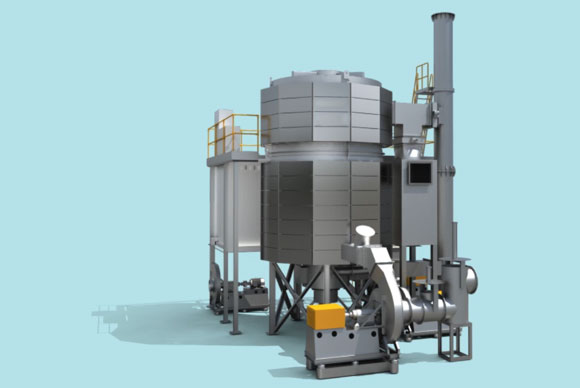 Somos una empresa de alta tecnología especializada en el tratamiento integral de compuestos orgánicos volátiles (COV), gases residuales y reducción de carbono, y tecnología de ahorro energético para la fabricación de equipos de alta gama. Nuestro equipo técnico principal proviene del Instituto de Investigación de Motores de Cohetes Líquidos Aeroespaciales (Sexto Instituto Aeroespacial). Cuenta con más de 60 técnicos de I+D, incluidos 3 ingenieros superiores a nivel de investigador y 16 ingenieros superiores. Contamos con cuatro tecnologías principales: energía térmica, combustión, sellado y control automático. Además, tenemos la capacidad de simular campos de temperatura y modelado y cálculo de simulación de campos de flujo de aire. También tenemos la capacidad de probar el rendimiento de materiales cerámicos de almacenamiento térmico, la selección de materiales de adsorción de tamices moleculares y la prueba experimental de las características de incineración y oxidación a alta temperatura de materia orgánica de COV.
La empresa ha construido un centro de investigación y desarrollo de tecnología RTO y un centro tecnológico de ingeniería de reducción de carbono en gases de escape en la antigua ciudad de Xi'an, así como una base de producción de 30.000 m² en Yangling. El volumen de producción y ventas de equipos RTO es muy superior al del resto del mundo.
– Banco de pruebas de tecnología de control de combustión de alta eficiencia: Este banco de pruebas nos permite controlar con precisión el proceso de combustión y optimizar la eficiencia energética.
– Banco de pruebas de eficiencia de adsorción de tamiz molecular: Con este banco de pruebas, podemos evaluar la eficiencia de adsorción de diferentes materiales de tamiz molecular, asegurando la eliminación efectiva de COV.
– Banco de pruebas de tecnología de almacenamiento térmico cerámico de alta eficiencia: Este banco de pruebas nos permite evaluar el rendimiento de los materiales de almacenamiento térmico cerámico, que juegan un papel crucial en el ahorro de energía y la reducción de carbono.
– Banco de pruebas de recuperación de calor residual a temperaturas ultra altas: utilizando este banco de pruebas, podemos explorar métodos innovadores para recuperar calor residual a temperaturas extremadamente altas, contribuyendo a la conservación de energía.
– Banco de pruebas de tecnología de sellado de flujo de gas: Este banco de pruebas nos permite desarrollar y probar tecnologías avanzadas de sellado para sistemas de flujo de gas, asegurando fugas mínimas y un rendimiento óptimo del sistema.
[Insertar imagen: https://regenerative-thermal-oxidizers.com/wp-content/uploads/2024/11/0-RD-Platform-3.webp]
Contamos con numerosas patentes y reconocimientos. Hemos solicitado un total de 68 patentes, incluidas 21 patentes de invención, que abarcan componentes clave de nuestra tecnología. Ya hemos obtenido 4 patentes de invención, 41 patentes de modelo de utilidad, 6 patentes de diseño y 7 derechos de autor de software.
[Insertar imagen: https://regenerative-thermal-oxidizers.com/wp-content/uploads/2024/10/0-rto-Certification.webp]
Nuestras capacidades de producción incluyen:
– Línea de producción automatizada de granallado y pintura de placas y perfiles de acero
– Línea de producción de granallado manual
– Equipos de eliminación de polvo y protección ambiental
– Cabina de pintura automática
– Cuarto de secado
Estas capacidades de producción nos permiten ofrecer equipos eficientes y de alta calidad para diversas aplicaciones.
[Insertar imagen: https://regenerative-thermal-oxidizers.com/wp-content/uploads/2024/11/0-rto-Production-Base-3.webp]
Invitamos a nuestros clientes a colaborar con nosotros y beneficiarse de las siguientes ventajas:
1. Tecnología de vanguardia y experiencia en el tratamiento de gases residuales COV.
2. Soluciones integrales para la reducción de carbono y el ahorro de energía en la fabricación de equipos.
3. Amplias capacidades de I+D respaldadas por un equipo técnico altamente calificado.
4. Plataformas de pruebas y simulación de última generación para la evaluación del desempeño.
5. Una sólida cartera de patentes y reconocimientos en el campo de la protección del medio ambiente.
6. Instalaciones de producción avanzadas que garantizan equipos de alta calidad y entrega oportuna.
[Insertar imagen: https://regenerative-thermal-oxidizers.com/wp-content/uploads/2023/12/0_rto-19.webp]
Autor: Miya.
 ES
ES  EN
EN  ZH
ZH  AR
AR  ID
ID  PT
PT  FR
FR  JA
JA  RU
RU  DE
DE  MS
MS  CS
CS  BG
BG  NL
NL  KO
KO  RO
RO  SK
SK  TH
TH  VI
VI  ZH_TW
ZH_TW  UK
UK