
Oxidante térmico (TO)
What Is a Thermal Oxidizer (TO)?
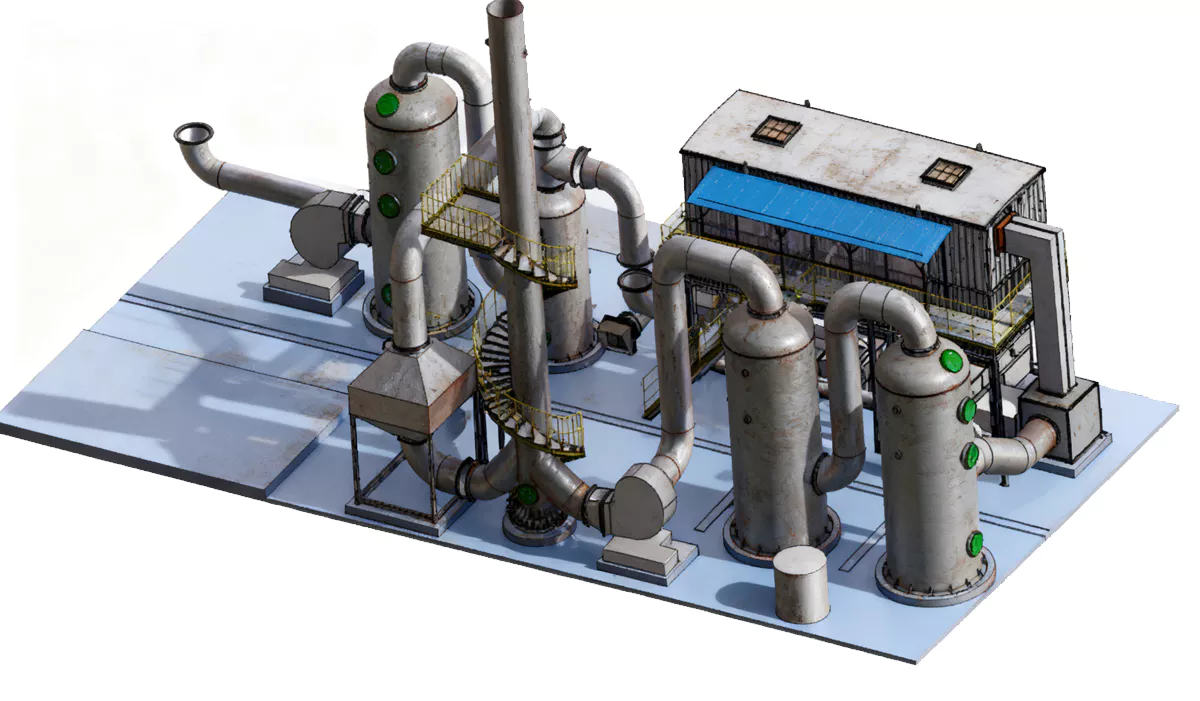
By Lars Jorgensen – Senior RTO Specialist at Ever-Power (Yes, I once witnessed burner flames dancing to ABBA music in a Swedish paint factory.)
The thermal oxidizer—industry insiders jokingly call it a “documented flamebox”—is more than just an absurdly hot metal box; it’s the final test before industrial waste gases are released into the atmosphere. We feed it gas streams containing volatile organic compounds (VOCs), harmful air pollutants (HAPs), and the occasional residue from failed solvent experiments, then raise the temperature to somewhere between a “pizza oven” and the “surface of Venus” (approximately 1400–1800°F or 760–980°C), where oxygen and turbulent air work together to break down these “troublemakers” into carbon dioxide, water vapor, and a faint sense of environmental redemption.
The classic TO furnace maintains a simple beauty: no fancy ceramic hearths, no complicated valve operations, only powerful combustion as reliable as a diesel tractor and efficient combustion as efficient as a roaring campfire. It shines in chemical plants (where exhaust fumes could strip the paint off a robot), pharmaceutical labs (where purity is more important than your morning espresso), and printing plants filled with the mingled smells of regret and acetone. While it may not recover heat like an RTO furnace, its combustion efficiency still exceeds 99%, and it requires no maintenance.
So, if your chimney emissions are attracting attention (or the EPA’s attention), a TO furnace might be the practical and efficient flame protector you never realized you needed in your permit application.
How a Thermal Oxidizer Actually Works?
(No Magic Involved—Just Very Hot Physics)
Thermal Oxidizer doesn’t “filter” your dirty air like some overpriced kitchen sponge—it doesn’t politely ask pollutants to leave. Oh no. It invites them into a chamber so hot that even carbon atoms start sweating, then says, “Alright, VOCs—you’ve got two seconds to turn into CO₂ and H₂O before I call thermodynamics on you.”
Exhaust Gas Introduction and Preheating
Before directly introducing VOCs (volatile organic compounds)-containing exhaust gas from your plant into the combustion chamber of the thermal oxidizer, it will first pass through an air preheater, if conditions permit. This clever design is not simply energy recovery, but rather a clever use of the residual heat in the clean exhaust gas to preheat the incoming polluted gas stream, like giving it a warm-up boost. This reduces fuel consumption in subsequent heating processes, a kind of permissible strategic energy “theft”.
High-temperature combustion conversion
After preheating, the exhaust gas (or without preheating if you choose the budget-friendly YOLO version) then encounters a burner with temperatures reaching 1400°F or higher. Here, the three key elements of “turbulence, temperature, and time” work together like the Avengers of the environmental world to ensure that all VOCs are completely oxidized and decomposed into harmless carbon dioxide and water vapor. This is known as “thermodynamic justice.” In this process, some residual heat may be captured and reused, or simply released through the chimney.
Clean emissions and additional protection
In the final step, the treated gas returns to the atmosphere as a clean product, free from previous pollution problems. For exhaust gases containing special components such as chlorine or fluorine, engineers have solutions, such as using special alloy linings for protection, essentially giving the equipment a chemical protective suit to ensure it can withstand even harsher working environments.
Thermal Oxidizer Working Mechanism
- VOC Source: Industrial exhaust containing solvents or organic vapors enters the system.
- Fan: Pushes or pulls the air through the oxidizer.
- Heat Recovery (Pre-heating): The dirty air passes through ceramic media or a heat exchanger. It absorbs heat from previous cycles, raising its temperature to save fuel.
- Cámara de combustión: The core zone. A burner maintains high temperature (>760°C). The VOCs react with oxygen and break down into harmless CO₂ and H₂O.
- Clean Air Exhaust: The purified, hot air releases its heat back to the recovery bed before exiting through the stack.
Chemical Principle of Thermal Oxidation
1. General Chemical Equation
2. Example: Oxidation of Toluene (Solvent)
3. Example: Oxidation of Ethanol (Alcohol)
Comparison: TO vs. RTO vs. CO vs. RCO
Swipe left on the table to view more columns on mobile.
| Característica | TO (Thermal Oxidizer) | RTO (Regenerative TO) | CO (Catalytic Oxidizer) | RCO (Regenerative CO) |
|---|---|---|---|---|
| Full Name | Oxidante térmico de fuego directo | Oxidador térmico regenerativo | Oxidante catalítico | Oxidador catalítico regenerativo |
| Operating Temp | Alto (760°C - 850°C) | Alto (800°C - 900°C) | Low (250°C - 400°C) | Low (300°C - 450°C) |
| Recuperación de calor | Low / None (0% - 70%) | Very High (Up to 95-97%) | Medio (50% - 70%) | Very High (Up to 95-97%) |
| Concentración de COV | Alto | Low to Medium | Low to Medium | Low to Medium |
| Capital Cost (CapEx) | Más bajo | Medium / High | Medio | Más alto |
| Operating Cost (OpEx) | Más alto (High fuel consumption) | Low (Autothermal possible) | Medio | Más bajo |
| Sensitivity | Robust (Handles most compounds) | Robust (Beware of particulate blockages) | Alto (Sensitive to catalyst poisons*) | Alto (Sensitive to catalyst poisons*) |
* Catalyst Poisons include: Silicones, Sulfur, Heavy Metals, Chlorine, Phosphorus.
Selection Guide: Which one should you buy?
If the waste gas is very rich (approaching LEL limits) and the airflow volume is small.
✅ Recommendation: TO (Thermal Oxidizer)
Why? It handles high heat release safely. You can install a waste heat boiler to generate steam for the factory.
Large volume of air with low to medium concentration of VOCs (e.g., painting, printing, coating).
✅ Recommendation: RTO (Regenerative Thermal Oxidizer)
Why? The 95% heat recovery makes it economically viable. It can run "autothermally" (using no fuel) at concentrations > 3% LEL.
The exhaust gas contains no catalyst poisons (no silicone, no sulfur) and you want the lowest possible fuel usage.
✅ Recommendation: RCO (Regenerative Catalytic Oxidizer)
Why? It combines the heat recovery of RTO with the lower activation temperature of a catalyst, saving maximum energy.
Your process involves silicones, siloxanes, sulfur, or heavy metals.
❌ Avoid: CO and RCO (Catalysts will be deactivated quickly).
✅ Recommendation: RTO or TO (Thermal oxidation relies on heat, not chemical catalysts).
 ES
ES  EN
EN  ZH
ZH  AR
AR  ID
ID  PT
PT  FR
FR  JA
JA  RU
RU  DE
DE  MS
MS  CS
CS  BG
BG  NL
NL  KO
KO  RO
RO  SK
SK  TH
TH  VI
VI  ZH_TW
ZH_TW  UK
UK