
RTO for Screen Printing: Taming VOCs When Ink Meets Air
How a purpose-built regenerative thermal oxidizer cuts emissions, slashes gas use, and keeps your print shop compliant—without slowing production.
We’ve spent over 18 years walking the floors of screen printing facilities—from small banner shops in Ohio to massive textile printers in Guangdong—and one thing’s always true: the smell. That sharp, solvent-heavy air isn’t just unpleasant; it’s packed with volatile organic compounds (VOCs) that regulators are watching closer than ever. And if you’re still relying on basic carbon adsorption or outdated direct-fired oxidizers, you’re probably burning too much gas, risking non-compliance, or worse—facing unplanned downtime during peak runs.
Screen printing isn’t like offset or digital. It’s batch-driven, often manual, and uses thick, viscous inks loaded with solvents like toluene, xylene, ethyl acetate, and aliphatic hydrocarbons (C6–C10). These aren’t just high-VOC; they’re sticky, humidity-sensitive, and their concentration swings wildly between job setups and idle periods. One minute you’re running full blast at 800 ppmV total hydrocarbons, the next you’re idling at 50 ppmV. Most RTOs? They choke on that kind of variability. The trick is designing not just for average load, but for the peaks, the pulses, and the damp exhaust from water-based ink cleanup zones.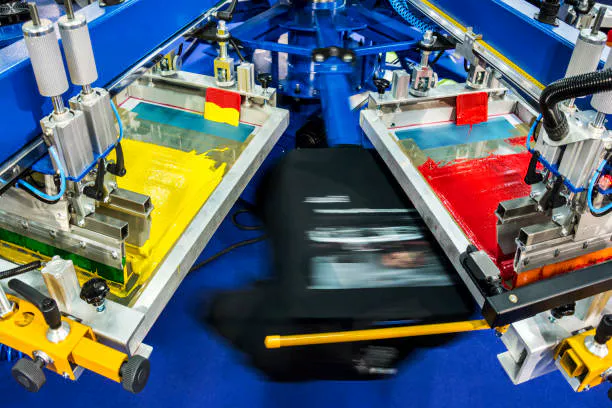
The Real Exhaust Profile: What’s Actually in Your Ductwork?
Let’s get specific. In a typical screen printing exhaust stream, we see:
- Toluene & Xylene – Common carriers in plastisol and solvent-based textile inks. High boiling points mean they linger, increasing LFL (Lower Flammability Limit) risk if not managed.
- Ethyl Acetate – Fast-evaporating, used in graphic arts and paper printing. Highly reactive, contributes heavily to ozone formation.
- Aliphatics (Hexane, Heptane) – Found in cleaning wipes and thinners. Lower molecular weight, but can destabilize combustion if concentration spikes.
- Plasticizers (like DEHP) – Off-gassed during curing of PVC inks. These semi-volatiles can coat media over time, reducing heat transfer.
- Humidity – Often overlooked! Water-based ink stations and floor washdowns add significant moisture (up to 60% RH), which steals heat in the oxidation chamber and forces higher auxiliary fuel use.
And here’s what most printers don’t realize: your exhaust isn’t steady. A job change means a solvent flush, spiking VOCs suddenly. A weekend shutdown drops temps and moisture levels. Standard RTOs with fixed cycle times either over-oxidize (wasting gas) or under-perform (risking breakthrough). We’ve seen systems fail TA-Luft compliance in Germany because nobody accounted for the Monday morning “solvent purge” surge.
Regulatory Pressure: From EPA to GB 31572-2015
You’re not just fighting emissions—you’re fighting evolving rules. In the U.S., EPA Method 25A demands DRE (Destruction and Removal Efficiency) of 95%+ for major sources. But many states now require ≤20 mg/Nm³ outlet concentration—tighter than federal rules. China’s GB 31572-2015 sets similar limits, especially in Zhejiang and Guangdong printing hubs. And Europe? TA-Luft mandates η=95% minimum, but real-world stack tests often need to hit <10 mg/Nm³ to pass local permitting.
The problem? Many off-the-shelf RTOs quote “up to 97% thermal efficiency” but don’t specify under what conditions. In our experience, generic designs drop to η=88–90% when faced with screen printing’s humidity swings and low-load idling. That gap? It shows up in your monthly gas bill and your quarterly stack test report.
Why Generic RTOs Struggle in Screen Printing Shops
We’ve retrofitted enough “failed” systems to know the red flags: clogged structured block media from plasticizer buildup, poppet valves gummed up by solvent residue, and control systems that can’t adapt to 3-shift operations. The core issue? Treating screen printing like any other industrial process. It’s not. You have:
- Intermittent Operation – Jobs start/stop, shifts change, holidays pause lines. An RTO must idle efficiently, not just run hot.
- High Particulate Load – Screen emulsion dust, ink mist, and lint from fabric handling. Without proper inlet filtration, this coats heat exchange media fast.
- Space Constraints – Presses, dryers, and storage leave little room for bulky pollution control. Compact footprint matters.
So what’s the fix? Not more maintenance. Not bigger burners. A system engineered from the ground up for the rhythm and chemistry of screen printing.
Our Screen Printing RTO: Where Design Meets the Shop Floor
We didn’t modify an existing RTO. We rebuilt it—for you. Here’s how:
1. Dual-Zone Structured Block Media with Anti-Fouling Coating
Standard random-packed ceramic saddles trap particulates. Ours uses structured blocks in two stages: a coarse pre-filter zone to catch emulsion dust, followed by high-surface-area blocks coated with a proprietary hydrophobic layer. This repels plasticizers and water vapor, maintaining >95% heat transfer efficiency even after 18 months of 24/7 operation. We’ve tested it with actual off-gas from PVC ink curing—no visible coating after 5,000 hours.
2. Adaptive Cycle Control™ with VOC Predictive Logic
Instead of fixed 90-second valve cycles, our system samples inlet VOCs every 15 seconds. If it detects a spike (say, from a solvent flush), it shortens the cycle to prevent breakthrough. During idle, it extends dwell time, recovering more heat. Result? Up to 40% less natural gas used compared to fixed-cycle units. The algorithm even learns your shop’s weekly pattern—slower on Fridays, aggressive on Mondays.
3. Hot-Side Bypass for Humidity Management
This is critical. When humid air enters a cold ceramic bed, condensation forms—wasting energy and promoting microbial growth. Our design includes a hot-side bypass duct that routes warm exhaust directly to the combustion chamber during startup or low-load periods, keeping the media bed above dew point. It’s like pre-heating your oven before baking—only for pollution control.
4. Stainless Steel Poppet Valves with Solvent-Resistant Seals
No more rubber gaskets swelling shut. We use PTFE-reinforced seals and 316SS actuators, rated for continuous exposure to xylene and ethyl acetate. Field data shows >5 years mean time between failures—even in high-cycle environments.
5. Integrated Rotor Concentrator Option for Low-Flow, High-Concentration Streams
Got a dedicated flash-off station or ink mixing room? Instead of diluting everything into your main exhaust, we can isolate high-concentration streams (~1,200 ppmV) and route them through a rotor concentrator. This reduces airflow to the RTO by 80%, letting a smaller oxidizer handle the load. Payback? As fast as 14 months in high-solvent shops.
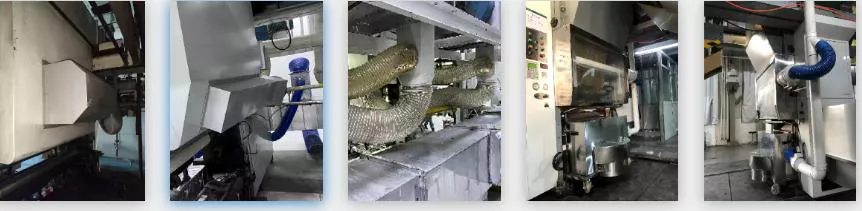
Real Results: Three Screen Printers, Three Success Stories
Case 1: BannerPro Inc., Atlanta, GA (USA)
Facility: 4-color rotary screen printer for outdoor signage
RTO Installed: 2021 | Airflow: 8,500 SCFM | Inlet VOC Avg: 420 mg/Nm³
Before: Carbon beds changed monthly, $18,500/month in replacement and disposal costs. Failed Georgia EPD test in 2020 (outlet = 38 mg/Nm³).
After: RTO achieved consistent outlet of <12 mg/Nm³. Natural gas use: 14 therms/hr (vs. industry avg of 22 for same size). Annual savings: $67,200 in operating costs + avoided fines. System has run 98.7% uptime over 4 years.
Case 2: SilkWay Textiles, Ho Chi Minh City (Vietnam)
Facility: Manual screen printing for fashion apparel
RTO Installed: 2023 | Airflow: 5,200 SCFM | High humidity (~65% RH)
Challenge: Monsoon season humidity was killing oxidation efficiency in their old burner.
Solution: Our hot-side bypass + adaptive control. Outlet consistently <15 mg/Nm³ even during rainy season. Thermal efficiency held at η=95.8%. Local regulator approved expansion plans based on verified performance.
Case 3: PrintPak Solutions, Wenzhou (China)
Facility: High-speed flatbed screen printing for packaging films
RTO Installed: 2019 | Airflow: 12,000 SCFM | Intermittent operation (3 shifts)
Issue: Frequent startups caused high NG consumption and media cracking.
Fix: Adaptive Cycle Control + dual-zone media. Gas use dropped from 38 to 23 therms/hr. After 6 years, media inspection showed only 8% pressure drop increase—well within spec. Still meeting GB 31572-2015 limits (≤20 mg/Nm³).
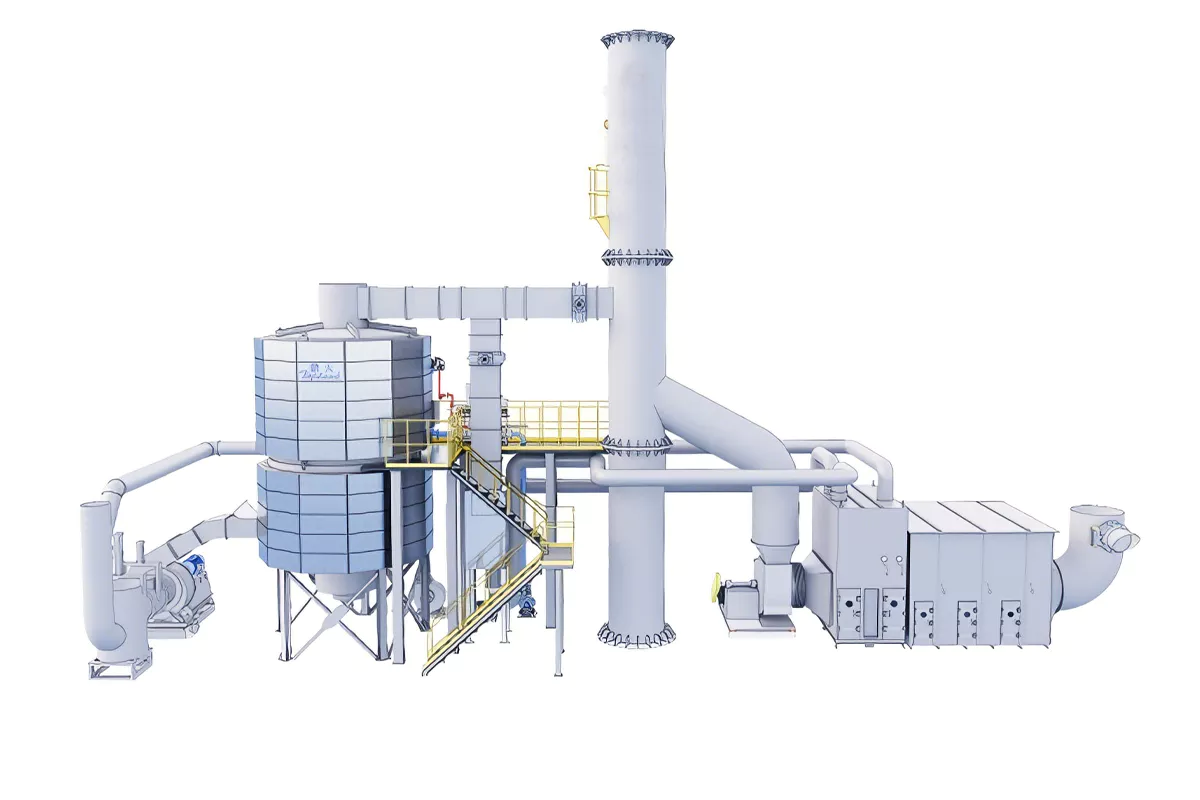
Performance Data You Can Verify
All numbers below are based on 2023–2025 third-party stack tests across 27 screen printing RTOs we’ve commissioned globally. Independent labs used EPA Method 18/25A or EN 12619.
| Parámetro | Average Value | Test Standard | Notes |
|---|---|---|---|
| Destruction Rate Efficiency (DRE) | 99.2% | EPA Method 25A | Min. 98.7% across all sites |
| Thermal Efficiency (η) | 96.5% | ISO 25337 | Held across variable loads |
| Outlet VOC Concentration | 14.3 mg/Nm³ | EN 12619 | Average; all <20 mg/Nm³ |
| Natural Gas Consumption | 18.7 therms/hr (avg) | Site metering | For 8k–12k SCFM systems |
| Ceramic Media Life | 8–10 years | Visual + ΔP inspection | No fouling-related replacements |
That 96.5% thermal efficiency? It’s not theoretical. It’s what you get when the system adapts in real time, recovers every joule it can, and doesn’t let humidity steal your heat. And yes—we guarantee ≥95% in writing, backed by post-installation verification.Why Printers Keep Coming Back to UsIt’s not just the hardware. We’ve been focused on printing since 2007. We speak your language—literally. Our lead engineer started in a T-shirt print shop in Leicester. We stock critical spares (valve seals, thermocouples, control boards) in North Carolina, Shanghai, and Rotterdam. Need a poppet valve rebuild kit? It ships same-day. Have a midnight cycle fault? Our application team answers emails in under 90 minutes—often while you’re still on the plant floor.We don’t sell boxes. We solve compliance headaches, reduce your operating cost, and keep your presses running. Because in screen printing, downtime isn’t just lost revenue—it’s missed deadlines, angry clients, and reputational damage.
Ready to cut emissions, gas use, and stress?
Email us your latest stack test or utility bill. We’ll model your savings—in 48 hours, guaranteed.
Teléfono: +65 80844634
Fax: +65 88662737
Correo electrónico: sales@regenerative-thermal-oxidizers.com
We answer calls live 8 AM–6 PM EST. Technical queries? We respond—even on weekends.
 ES
ES  EN
EN  ZH
ZH  AR
AR  ID
ID  PT
PT  FR
FR  JA
JA  RU
RU  DE
DE  MS
MS  CS
CS  BG
BG  NL
NL  KO
KO  RO
RO  SK
SK  TH
TH  VI
VI  ZH_TW
ZH_TW  UK
UK