
Descripción
Multi-Pollutant Synergistic Control | SDS Dry Desulfurization System
BLSDS1W/230W Series by Ever-power
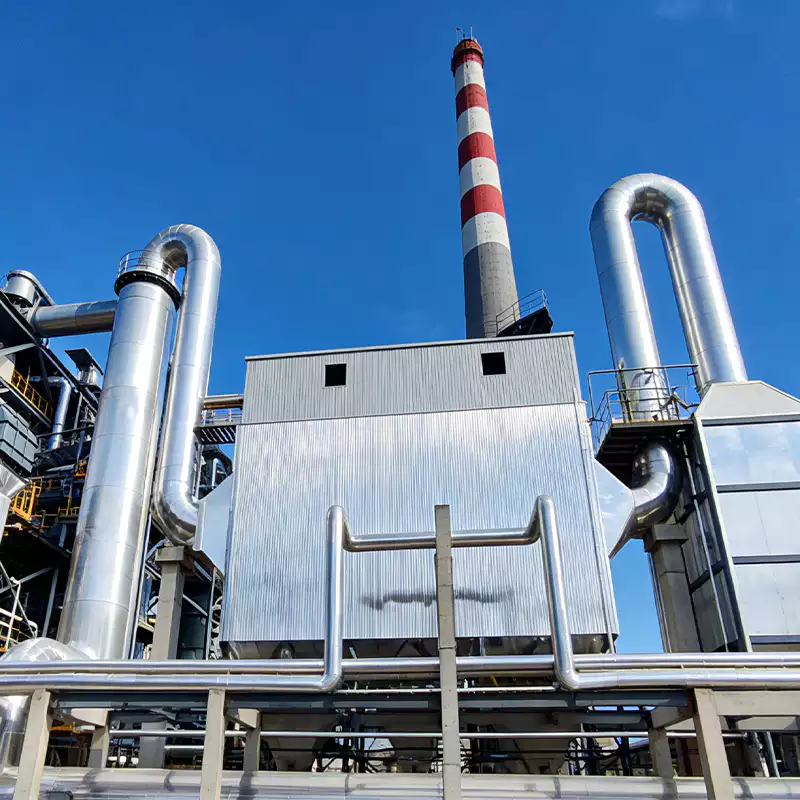
Eliminate SO2, SO3, HCl, and HF simultaneously with zero wastewater, zero visible plumes, and extreme operational simplicity. The Ever-power BLSDS1W/230W Series Sodium Bicarbonate Dry Sorbent Injection (SDS) system delivers >95% desulfurization efficiency. Achieve outlet emissions below 35 mg/Nm3 while slashing maintenance costs and eliminating the massive footprint required by traditional wet scrubbers.
⚙️ Executive Engineering Brief
🌊 Volumetric & Thermal Capacity
- 📉 Gas Volume: 10,000 to 2,300,000 m3/h
- 🌡️ Max Gas Temp: 260 °C
- 🌫️ Inlet Dust Density: 1 to 1500 mg/Nm3
- ⚖️ Casing Pressure: -6000 to +6000 Pa
🎯 Purification Performance
- ✅ Desulfurization Efficiency: > 95%
- ✅ Outlet Emission: < 35 mg/Nm3
- ✅ Operating Resistance: 800 to 1000 Pa
- ✅ Sorbent Fineness: > 1000 mesh (< 15 μm)
🏭 Ideal Target Applications
- 🏗️ Space-Constrained Sites: Ultra-compact footprint
- 🔥 Waste Incineration: Simultaneous acid gas control
- ⚗️ Coking & Glass Kilns: Water-free processing
- 💧 Zero Liquid Discharge: No wastewater treatment
📊 Deep Technical Specifications (BLSDS Series)
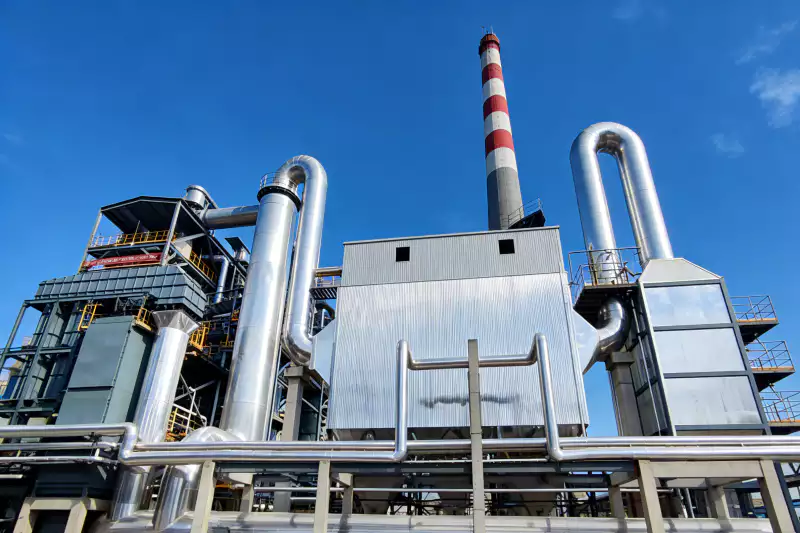
The Ever-power SDS Dry Desulfurization system is meticulously engineered for plants demanding high-efficiency SO2 removal without the crippling OPEX of wet scrubbers. Below is the comprehensive structural and performance matrix.
| Technical Parameter | Specification Range | Engineering Impact & Plant Value |
|---|---|---|
| Gas Processing Volume | 10,000 – 2,300,000 m3/h | Infinitely scalable design. Suitable for small industrial kilns up to massive utility-scale boilers. |
| Allowable Gas Temperature | 140 – 260 °C | Perfectly utilizes waste heat for sorbent thermal activation. No water quenching required, protecting ductwork from acid dew point corrosion. |
| Allowable Inlet Dust Density | 1 – 1500 mg/Nm3 | Handles moderate particulate loading seamlessly prior to final collection in the downstream baghouse. |
| Shell Design Pressure | -6000 to 6000 Pa | Robust reactor and ductwork casing ensures absolute structural integrity under severe Induced Draft (ID) fan pressure fluctuations. |
| Operating System Resistance | 800 – 1000 Pa | Ultra-low pressure drop compared to wet scrubbers, drastically reducing ID fan electricity consumption. |
| Guaranteed Outlet Emission | < 35 mg/Nm3 | Ensures unwavering compliance with global ultra-low emission standards, preventing regulatory fines and operational shutdowns. |
🔬 Process Chemistry & Internal Architecture
The SDS Working Principle
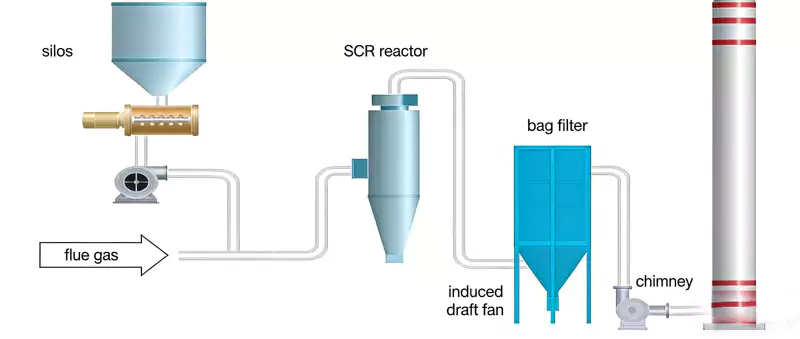
Flue gas extracted from the process (at 140-260 °C) enters the proprietary Ever-power SDS reactor. Here, ultra-fine sodium bicarbonate (NaHCO3) powder is injected into the gas stream. Upon exposure to high-temperature flue gas, the sorbent rapidly decomposes, “popping” like popcorn to form highly porous, highly active sodium carbonate (Na2CO3). This expanded surface area acts as a chemical sponge, instantly neutralizing SO2, SO3, HCl, and HF.
Core Chemical Reactions:
- Thermal Activation: 2NaHCO3 → Na2CO3 + CO2↑ + H2O
- Main Desulfurization: Na2CO3 + SO2 → Na2SO3 + CO2↑
- Oxidation Side Reaction: 2Na2SO3 + O2 → 2Na2SO4 (Forms stable sodium sulfate)
- SO3 Removal (Plume Elimination): Na2CO3 + SO3 → Na2SO4 + CO2↑
System Composition & Architecture
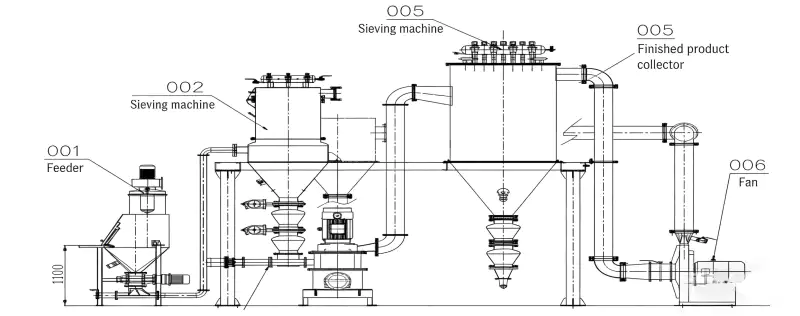
The BLSDS series is a fully automated, continuous processing loop consisting of the following core modules:
- Vacuum Feeding System: Utilizes a highly automated vacuum loader (001) to transfer raw sodium bicarbonate to the Raw Material Silo (002), eliminating manual labor and dust spillage.
- Classifying Mill: A severe-duty mechanical mill crushes the raw sorbent to an ultra-fine specification of >1000 mesh (below 15 μm). This extreme fineness is the key to achieving >95% efficiency.
- SDS Injection Reactor: Equipped with proprietary mixing components. It creates intense turbulence, extending the gas-solid contact time to >4 seconds for maximum reagent utilization.
- Bag Filter Collector: The chemical reaction continues on the surface of the filter bags. The bags, built to withstand >260 °C, capture the dry sodium sulfate byproduct and fly ash, releasing purified gas to the ID fan.
🚀 Strategic Engineering Advantages
Zero Water Consumption
The SDS process is 100% dry. It requires absolutely zero makeup water, produces zero wastewater to treat, and entirely eliminates the highly visible, corrosive “blue plume” associated with wet scrubbers.
Low Reagent Cost
The system utilizes domestic, readily available sodium bicarbonate. By milling it to <15 μm on-site, the reactive surface area is maximized, driving down stoichiometric consumption rates and drastically lowering daily OPEX.
Unparalleled Uptime
Wet systems suffer from slurry scaling, nozzle plugging, and severe corrosion. The Ever-power SDS system handles only dry powder and hot gas, extending equipment life exponentially and eliminating unplanned maintenance shutdowns.
⚠️ Why Upgrade? Overcoming Industry Bottlenecks
The Catastrophe of Wet Scrubber Corrosion
Operating wet scrubbers (WFGD) introduces saturated, acidic moisture into your downstream exhaust systems. If flue gas temperatures drop below the acid dew point, concentrated sulfuric acid condenses on your ductwork and chimney stacks. This aggressive corrosion can eat through steel structures in months, causing millions of dollars in repair costs and halting production. Dry SDS eliminates moisture entirely, protecting your physical plant assets.
The “Blue Plume” and Regulatory Surveillance
Wet systems struggle to capture fine SO3 acid mist, which escapes the stack as a highly visible, toxic blue or yellow plume. This immediately attracts public complaints and intense regulatory scrutiny. Furthermore, new environmental mandates enforce strict limits on multi-pollutants (HCl, HF). The Ever-power SDS system chemically neutralizes SO3, HCl, and HF instantly, rendering the stack exhaust completely invisible and legally compliant.
🏭 Typical Application Scenarios & Industry Fit
The BLSDS1W/230W Series is the preeminent choice for applications requiring multi-pollutant control without the burden of water treatment.
Waste Incineration & Biomass
Municipal solid waste (MSW) and hazardous waste incinerators generate highly complex off-gases rich in HCl, HF, and SO2. SDS is the globally recognized standard for treating these aggressive acidic streams simultaneously.
Coking Plants & Steel Mills
Perfect for coke oven flue gas and sintering processes. The dry method ensures no temperature drop, allowing the purified gas to be exhausted directly or sent to downstream heat recovery systems.
Glass & Ceramic Kilns
These industries require compact footprints and cannot accommodate wastewater infrastructure. SDS provides plug-and-play compliance for continuous high-temperature kilns.
⚖️ Core Advantages: SDS Dry vs. Wet FGD vs. Semi-Dry (SDA)
| Comparison Metric | Ever-power SDS (Dry) | Limestone-Gypsum (Wet) | Spray Dryer Absorber (Semi-Dry) |
|---|---|---|---|
| Water Consumption | Absolute Zero. | Massive continuous demand. | Moderate to High demand. |
| Wastewater Treatment | None required. | Expensive ZLD or treatment plant needed. | None. |
| Corrosion Risk (Plume) | Zero. Operates above dew point. | High. Acid mist bypass requires WESP. | Moderate. Risk of wet bottom if uncontrolled. |
| System Footprint | Extremely Small. Compact duct injection. | Immense. Large towers and tanks. | Large. Requires massive drying chamber. |
| Multi-Pollutant Control | Simultaneous SO2, HCl, HF, SO3 removal. | Mainly SO2. Struggles with fine SO3 aerosols. | Good SO2 and HCl removal. |
🏆 Why Partner with Ever-power?
For over 20 years, Ever-power has been the trusted engineering authority in heavy industrial air purification. Designing an SDS system requires precision fluid dynamics to ensure perfect gas-solid mixing. It is a science we have perfected.
- ✔️ Full Value-Chain Integration: We are true EPC contractors. We deliver Process Engineering ➔ Proprietary Mill & Reactor Manufacturing ➔ Turnkey Site Installation ➔ Intelligent Commissioning.
- ✔️ Proven by Industry Giants: Our bespoke dry scrubbing systems successfully safeguard the compliance of massive conglomerates, including Tongchuan Shengwei, Shanshui Group, and major municipal waste facilities.
- ✔️ Proprietary Technology: We utilize advanced classifying mills yielding <15 μm powder, coupled with our patented SDS injection lances that guarantee >4 seconds of residence time, pushing efficiency beyond standard limits.
📐 Engineering Selection Guide: Sizing Your SDS System
To engineer the precise SDS system for your facility, our technical team requires specific operational data. Prepare the following parameters for a rapid, accurate technical proposal:
1. Flue Gas Volumetrics & Temperature
Provide the Maximum Gas Volume (Nm3/h) and the continuous Operating Temperature (°C). The thermal activation of sodium bicarbonate is optimal between 140°C and 260°C. If your gas is outside this window, we will engineer necessary heat exchange solutions.
2. Inlet Contaminant Profile (Crucial)
We require the absolute peak concentrations of SO2, HCl, and HF (mg/Nm3). Knowing the total acidic load allows us to calculate the precise stoichiometric ratio of sodium bicarbonate required, dictating the sizing of the silo, feeder, and classifying mill.
3. Downstream Baghouse Status
The SDS reaction completes on the surface of filter bags. Do you have an existing baghouse, or do you require Ever-power to supply a high-temperature tolerant bag filter integrated into the EPC package? Please specify allowable footprint dimensions.
💰 Value Quantified: Return on Investment (ROI)
The Ever-power SDS Dry Desulfurization system presents a transformational shift in plant economics by entirely removing the water cycle from emission control.
The Cost of Obsolete Wet Systems
- Wastewater Nightmare: Wet scrubbers produce highly toxic, heavy-metal laden wastewater. Building and operating a Zero Liquid Discharge (ZLD) treatment facility can cost millions annually.
- Corrosion Maintenance: Acid dew point condensation ruthlessly destroys ID fans, ductwork, and stacks, causing catastrophic replacement costs and extended plant downtime.
The Ever-power Upgrade ROI
- Zero Water OPEX: No water usage, no slurry pumps, no vacuum filters, and no wastewater treatment. The operational electricity and maintenance savings alone justify the CapEx within 2-3 years.
- Byproduct Utilization: The resulting dry sodium sulfate powder is stable and can often be safely landfilled or sold for secondary industrial uses, completely bypassing sludge handling costs.
🌍 Global Case Studies: Proving Our Authority
🇨🇳 Shanxi Coking Group (China)
Application: Coke Oven Flue Gas
Challenge: Required simultaneous removal of SO2 and dust without dropping the gas temperature, allowing downstream SCR denitrification to operate efficiently.
Solution: Installed the Ever-power BLSDS Series followed by a high-temp baghouse. Achieved SO2 < 15 mg/Nm3. The dry process preserved the gas heat, perfectly protecting the SCR catalyst.
🇮🇳 Mumbai Municipal Waste (India)
Application: Waste Incineration (WTE) Exhaust
Challenge: Lethal spikes of HCl and HF gases causing severe corrosion in previous semi-dry towers, coupled with strict urban emission limits.
Solution: Retrofitted with our SDS injection system. The ultra-fine milled sodium bicarbonate instantly neutralized the acid spikes. Stack emissions became totally invisible, solving civic complaints.
🇧🇷 Rio Glass Manufacturing (Brazil)
Application: Float Glass Kiln
Challenge: Extremely tight factory footprint with absolutely no space for water treatment infrastructure.
Solution: The ultra-compact SDS reactor was installed directly into the existing ductwork. The fully automated vacuum feeding system required zero manual handling. Compliance achieved with zero added footprint.
🇩🇪 Bavaria Ceramic Works (Germany)
Application: High-Temperature Ceramic Kiln
Challenge: Intermittent HF and SO2 emissions. Previous lime-based injection struggled with low reactivity.
Solution: Switched to Ever-power’s Sodium Bicarbonate system. The classifying mill ensured <15 μm particle size, boosting reactivity. Sorbent consumption dropped by 45% compared to hydrated lime.
❓ Engineering & Operational FAQ
Why is a classifying mill required on-site?
Reactivity is entirely dependent on surface area. Standard sodium bicarbonate powder is too coarse. By milling it on-site instantly before injection to < 15 μm (over 1000 mesh), we exponentially increase the surface area available for gas contact, ensuring >95% efficiency while minimizing reagent waste.
Can SDS replace my existing wet scrubber?
Yes, in many industrial applications. If your inlet sulfur loads are moderate (e.g., < 2000 mg/Nm3), SDS is vastly superior due to the elimination of wastewater and corrosion. Utility-scale power plants with extreme sulfur loads still primarily use wet scrubbers, but SDS is dominating the coking, glass, and waste-to-energy sectors.
What happens to the byproduct powder?
The reaction yields dry sodium sulfate (Na2SO4) mixed with fly ash, which is captured by the bag filter. It is discharged via an automated pneumatic conveying system to an ash silo. Because it is completely dry, it is highly stable, non-leaching, and easily disposed of or sold for industrial chemical reuse.
Do I need to condition or cool the gas before injection?
No water injection is needed. The thermal activation of sodium bicarbonate works best between 140°C and 260°C. As long as your exhaust falls within this window, the dry powder is injected directly into the hot duct.
Does SDS handle SO3 (acid mist) as well?
Absolutely. Unlike wet scrubbers which struggle to capture fine SO3 aerosols (resulting in blue plumes), the highly active sodium carbonate reacts instantly with SO3 to form solid sodium sulfate, completely eradicating the acid mist plume at the stack.
Modernize Your Plant Economics Today
Stop fighting corrosion, wastewater, and regulatory fines caused by outdated wet scrubbers. Let Ever-power’s senior engineering team design a bespoke SDS Dry Desulfurization system that fits your ductwork, guarantees < 35mg/Nm3 SO2, and secures your plant’s operational future with zero liquid discharge.
 ES
ES  EN
EN  ZH
ZH  AR
AR  ID
ID  PT
PT  FR
FR  JA
JA  RU
RU  DE
DE  MS
MS  CS
CS  BG
BG  NL
NL  KO
KO  RO
RO  SK
SK  TH
TH  VI
VI  ZH_TW
ZH_TW  UK
UK