
Regenerative Thermal Oxidizer (RTO) Solutions for Marine & Aerospace Large Component Painting
Target Audience: EHS Directors, Shipyard Operations Managers, and Aerospace Facility Engineers facing massive air volume challenges.
Core Promise: How to achieve >99% Compliance in High-Volume/Low-Concentration environments without bankrupting your facility on fuel costs. The secret lies in “Concentration + Oxidation”.
Industry Background: The Challenge of Scale
painting a tiny car part and painting a giant ship or a jumbo jet wing are about as similar as comparing a tricycle to a freight train—they’re fundamentally different beasts!
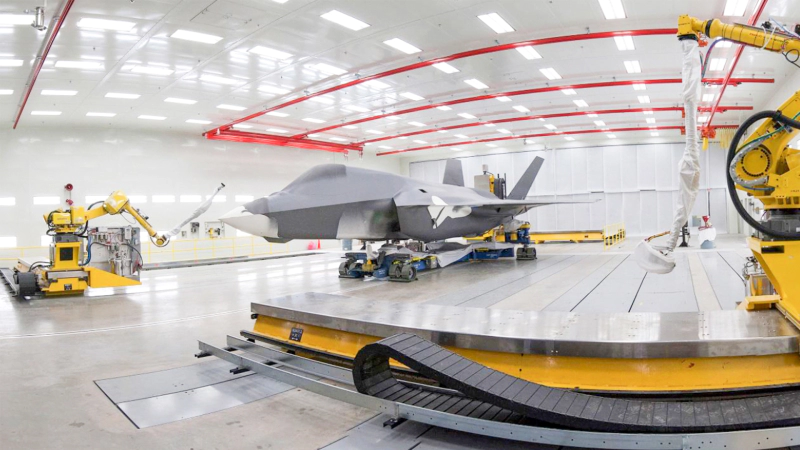
When we talk about coating a ship’s massive hull block or a sprawling aircraft wing, we’re not dealing with some cramped spray booth; we’re talking about components that are absolutely gargantuan, with spray environments so cavernous they often stretch over thousands of square meters, requiring an enormous, continuous volume of fresh air just to keep the workers safe and the process compliant.
Whether I’m dealing with the tough demands of the Shipbuilding Industry—handling VOCs from block painting or the deep, dark corners of ballast tanks—or grappling with the precise requirements of Aerospace Manufacturing—coating a huge fuselage or a complex wing assembly—the environmental headache is always the same: we have to process literally millions of cubic meters of air that contain only minute, trace amounts of solvents.
Here’s the kicker: attempting to clean this ridiculously huge volume of air using traditional incineration methods is not just expensive; it is economically impossible—you’d be burning through enough fuel to power a small city! That’s precisely why, in these heavy industries, we cannot rely on standard solutions; we need a highly specialized, hyper-efficient approach that only my Ever-Power RTO systems can deliver
2. Waste Gas Characteristics & Composition Analysis
In this sector, the “Enemy” is volume, not concentration. The following data highlights why off-the-shelf equipment fails:
| Application Area | Key VOC Components & Toxicity | Critical Flow & Concentration Data |
|---|---|---|
| Aerospace (Wings/Fuselage) | MEK, MIBK, Toluene, Xylene. Risk: Hexavalent Chromium (from primers) and Isocyanates (from Polyurethane topcoats). | Airflow: 100,000 – 500,000 Nm³/h Concentration: Very Low (100 – 400 mg/m³) |
| Marine (Block Painting) | Epoxy Thinners, Xylene, Butanol. Heavy solvent load during short “spray bursts”. | Airflow: > 300,000 Nm³/h per hall Concentration: Fluctuating (50 – 600 mg/m³) |
| Composite Manufacturing | Styrene, Acetone (from lay-up and cleaning). | High volume, incredibly distinct odor threshold. |
3. Hazards & Urgency of Treatment
Toxic HAPs & Chromates
We can’t ignore the toxic materials: for example, many aerospace primers rely on Strontium Chromate because it’s a powerhouse for corrosion resistance. And while those particulate filters are great at snagging the solid bits—the tiny chromate dust—the associated solvent vapors themselves are classified as serious Hazardous Air Pollutants (HAPs). Letting those fumes float away unchecked is completely unacceptable; it poses a severe cancer risk not just to the hardworking staff inside the facility, but also to the innocent communities living nearby.
The Cost of Inaction
And you better believe the government takes this seriously, because here’s the cold, hard truth about the Cost of Inaction: it’s simply no longer legal in any major manufacturing hub to just directly vent those millions of cubic meters of solvent-laden air straight into the sky.
If you ignore the regulations and try to cut corners, the penalties are swift and brutal. I’ve seen regulatory shutdowns in the shipbuilding industry alone that completely halt production, which means you can’t deliver that massive vessel on time, and that quickly incurs contractual penalties that can run upwards of fifty thousand dollars per day. You tell me: is saving a few bucks on a proper abatement system worth that kind of catastrophic financial risk? Absolutely not!
4. Global Regulatory Snapshot
- USA (EPA NESHAP Subpart GG & II): Specific standards for Aerospace Manufacturing and Shipbuilding. Requires strict control of organic HAPs and VOCs, often mandating >95% control efficiency for coating operations.
- European Union (IED Directive): Large shipyards and aerospace plants fall under rigorous Solvent Emission Directive (SED) limits. Fugitive emissions must be minimized (<20% of total solvent input).
- China (GB 37824-2019): “Emission standard for Ship manufacturing.” Mandates VOC collection and treatment, with strict bans on unorganized emissions in key regions (Bohai Rim, Yangtze Delta).
5. The Solution: Concentration is Key
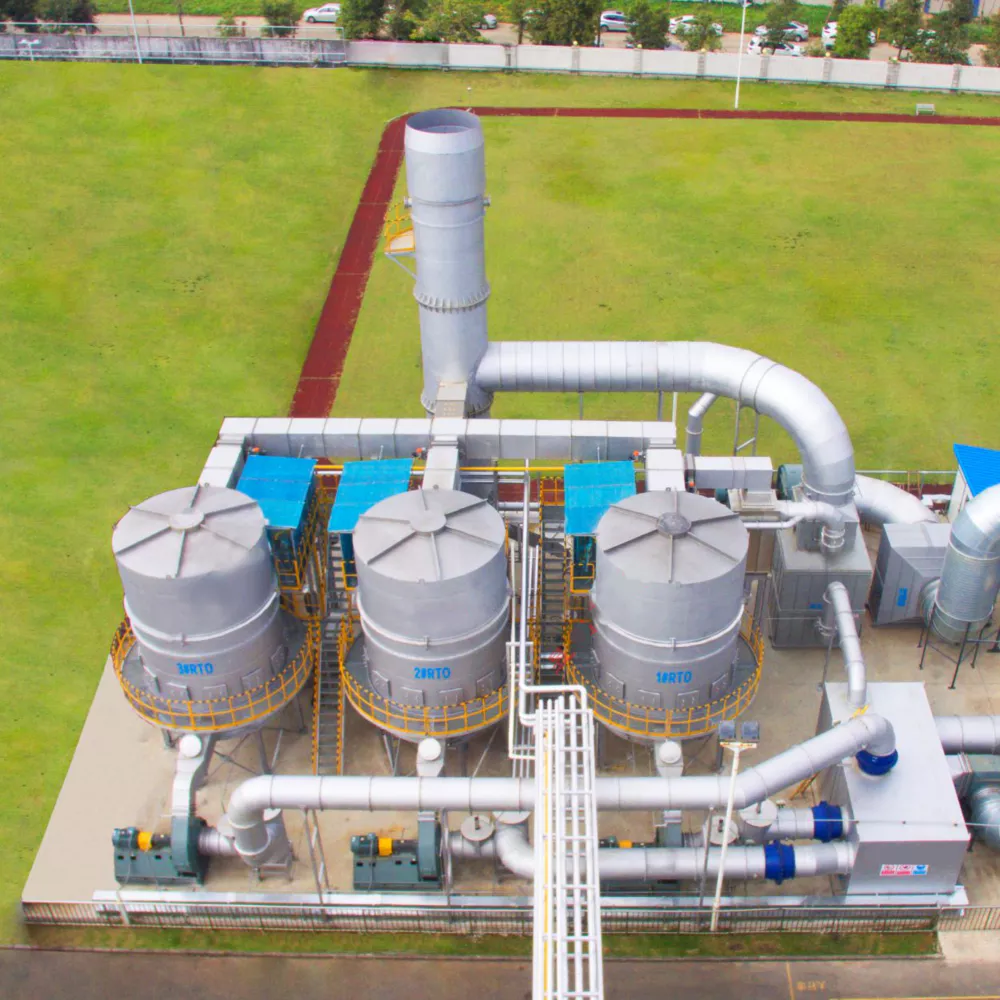
We at Ever-Power employ the much smarter approach, what I call the ‘Concentrator + RTO Tag Team’ Strategy. It’s all about working smarter, not harder, and we utilize a Zeolite Rotary Concentrator as the crucial first step.
The entire process works like a charm:
The Adsorption Phase (The Giant Filter): We take that gargantuan volume of cool, polluted air and gently push it right through the rotating zeolite wheel—which acts like a colossal, VOC-trapping sponge. The dangerous solvents are efficiently trapped inside the zeolite pores, and the vast majority of the air that exits is completely clean and safely vented.
The Desorption Phase (The Strip-Down): Next, we only need a tiny stream of hot air—usually about one-twentieth (1/20th) of the original massive volume—to sweep through and efficiently strip the captured VOCs off the wheel, releasing them in a much smaller, highly concentrated blast.
The Oxidation Phase (The Fuel-Free Furnace): Finally, we send this small, now incredibly concentrated stream of air straight into our compact RTO unit. Because the solvent concentration is now through the roof, the RTO instantly flips into its ‘Auto-Thermal’ mode, meaning it sustains combustion using only the energy from the concentrated solvents, running completely fuel-free!
6. Comparative Analysis
| Technologie | Pros | Why it fails in Aerospace/Marine | Verdict |
|---|---|---|---|
| Zeolite Runner + RTO | Reduces air volume by 20x. Drastically lowers CAPEX and OPEX. | Requires high-quality zeolite to avoid polymerization blockage. | ★ The Standard |
| Direct RTO (No Concentrator) | Simple process. | Financial Disaster. Fuel costs for heating 300k m³/h air are unsustainable. Equipment size is massive. | Do Not Use |
| Activated Carbon (Disposal) | Cheap initial hardware. | Huge footprint for large flows. Carbon saturation is rapid; replacement costs are prohibitive. | Obsolete |
7. Our Exclusive Design: Optimized for Giant Components
1. High-Boiling Solvent Management (Dealing with the Gunk)
You see, the biggest headache in aerospace and marine coating is that they rely on these heavy, high-boiling solvents—think of them as thick, sticky syrup—and if you run a standard concentrator, those solvents will quickly cool down and condense right onto the Zeolite wheel, permanently clogging it. That’s a nightmare scenario, costing you massive downtime and replacement expense!
Our brilliant fix? We exclusively use Hydrophobic Zeolite coupled with a unique, specialized high-temperature regeneration cycle, pushing the rotor heat up to a scorching $220^\circ\text{C}$. We essentially give the system a controlled ‘burn off’ or deep-cleaning periodically, which vaporizes and removes those heavy, sticky organics, a smart move that easily extends the rotor’s life span to over ten years.
2. Load Fluctuation Logic (The Smart Standby Mode)
Another major issue is the start-and-stop nature of coating massive parts. You might have your spray guns blazing for a couple of hours, but then the crew spends four hours just prepping the next section, meaning the VOC load constantly spikes and then dramatically drops. If you run your system full-blast during those long prep times, you’re just wasting a fortune in gas.
Our solution is a game-changer: we installed a sophisticated PLC (Programmable Logic Controller) system that actually predicts these load changes. When our system recognizes the start of a low-load prep time, it intelligently dials down the RTO’s burner output and simultaneously slows the concentrator’s rotation. This clever, integrated logic allows us to dynamically save roughly 40% of the energy compared to those dumb, constant-run systems that are just sitting there burning fuel for no reason.
8. ROI & Operational Cost Optimization
By implementing the Concentration Strategy (20:1 Ratio):
- Fuel Savings: You heat 95% LESS air. Natural gas consumption drops by ~90%.
- Electricity Savings: A smaller RTO means smaller fans.
- Payback: Compared to a Direct RTO, the CAPEX difference is recovered in 12-18 months purely on fuel savings.
9. Success Stories: Proven in the Field
Case 1: Aerospace Tier 1 Supplier (USA, Seattle)
Kunde: Manufacturer of commercial aircraft fuselage sections.
Challenge:
• Airflow: 180,000 Nm³/h (3 huge spray booths).
• Concentration: Only 120 mg/m³.
• Problem: Old Carbon Adsorption system was a fire hazard and cost $500k/year in carbon replacement.
How they found us: Search for “NESHAP compliant low VOC abatement”.
Our Solution: Replaced carbon beds with a Dual-Rotor Zeolite Concentrator + Compact RTO (10,000 Nm³/h).
Result:
✅ OpEx: Annual operating cost dropped by 85%.
✅ Sicherheit: Eliminated carbon fire risks completely.
✅ Einhaltung der Vorschriften: Consistent 98% destruction efficiency, exceeding EPA requirements.
Case 2: Major Shipyard (South Korea, Ulsan)
Kunde: One of the world’s largest shipbuilding heavy industries.
Challenge:
• Airflow: 400,000 Nm³/h (Block painting cell).
• Issue: Intermittent spraying meant the system ran empty 50% of the time, wasting massive electricity.
Our Solution: A 4-Rotor Concentrator System with “Smart-Idle” Logic. The system automatically ramps down fan speeds and RTO temps when spray guns are inactive.
Result:
✅ Energy: Electricity consumption reduced by 35% via VFD control.
✅ Einhaltung der Vorschriften: Solved the “odor complaint” issue from the nearby residential district.
Case 3: Aviation MRO Center (Singapore)
Kunde: Maintenance, Repair, and Overhaul center for private jets.
Challenge: Highly variable paints (strippers, primers, topcoats) with unknown compositions.
Our Solution: RTO with Corrosion-Resistant Alloy (2205 Duplex) and upgraded particulate filtration to handle paint overspray dust.
Result: Zero downtime in 3 years. Successfully handles diverse solvent inputs without catalyst poisoning risks.
10. Frequently Asked Questions (FAQ)
Q1: Does the Zeolite Wheel require frequent replacement?
A: No. Unlike activated carbon, Zeolite is inorganic and non-combustible. With proper filtration of paint mist, the wheel life exceeds 10 years.
Q2: What about paint particulate (overspray)?
A: This is critical. We install multi-stage filtration (G4+F7+F9) before the Zeolite wheel to prevent physical blockage. We also monitor pressure drop constantly.
Q3: Can this system handle floor-level ventilation?
A: Yes. The system is designed to pull huge volumes of air from the downdraft pits to keep the worker breathing zone safe, then concentrate it for treatment.
Solve the High-Volume Airflow Puzzle
Stop wasting energy on thin air. Switch to our Concentrator + RTO solution.
 DE
DE  EN
EN  ZH
ZH  ES
ES  AR
AR  ID
ID  PT
PT  FR
FR  JA
JA  RU
RU  MS
MS  CS
CS  BG
BG  NL
NL  KO
KO  RO
RO  SK
SK  TH
TH  VI
VI  ZH_TW
ZH_TW  UK
UK