
SOx Gas Treatment Solutions | RTO Systems for DeSOx
SO₂
CS₂
H₂S
Mercaptans
Thioether
Flue Gas Desulfurization (FGD) Systems
Comprehensive SO₂ eradication solutions. From utility-scale wet scrubbing to highly efficient dry and semi-dry systems, ensuring strict environmental compliance for any industrial process.
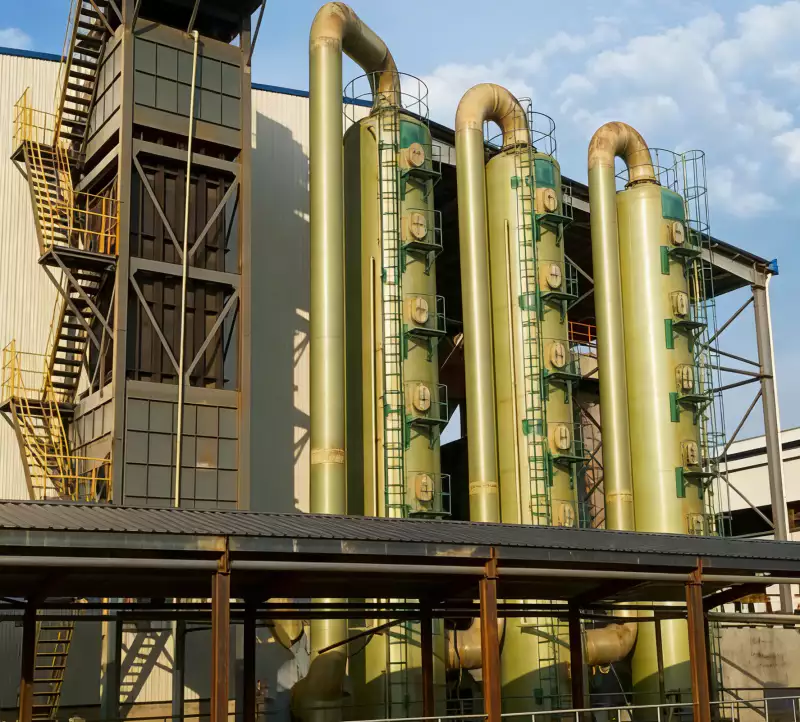
Single Alkali Desulfurization System
A highly mature and cost-effective wet scrubbing solution designed for efficient SO₂ emission control in small to medium industrial boilers.
View Details →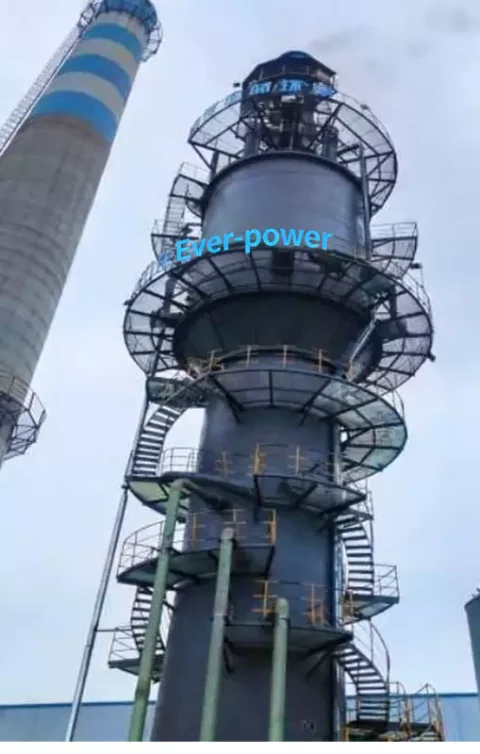
Limestone-Gypsum FGD System
The industry standard for utility-scale SO₂ eradication. Delivers maximum removal efficiency with commercial-grade gypsum byproduct recovery.
View Details →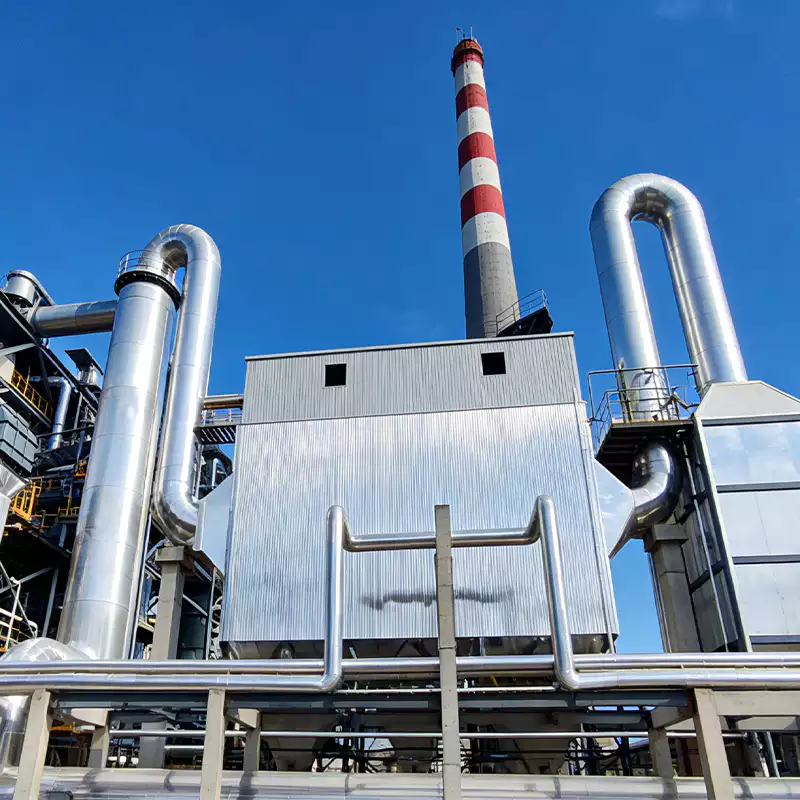
SDS Dry Desulfurization System
Advanced multi-pollutant synergistic control with zero wastewater generation. Perfect for environments with strict water consumption limits.
View Details →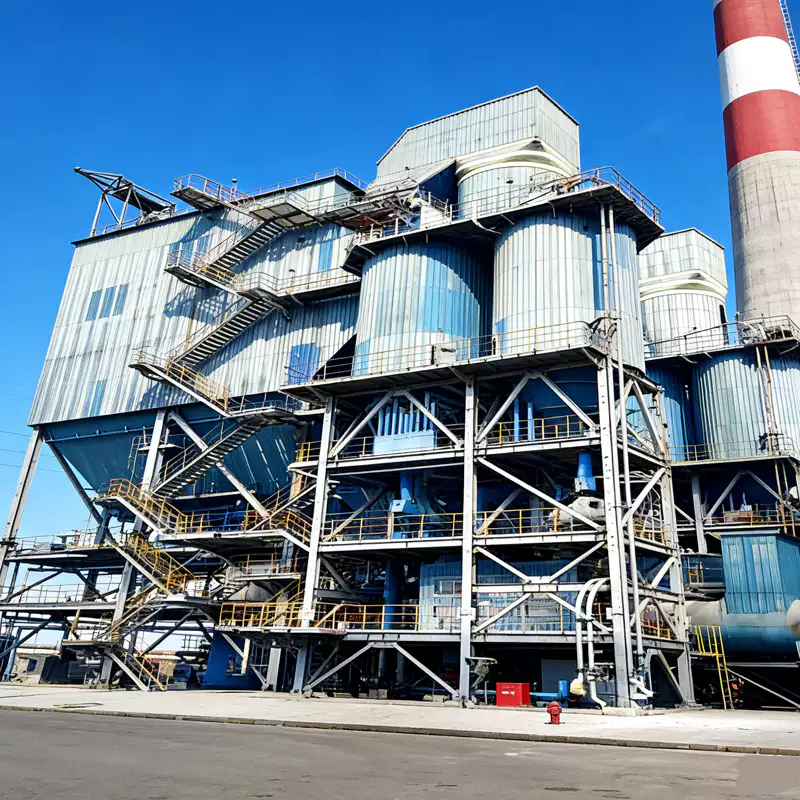
SDA Semi-Dry Desulfurization
Combines the benefits of wet and dry scrubbing. Uses rotary atomization for rapid SO₂ absorption, yielding a dry, easily manageable byproduct.
View Details →Main Technical Specifications
Comprehensive comparison of Wet, Dry, and Semi-Dry Flue Gas Desulfurization (FGD) systems.
| Technical Parameter | Single Alkali (Wet Scrubbing) | Limestone-Gypsum (Wet Scrubbing) | SDS (Dry Desulfurization) | SDA (Semi-Dry Desulfurization) |
|---|---|---|---|---|
| Gas Volume (m³/h) | 10,000 - 1,000,000 | 10,000 - 2,300,000 | 10,000 - 2,300,000 | 10,000 - 2,300,000 |
| Allowable Gas Temp. (°C) | 180 | 180 | 260 | 260 |
| Allowable Inlet Concentration (mg/Nm³) |
1 - 1,000 Sulfur | 1 - 5,000 Sulfur | 1 - 1,500 Dust | 1 - 2,000 Dust |
| Shell Design Pressure (Pa) | -6,000 ~ +6,000 | -6,000 ~ +6,000 | -6,000 ~ +6,000 | -6,000 ~ +6,000 |
| Operating Resistance (Pa) | 800 ~ 1,300 | 800 ~ 1,300 | 800 ~ 1,000 | 800 ~ 1,500 |
| Outlet Emission (mg/Nm³) | < 35 | < 35 | < 35 | < 35 |

Sources & Environmental Challenges of SOx
In the petrochemical and refining industries, sulfur-containing gases primarily originate from FCC units, delayed coking, and hydrodesulfurization processes during crude oil processing. These gases, including hydrogen sulfide, mercaptans, and sulfur dioxide, can lead to acid rain formation and air pollution if left untreated. According to recent studies, global sulfur emissions have risen from low levels in 1750 to a peak in 2022, mainly due to industrialization. The necessity of treating these gases lies in protecting ecosystems and preventing soil acidification and water pollution. In China, in cities like Beijing and Shanghai, factory emissions directly impact air quality, leading to respiratory illnesses.
The history of sulfur-containing gases can be traced back to the Industrial Revolution, when coal burning caused the London smog incidents, prompting the earliest air pollution regulations. Today, with updated environmental regulations in 2025, treating sulfur-containing gases has become central to corporate compliance. Yuchang Environmental’s RTO system uses high-temperature oxidation to convert H2S into SO2, which is then neutralized through scrubbing, achieving efficient removal.
What is SOx?
SOₓ exhaust gas (sulfur oxide exhaust gas) refers to industrial or combustion emissions containing sulfur oxides, primarily sulfur dioxide (SO₂) and a small amount of sulfur trioxide (SO₃). In environmental engineering and air pollution control, SOₓ is commonly used as a general term for these pollutants.
Formation of acid rain
SO₂ is oxidized to SO₃ in the atmosphere, which then reacts with water to form sulfuric acid (H₂SO₄). Acid rain corrodes buildings, acidifies soil and water bodies, and damages ecosystems.
Zdravotní rizika
It irritates the respiratory tract, triggering coughs, asthma, and bronchitis; the sulfates formed by combining with particulate matter can penetrate deep into the alveoli, increasing the risk of cardiovascular disease.
Corrosion of equipment & materials
SO₂ and sulfuric acid mist are highly corrosive to metal pipes, boilers, chimneys, electronic equipment, etc., shortening their lifespan.
Impacts on Visibility and Climate
Sulfate aerosols are an important component of fine particulate matter (PM2.5) in the atmosphere, reducing atmospheric visibility (smog); They have a cooling effect (reflecting solar radiation)
Desulfurization System Process Comparison
Comprehensive technical specifications overview.
| Parameter / Category | Single Alkali Desulfurization | Limestone-Gypsum Desulfurization | SDS (Dry Desulfurization) | SDA (Semi-Dry Desulfurization) |
|---|---|---|---|---|
| Main Applications |
|
|
|
|
| Gas Volume (m³/h) | 10,000 - 1,000,000 | 10,000 - 2,300,000 | 10,000 - 2,300,000 | 10,000 - 2,300,000 |
| Allowable Gas Temp. (°C) | 180 | 180 | 260 | 260 |
| Allowable Inlet Concentration (mg/Nm³) |
1 - 1000 Sulfur |
1 - 5000 Sulfur |
1 - 1500 Dust |
1 - 2000 Dust |
| Shell Design Pressure (Pa) | -6000 ~ +6000 | -6000 ~ +6000 | -6000 ~ +6000 | -6000 ~ +6000 |
| Operating Resistance (Pa) | 800 ~ 1300 | 800 ~ 1300 | 800 ~ 1000 | 800 ~ 1500 |
| Outlet Emission (mg/Nm³) | < 35 | < 35 | < 35 | < 35 |
SOx Emissions Analysis
| Major Sources of SOx | Components of SOx | Special Characteristics |
|---|---|---|
| Fossil Fuel CombustionPower plants, industrial boilers using coal or oil | Sulfur Dioxide (SO2)The predominant component | Acid Rain Precursor: Reacts with water vapor to form sulfuric acid (H2SO4), causing damage to forests, aquatic life, and building materials. |
| Průmyslové procesySmelting of mineral ores containing sulfur, oil refining | Sulfur Trioxide (SO3)Usually forms secondary to SO2 | Respiratory Toxicity: Highly irritating to the respiratory system; triggers bronchoconstriction and asthma attacks even at low concentrations. |
| PřepravaLocomotives, ships, and heavy equipment using high-sulfur diesel | Sulfate Particles (SO42-)Particulate form | PM2.5 Formation: Contributes significantly to the formation of fine particulate matter (secondary aerosols), reducing visibility and harming lung health. |
| Natural SourcesVolcanic eruptions, sea spray, biological decay in wetlands | Trace Sulfur Species | Cooling Effect: Sulfate aerosols can reflect sunlight (albedo effect), potentially causing a temporary local or global cooling effect on the climate. |
Global SOx Emission Regulatory Landscape
- Baseline: GB 16297-1996 mandates <550 mg/m³.
- Context: Founded on the Air Pollution Prevention Law.
- Driver: Severe smog events catalyzed stricter legislative evolution.
- Guangdong: DB44/815 stricter limit at <100 mg/m³.
- Beijing: DB11/447 emphasizes continuous monitoring (CEMS).
- Shanghai: DB31/933 targets Chemical Industry Zones.
- Japan: Air Pollution Control Act enforces <100 mg/m³.
- S. Korea: Clean Air Conservation Act baseline <500 ppm.
- Focus: Stringent control on stationary industrial sources.
- USA: EPA NESHAP targets hazardous pollutants via federal mandates.
- Brazil: CONAMA 382 defines max limits for fixed sources.
- Goal: Reducing acid rain and health risks.
- Germany: TA Luft sets the technical benchmark for air quality.
- Russia: GOST standards ensure state-level compliance.
- Trend: Broad adoption of Best Available Techniques (BAT).
- Saudi Arabia: RCER regulations govern industrial cities.
- India: CPCB sets national limits for high-pollution industries.
- Challenge: Balancing industrial growth with clean air targets.
Our RTO for SOx Treatment (DeSOx)
Regenerative Thermal Oxidizer, RTO
- Regenerative Thermal Oxidizer (RTO) is a highly efficient industrial waste gas treatment device that primarily converts organic pollutants into harmless carbon dioxide and water vapor through high-temperature oxidation. In the field of sulfur-containing gas treatment, RTOs are particularly suitable for industries such as petrochemicals, refineries, sulfur recovery units (SRUs), and fine chemicals. These gases often contain hydrogen sulfide (H₂S), sulfur dioxide (SO₂), or other sulfur compounds. RTOs can oxidize them into stable forms, but post-treatment (such as scrubbers) is necessary to prevent the emission of acidic gases. According to the latest research (such as EPA reports and industrial application cases), RTOs can achieve a heat recovery rate of over 95% and a destruction removal efficiency (DRE) of over 99% when treating sulfur-containing waste gases, but corrosion risks must be considered.
Working Principle of RTO
- The working principle of an RTO is based on thermal oxidation: the sulfur-containing gases undergo oxidation reactions at combustion chamber temperatures of 800-1000°C. For example, H₂S can be oxidized to SO₂ or SO₃, which are then neutralized into sulfates through alkaline scrubbing. This makes RTOs the preferred technology for treating complex sulfur compounds, especially in the context of global environmental regulations (such as China’s GB 31571-2015 and the EU IED directive) requiring SOx emissions to be below 50 mg/Nm³.
RTO Process: Sulfur-Containing Gas Treatment
Integrated Workflow: Thermal Oxidation (DeVOC) + Wet Scrubbing (DeSOx)
Technical Parameters of RTO
| Category | Parametr | Value / Specification | Technical Note |
| 1. Core Performance | Účinnost odstraňování | > 99% | For both SOx and VOCs |
| Thermal Recovery | 95% - 97% | Saves approx. 80% fuel | |
| Oxidation Temp | 850 - 950°C | High temp ensures full S-conversion | |
| Doba pobytu | 1 - 2 Seconds | Ensures complete oxidation reaction | |
| Airflow Range | 10,000 - 500,000 m³/h | Scalable capacity | |
| Pokles tlaku | < 200 Pa | Low resistance design | |
| Turndown Ratio | 5 : 1 | Flexibility for load fluctuation | |
| System Availability | 99% | High uptime reliability | |
| 2. Emission & Input | Inlet Sulfur Conc. | 5,000 ppm H₂S | High sulfur tolerance |
| Outlet SOx | < 50 mg/Nm³ | Compliant with strict regulations | |
| Outlet NOx | < 100 mg/Nm³ | Low NOx burner technology | |
| Kontrola pevných částic | Pre-filter System | Prevents media clogging | |
| Humidity Control | Pre-drying | Reduces moisture burden | |
| LEL Control Limit | < 25% | Lower Explosive Limit safety margin | |
| Outlet Temp | 150 - 200°C | Safe discharge temperature | |
| 3. Design & Material | Construction Material | Hastelloy C-276 | Critical: Anti-corrosion against H₂SO₄ |
| Výměník tepla | Structured Ceramic | High thermal mass media | |
| Surface Area | 500 - 800 m²/m³ | Specific surface area for heat transfer | |
| Chamber Volume | 0.5 - 1 m³ | Per 1,000 m³/h airflow | |
| Valve Switching | 60 - 120 Seconds | Optimized cycle time | |
| Valve Cycle Life | > 1 Million Cycles | High durability switching valves | |
| Leakage Rate | < 0.1% | Poppet valve sealing technology | |
| System Footprint | 10 - 50 m² | Compact design | |
| 4. Integration & Utility | Post-Treatment | DeSOx Scrubber | Critical: Removes SO₂ formed in RTO |
| Typ paliva | Natural Gas | Low NOx burners utilized | |
| Spotřeba energie | 0.5 - 1 kWh/m³ | Low electrical demand | |
| Bake-out Temp | 500°C | Self-cleaning mode for media | |
| Preheat Temp | 200°C | Inlet waste heat utilization | |
| OPEX Savings | 40% | Compared to standard thermal oxidizers | |
| 5. Control & Safety | Automation | PLC + AI Maint. | Smart predictive maintenance |
| Monitorování | CEMS | Continuous Emission Monitoring System | |
| Safety Device | Flame Arrestor | Explosion prevention at inlet |
Important Components & Consumables for RTO
Ventily
Hastelloy coating, lifespan 5-10 years; seals are consumables and need to be replaced annually.
Keramická média
High-alumina, acid-resistant; replaced every 5-7 years.
Hořák
Low NOx; nozzles are consumables and require quarterly inspection.
Fan
Drive belt, easily worn and replaced every 2 years.
Sensors
LEL temperature sensors, consumables requiring calibration every six months.
Scrubber packing
Plastic rings, replaced every 3 years due to fouling.
Comparison of RTOs From Major Brands
Dürr™'
- Dürr™’s high-end rotary RTOs are known for their high heat recovery efficiency (typically around 98%), making them suitable for applications with extremely stringent energy efficiency requirements. However, their system cost is usually about 150% higher than standard solutions, making them more suitable for large projects with ample budgets and a focus on ultimate energy efficiency.
Anguil™
- Anguil™ employs a modular design and performs robustly in handling exhaust gases containing sulfur or complex components. However, due to the longer customization process, the overall delivery time often takes 6–9 months or even longer, which may affect the project’s commissioning schedule.
Věčná síla
- Ever-Power RTOs are positioned at the balance point between high performance and high responsiveness: we benchmark ourselves against international leading brands in core thermal efficiency (95–97% TER), corrosion-resistant structure, and intelligent control. At the same time, relying on our localized engineering team and flexible production lines, we achieve a total cost 30–40% lower than Dürr™ and a delivery time more than 40% faster than Anguil™. More importantly, we provide deep customization for each customer – not simply “selecting configurations” from a standard catalog, but designing and building an RTO specifically for you, based on your exhaust gas composition, process cycle, and site constraints.
Sharing Real Case Studies
Beijing Petrochemical Plant | 50,000 m³/h High-Volume Waste Gas
→ RTO + Sulfur-resistant design, 99% SOx removal rate, stable operation throughout the year, passed the ultra-low emission acceptance test in the Beijing-Tianjin-Hebei region.
Tokyo, Japan Precision Manufacturing Base | Strict Space Constraints + Complex Components
→ Seamless integration of RTO and FGD (flue gas desulfurization), fully compliant with Japan’s Air Pollution Control Act, and noise controlled below 65 dB – the neighbors thought we were just running air conditioners.
Seoul, South Korea Semiconductor Supporting Plant | H₂S concentration as high as 2000 ppm, so smelly that security guards had to wear gas masks
→ Customized two-stage oxidation + rapid cooling + adsorption post-treatment, outlet H₂S <10 ppm, employees can finally smoke near the exhaust port (although we don’t encourage it).
Střihač: Miya
 CS
CS  EN
EN  ZH
ZH  ES
ES  AR
AR  ID
ID  PT
PT  FR
FR  JA
JA  RU
RU  DE
DE  MS
MS  BG
BG  NL
NL  KO
KO  RO
RO  SK
SK  TH
TH  VI
VI  ZH_TW
ZH_TW  UK
UK