
Regenerative Thermal Oxidizer (RTO) for New Energy Battery Electrode Coating
Target Audience: Plant Managers, EHS Directors, and Process Engineers in Lithium-ion Battery Gigafactories and Separator Manufacturing.
Core Promise: Our specialized Řešení RTO act as the final defense line for NMP recovery systems, delivering >99.5% destruction efficiency to meet strict global emission limits while feeding recovered energy back into your coating lines.
Industry Background: The EV Battery Boom & Coating Challenges
Since the global push for ‘electrification,’ the demand for lithium batteries has skyrocketed, experiencing exponential growth. Those of us in the exhaust gas treatment field have naturally been incredibly busy.
To put it simply, the core of battery manufacturing is the electrode coating process. Imagine painting the ‘heart’ of the battery: mixing active materials, solvents, and binders into a porridge-like mixture, then carefully applying it to a long metal foil, followed by baking it in an oven as long as a train tunnel to dry the solvent. This process is both sweet and arduous.
While we’re pleased to see that on the negative electrode side, everyone is finally embracing the ‘green new favorite,’ making things much easier for our RTOs, I must tell you the truth: the **positive electrode coating, the ‘big brother,’ is quite stubborn; it still has a deep and unwavering preference for the solvent **N-methyl-2-pyrrolidone (NMP)**.
Yes, I know many gigafactories have installed advanced NMP recovery systems—condensation, zeolites, all to “scavenge” back 99% of the NMP, saving as much as possible, since this solvent is painfully expensive.
But the problem lies in the residual “exhaust gases.” Despite the recovery systems’ best efforts, that residual NMP and other organic waste gases are like the lingering smell of cooking oil in your kitchen. Don’t underestimate this small “tail”—it’s a crucial bottleneck determining whether those gigafactories with billions of dollars in investment can obtain compliance “permits.” Therefore, we at Ever-Power’s RTOs are specifically designed to tackle these stubborn “tails”!
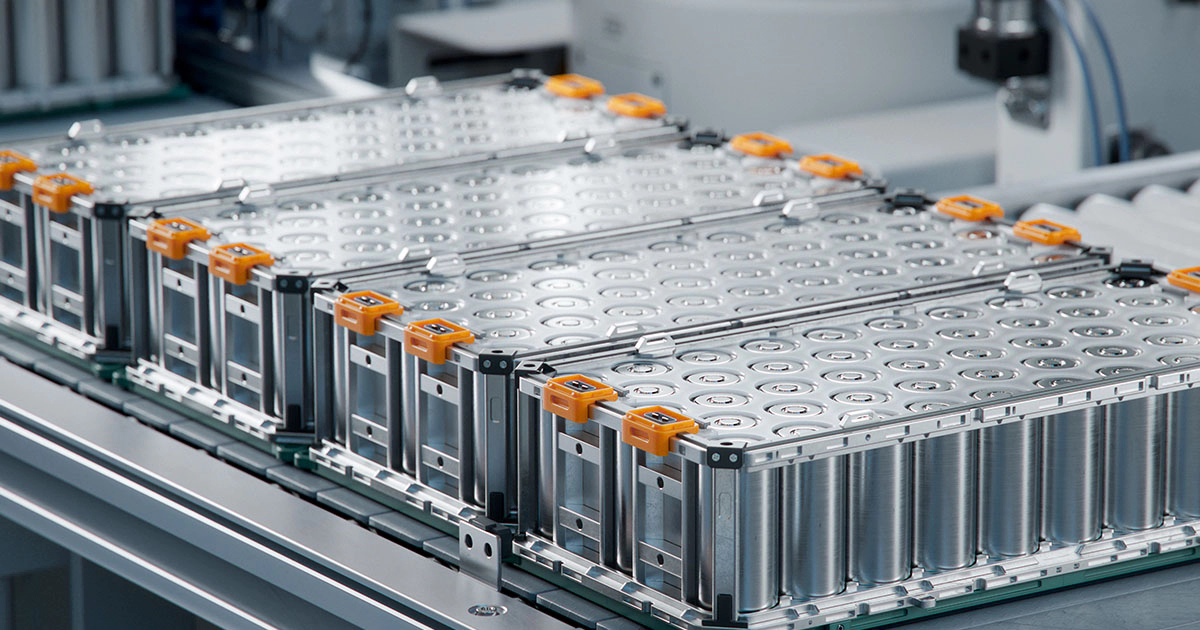
Waste Gas Characteristics & Composition Analysis
Understanding the exhaust profile is crucial for selecting the right VOC abatement system. In battery manufacturing, the RTO typically handles the tail gas after the primary recovery unit.
| Process Stage | Key VOC Components | Exhaust Characteristics |
|---|---|---|
| Cathode Coating & Drying | NMP (N-Methyl-2-pyrrolidone) (>90%), Binder residues | High Temperature (100°C-140°C), Low Concentration (after recovery), High Humidity. |
| Battery Separator Production | Dichloromethane, Paraffin oil mist, Acetone | Complex composition, Potential for condensation/clogging. |
| Anode Coating (Solvent-based) | Trace organic solvents | Lower concentrations, often combined with general ventilation air. |
The Urgency: Why NMP Tail Gas Must Be Treated
Health & Toxicity Risks
NMP is classified as Reprotoxic (Category 1B). It poses severe risks to human reproductive health and development. Direct discharge of tail gas, even in small amounts, can accumulate in the factory vicinity, endangering workers and local communities.
Visual & Smog Impact
NMP contributes to the formation of photochemical smog and PM2.5. In humid conditions, NMP emissions can create a visible “blue smoke” plume, attracting immediate regulatory attention and public complaints.
Global Regulatory Snapshot for Battery Manufacturing
- European Union (IED & REACH): NMP is on the SVHC (Substance of Very High Concern) list. Emissions are strictly limited, often requiring concentrations < 10 mg/m³ or even lower in specific jurisdictions.
- China (GB 30484-2013 / Local Standards): “Emission Standard of Pollutants for Battery Industry.” Key regions like Jiangsu and Fujian enforce NMHC limits < 50 mg/m³ and strict controls on “factory boundary” odors.
- USA (EPA): NMP is a targeted chemical under TSCA. New Gigafactories must employ BACT (Best Available Control Technology), which universally points to high-efficiency thermal oxidizers.
How RTO Works: The “Goalie” of Emission Control
You’ve got this great analogy comparing your industrial process to a high-stakes soccer match, which I love—but here’s how I see it, with our Regenerative Thermal Oxidizer (RTO) playing the starring role. I tell people that those nasty VOCs (Volatile Organic Compounds) pouring out of your factory stack are the opposition’s star strikers, and they are dead set on scoring against the pristine, beautiful goal of clean air.
Now, who do you call when the pressure is on? You call the biggest, baddest, most reliable stopper in the league: The Ever-Power RTO, your ultimate emissions goalie.
I mean, just like an elite goalkeeper who anticipates the play, blocks those lightning-fast shots with speed and precision, and always seems to be in the right place, the RTO is there, ready to slap those pesky pollutants down before they have a chance to sneak into the atmosphere. How does this ceramic titan pull off such a dramatic performance? I’ll tell you the play-by-play.
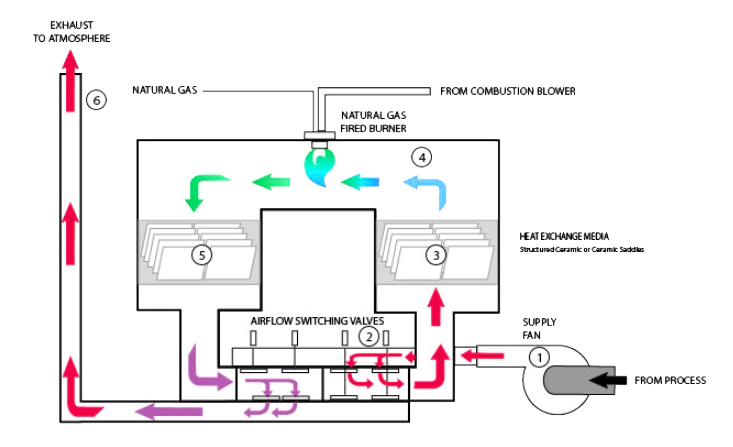
We first grab that filthy, VOC-laden process exhaust—it’s got nowhere to run or hide. Then, with an impressive surge of energy, we slam-dunk that dirty air into a massive ceramic heat-exchange bed, rapidly heating it up to scorching temperatures, usually somewhere between 1,400-1,800 F ( 760-980℃), a temperature high enough to literally obliterate and chemically destroy over 99% of those awful VOCs and hazardous air pollutants (HAPs).
And here’s the clever part, the financial hat-trick that makes the accountants happy: this clever machine takes the clean, scalding hot gas leaving the system, recycles its heat back into the system to preheat the next batch of incoming polluted air, a smart move that often slashes the fuel required for operation by a jaw-dropping 95%.
With its almost impossibly quick, computerized valve-switching ‘reflexes’ and its phenomenal heat-recycling ‘instincts,’ the RTO doesn’t just stop illegal emissions dead in their tracks; it executes this crucial environmental defense with maximum efficiency, bulletproof reliability, and most importantly, in a seriously cost-effective manner.
Frankly, when we talk about winning the game of environmental compliance, the RTO isn’t just a player on the team; I’m telling you, it is absolutely the MVP goalkeeper, every single time.
6. RTO vs. Other Technologies
| Technology Name | My Professional Opinion on Battery Coating Suitability | The Unvarnished Truth: Why My RTO Wins (and they often fail) |
|---|---|---|
| RTO (The Rotary Valve Champ) | Hands Down, Excellent | Because we need stability! Our Rotary Valve RTO keeps the pressure fluctuating by less than 50 Pa which is vital for making sure your delicate electrode coating comes out perfectly uniform; plus, this baby handles massive air volumes without even breaking a sweat. |
| Catalytic Oxidizer (The ‘Low-Temp’ Temptation) | Moderate Risk (I wouldn’t bet my house on it) | Sure, it runs cooler, but let me warn you: those binders and weird additives we find in battery slurry love to gum up and poison the expensive catalyst. My RTO doesn’t care what you throw at it; it’s robust, it’s hot, and it always gets the job done without needing expensive chemical therapy. |
| Carbon Adsorption (The Charcoal Trap) | Poor. Just say no. | You’ve got a tail gas with residual NMP and quite a bit of moisture; high moisture absolutely kills the efficiency of carbon. Plus, stacking up all that adsorbed solvent is a huge fire risk waiting to happen, not to mention the headache of disposing of the resulting hazardous solid waste! |
| Wet Scrubbing (The Water Wash) | Partial Solution (It’s a good opener, but a terrible closer) | It’s actually quite useful for rough NMP recovery in the primary stage—I’ll give it that. But on its own, it has absolutely no chance of meeting those incredibly strict environmental limits like < 20 mg/m ^3 VOCs. Honestly, you still need one of my RTOs to polish off the job and make sure you’re compliant. |
7. Our Exclusive RTO Design for Battery Manufacturing
1. Integrated RTO + Zeolite Wheel + Solvent Recovery
- Zeolite concentrator reduces airflow volume by 10–15x, allowing a smaller, more energy-efficient RTO.
- Condensation-based NMP recovery unit captures >85% of solvent for reuse—cutting raw material costs by up to €1M/year in a mid-sized plant.
- Compatible with NMP, DMF, DMAc, and other polar aprotic solvents used in cathode/anode coating.
2. Robust Construction for Harsh Conditions
- Chamber material: 316L or 310S stainless steel (6–8 mm thick) to resist corrosion from trace acids and high-temperature NMP decomposition.
- Hybrid ceramic media: Structured blocks at the bottom prevent clogging from carbon black or binder dust; honeycomb on top ensures optimal heat transfer.
- Designed for continuous operation at 850–900°C—critical for complete NMP destruction.
3. Intelligent Safety & Control
- **Real-time LFL **(Lower Flammability Limit) monitoring with automatic dilution.
- Redundant burner system and SIL2-certified safety PLC.
- Remote diagnostics & cloud-based O&M platform—enabling predictive maintenance and 24/7 performance tracking.
4. Modular & Scalable
- Standard modules from 30,000 to 150,000 Nm³/h—ideal for pilot lines to gigafactories.
- Factory pre-assembled skids reduce on-site installation time by 40%.

8. Investment & Operational Cost Optimization
While an RTO is an environmental necessity, we turn it into an energy asset.
The “Free Heat” Calculation
By coupling the RTO with the coating line’s air supply:
- Tepelná účinnost: 95% heat recovery within the RTO.
- Extra Recovery: Secondary heat exchanger recovers ~500kW of thermal energy per line.
- Payback: Typical ROI is achieved in 2-3 years through reduced steam/electricity consumption in the drying ovens.
9. Success Stories: Powering Top Tier Battery Makers
Case Study 1: South Korea – High-Purity NMP Recovery for Cathode Coating
Klient: Korea Advanced Battery Materials Co., Ltd. (Seoul, South Korea)
Projekt: 80,000 Nm³/h exhaust treatment for a new NMC811 cathode coating line.
Výzva:
The plant emitted high-concentration NMP vapor (up to 8,000 mg/Nm³) with fine conductive carbon dust. Their existing RTO suffered from:
- Frequent ceramic bed clogging → monthly shutdowns
- Incomplete NMP destruction (<95% DRE), violating MOE’s 2024 TMS regulation
- No solvent recovery, leading to ~USD 2.1M/year in NMP purchase costs
Jak nás našli:
After a reference visit to a Chinese battery plant using Ever-Power’s system, their engineering team contacted us via LinkedIn and requested a feasibility study.
Naše řešení:
- Integrated system: Zeolite concentrator (15:1 ratio) + 3rd-gen rotary RTO (80,000 Nm³/h) + NMP condensation recovery
- 316L stainless steel chamber with hybrid ceramic media (structured bottom layer)
- Real-time LFL monitoring + remote O&M platform compliant with Korean TMS data format
**Results After 6 Months Operation **(Q1 2025):
- VOC emission: 7 mg/Nm³ (vs. limit of 20 mg/Nm³)
- DRE: 98.9%
- NMP recovery rate: 87% → roční úspora USD 1.83M
- Zero unplanned downtime; passed MOE TMS audit with full data transparency
Case Study 2: Hungary – Fast-Track RTO for EU Gigafactory
Klient: European CellWorks Kft. (Debrecen, Hungary)
Projekt: Emissions control for anode and cathode lines in a new EV battery gigafactory supplying German OEMs.
Výzva:
Tight construction schedule (plant start-up in 6 months) and strict VW Group sustainability requirements:
- Required ≤15 mg/Nm³ VOCs and ≥98% DRE
- Needed CE certification and integration with factory energy management system
- Local EU suppliers quoted 8–10 months lead time—too slow
Jak nás našli:
Discovered Ever-Power at The Battery Show Europe 2024; impressed by our Munich service hub and CE-certified reference in Slovakia.
Naše řešení:
- Modular 120,000 Nm³/h rotary RTO with pre-fabricated skids
- 310S stainless steel for long-term durability at 880°C
- Waste heat reused to preheat drying ovens (saving 1.2 MW thermal energy)
- Delivered and commissioned in 14 weeks
**Results **(Post-Commissioning, March 2025):
- Average VOC emission: 11 mg/Nm³
- Thermal recovery efficiency: 96%
- Natural gas consumption: 35% lower than baseline design
- Successfully passed VW supplier environmental audit
Case Study 3: Mexico – Cost-Effective Compliance for Nearshoring Plant
Klient: NexaPower Americas Inc. (Monterrey, Mexico)
Projekt: Retrofit of electrode coating exhaust system for a BYD-partnered LFP battery plant.
Výzva:
Operating under Mexican NOM-083-SEMARNAT but required to meet Chinese parent company’s internal standard (≤30 mg/Nm³, ≥95% DRE). Existing catalytic oxidizer:
- Failed with high-boiling NMP (>200°C boiling point) → catalyst deactivation
- High operating cost due to frequent replacement
- No local technical support for Chinese-made equipment
Jak nás našli:
Referred by a Chinese equipment integrator familiar with Ever-Power’s Latin America presence.
Naše řešení:
- 50,000 Nm³/h rotary RTO with anti-clogging ceramic design
- Local Spanish-speaking commissioning team from our São Paulo office
- Cloud-based monitoring accessible to HQ in Shenzhen and plant in Monterrey
- Full documentation in Spanish, English, and Chinese
**Results **(Q2 2025):
- VOC emission: 14 mg/Nm³
- DRE: 98.2%
- Operating cost reduced by 41% vs. old catalytic system
- First RTO in northern Mexico with integrated NMP recovery—now a regional benchmark
10. Frequently Asked Questions (FAQ)
Q: Why burn NMP in an RTO if it is valuable?
A: We don’t burn all of it! The RTO is used only for the tail gas (the remaining <5%) that cannot be economically recovered by the primary condensation/zeolite system.
Q: Will the RTO affect the battery coating quality?
A: No. Our Rotary Valve RTO ensures stable pressure control (< ±20Pa), which is crucial for maintaining uniform coating thickness.
Q: Is NOx generation an issue with NMP combustion?
A: NMP contains Nitrogen. Uncontrolled combustion generates NOx. We use Low-NOx Burners and precise temperature control to minimize NOx, or add a small SCR unit if limits are ultra-strict.
Equip Your Gigafactory with the Best
Achieve NMP compliance and reduce energy costs simultaneously. Get a free consultation for your electrode coating line.
 CS
CS  EN
EN  ZH
ZH  ES
ES  AR
AR  ID
ID  PT
PT  FR
FR  JA
JA  RU
RU  DE
DE  MS
MS  BG
BG  NL
NL  KO
KO  RO
RO  SK
SK  TH
TH  VI
VI  ZH_TW
ZH_TW  UK
UK