
Regenerative Thermal Oxidizer (RTO) for the Automotive Parts Coating Industry
Target Audience: EHS Managers, Plant Operations Directors, and Technical Leads in Tier 1/Tier 2 Automotive Suppliers.
Core Promise: ملكنا حلول RTO deliver >99% VOC destruction efficiency, helping automotive part coaters achieve rapid compliance while significantly slashing long-term operating costs through advanced heat recovery and stability control.
Industry Background: The Complexity of Automotive Parts Coating
Unlike the standardized OEM body shops, the Automotive Parts Coating sector is characterized by high fragmentation and diverse processes. It involves coating a wide array of substrates—from plastics (bumpers, mirrors) to metals (wheels, chassis parts)—often within the same facility.
Manufacturers face a “triple threat”: rigorous quality standards (zero dust/defects), fluctuating production volumes (batch processing), and increasingly stringent environmental regulations. Traditional emission control methods often fail to balance these conflicting demands.
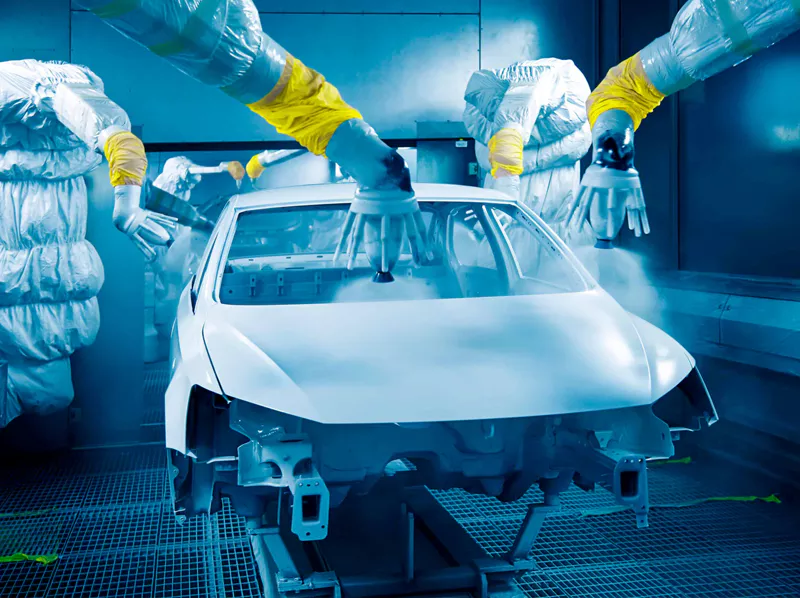
Waste Gas Characteristics & Composition Analysis
Effective abatement starts with understanding the source. In automotive parts coating, emissions vary drastically between process stages:
| Process Point | Typical Exhaust Components | Concentration & Flow Features |
|---|---|---|
| Spray Booth (Manual/Robot) | Xylene, Toluene, Butyl Acetate, Paint Mists | High Volume, Low Concentration (< 500 mg/m³). Contains sticky particulate matter. |
| Flash-off Area | Mixed Solvents (Esters, Ketones) | Medium Concentration, room temperature. |
| Curing Oven | High-boiling organics, Resin decomposition products, Siloxanes (from additives) | High Temperature, High Concentration (> 1,500 mg/m³). Potential for foul odors. |
Hazards & Urgency of Treatment
Health & Environmental Risks
Unabated emissions contain BTX (Benzene, Toluene, Xylene) and Isocyanates. These are potent contributors to ground-level ozone (smog) and pose severe occupational health risks, including respiratory damage and carcinogenic potential for workers.
Regulatory Risks
Non-compliance leads to immediate production halts and heavy fines. For Tier 1 suppliers, losing an “Green” certification can mean disqualification from OEM global supply chains.

Global Regulatory Snapshot
- ?? European Union (IED Directive 2010/75/EU): Sets strict limits for VOC emissions in surface cleaning and coating. Requires Best Available Techniques (BAT) such as thermal oxidation.
- ?? China (GB 37822-2019): Mandates comprehensive collection and treatment efficiency (often >90% system-wide). Specific limits for Benzene series are strictly enforced in automotive clusters.
- ?? USA (EPA MACT Standards – 40 CFR Part 63): Subpart PPPP (Plastic Parts) and Subpart MMMM (Misc. Metal Parts) require stringent destruction efficiency, typically met by RTOs.
How RTO Works: The Secret to High Efficiency
The Regenerative Thermal Oxidizer (RTO) uses ceramic media to capture and reuse heat. The process follows the “3T” principle:
- درجة حرارة: Heats exhaust to >760°C (or >850°C for high stability) to oxidize VOCs into CO2 and H2O.
- Time: Maintains residence time (0.5–1.0s) in the combustion chamber for complete destruction.
- Turbulence: Ensures thorough mixing of gas and oxygen.
استعادة الطاقة: With a thermal efficiency of up to 95%, the RTO can sustain self-combustion (Autothermal operation) with little to no auxiliary fuel once the VOC concentration exceeds 1.5–2.0 g/m³.
Why RTO? Comparative Analysis
Why choose RTO over other technologies for automotive parts?
| تكنولوجيا | Pros | Cons in Auto Parts Context | Verdict |
|---|---|---|---|
| رتو | High DRE (>99%), High thermal efficiency, robust to varied solvents. | Higher initial CAPEX than carbon adsorption. | Best Choice |
| Catalytic Oxidizer (CO/RCO) | Lower operating temperature. | Fatal Risk: Poisoning by Silicon/Siloxanes (common in auto molds/paints). | عالية الخطورة |
| الكربون المنشط | Low CAPEX. | High waste disposal costs; Fire risk with Ketones; Ineffective for high concentrations. | Only for low load |
| Zeolite Concentrator + RTO | Solves “High Volume/Low Conc.” issue. Energy efficient. | Complex system integration. | Best for Spray Booths |
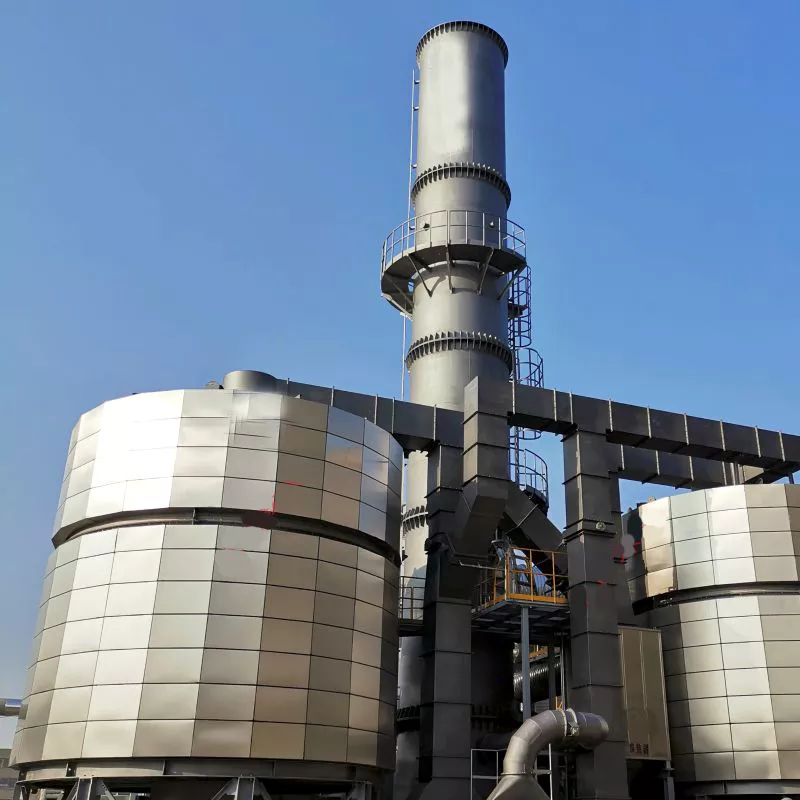
Our Specialized Design for Automotive Parts
1. Zero-Pressure-Pulse Rotary Valve
The Problem: Traditional 3-bed RTOs cause pressure spikes during valve switching, disturbing the delicate air balance in spray booths and causing dust defects on paint finishes.
Our Solution: We use a continuously rotating distributor valve. This ensures < 5 Pa pressure fluctuation, protecting your FTQ (First Time Quality) rate.
2. Anti-Silicone Configuration
The Problem: Automotive coatings often contain silicon additives that turn into SiO2 dust, plugging the ceramic media.
Our Solution: Design with “Sacrificial Layers” of large-pore ceramic media at the bottom, which are easy to access and cheap to replace, extending the main bed life.
ROI & Operational Cost Optimization
Investing in an RTO is not just a cost—it’s a defensive asset.
ROI = (Annual Fuel Savings + Annual Fines Avoided) / Initial RTO Investment
Fuel Savings: By integrating a Zeolite Concentrator, we reduce air volume by 10-20x, allowing the RTO to run in “Autothermal Mode” (burning only VOCs) for 95% of operation time.
Typical Payback Period: For a standard bumper paint line, the payback period is typically 2.5 to 3.5 years when factoring in recovered heat used for oven heating.
قصص النجاح
Case 1: Tier 1 EV Bumper Manufacturer (China, Shanghai)
Challenge: Massive airflow (300,000 Nm³/h) from spray booths with strict new GB37822 limits. High energy costs were a concern.
حل: 3 units of Zeolite Concentrator + 1 Rotary RTO. Waste heat is recycled to the Concentrator desorption air.
Result: Reduced Natural Gas consumption by 90%. Achieved < 20 mg/m³ VOCs emission. Passed Tesla supplier audit.
Case 2: Premium Wheel Manufacturer (Germany, Bavaria)
Challenge: Energy crisis drove gas prices up. The curing ovens were consuming too much fuel.
حل: RTO with Heat Exchanger (Air-to-Oil). Recovered heat is sent back to pre-heat the curing ovens.
Result: The system became a net energy provider for the plant. Annual savings exceeded €400k.
Case 3: Interior Trim Specialist (USA, Michigan)
Challenge: Old Catalytic Oxidizer failed repeatedly due to Silicone poisoning from mold release agents.
حل: Retrofit with a Compact Rotary RTO featuring anti-glazing ceramic media.
Result: 99.5% Uptime achieved. Zero catalyst replacement costs.

الأسئلة الشائعة
Q1: Will the RTO affect the pressure balance in my spray booth?
A: Standard RTOs might. That’s why we exclusively recommend Rotary Valve RTOs for paint lines, which eliminate pressure pulses and ensure <±3Pa fluctuation.
Q2: How do you handle Silicone (SiO2) plugging?
A: We use specialized structured ceramic media with larger channels at the inlet and a “sacrificial layer” design that allows for easy maintenance without replacing the entire bed.
Q3: Can RTO handle intermittent (batch) production?
A: Yes, our system includes a “Hot Standby” mode and variable frequency drives (VFD) to adjust airflow, minimizing fuel use during breaks or shift changes.
Q4: Is Zeolite Concentrator safe for all solvents?
A: It is excellent for most automotive solvents (Xylene, Esters). However, we analyze for high-boiling monomers or polymers that might polymerize on the wheel.
Q5: How much space is required?
A: Our Rotary RTO is compact. A 30,000 Nm³/h unit typically requires a footprint of approx. 6m x 8m. We also offer skid-mounted designs for easy retrofits.
Q6: What is the delivery and installation time?
A: Typical fabrication takes 12-14 weeks. Installation and commissioning can be completed in 2-3 weeks, often planned during scheduled plant shutdowns.
 AR
AR  EN
EN  ZH
ZH  ES
ES  ID
ID  PT
PT  FR
FR  JA
JA  RU
RU  DE
DE  MS
MS  CS
CS  BG
BG  NL
NL  KO
KO  RO
RO  SK
SK  TH
TH  VI
VI  ZH_TW
ZH_TW  UK
UK