
Commissioning should prove the approved design, not just start the fan
Commissioning connects the engineered design to the equipment installed at the plant. For an RCO, that connection includes exhaust ductwork, pretreatment where specified, regenerative heat management, catalyst modules, heat input, fans, instruments, controls, stack, and access provisions. The exact list depends on the project, so use approved drawings and the scope boundary rather than a generic checklist copied from another installation.
Before energization, confirm that the current process-flow diagram, piping and instrumentation diagram, equipment list, control narrative, electrical drawings, and cause-and-effect matrix are available to the team. Resolve discrepancies between drawings and the as-installed arrangement. A missing tag or undocumented field change can complicate troubleshooting, especially when a safety permissive depends on a device identified differently across records.
Review VOC variability and interlock inputs →
Verify documents first
Test the sequence
Record a baseline
Prepare the commissioning package
Define who owns each commissioning activity. Mechanical completion, electrical checks, control testing, safety review, process startup, emissions testing, and final acceptance may involve different teams. Assign a responsible person and a record for each task. Identify who can authorize progression and who can stop the activity when a prerequisite has not been met.
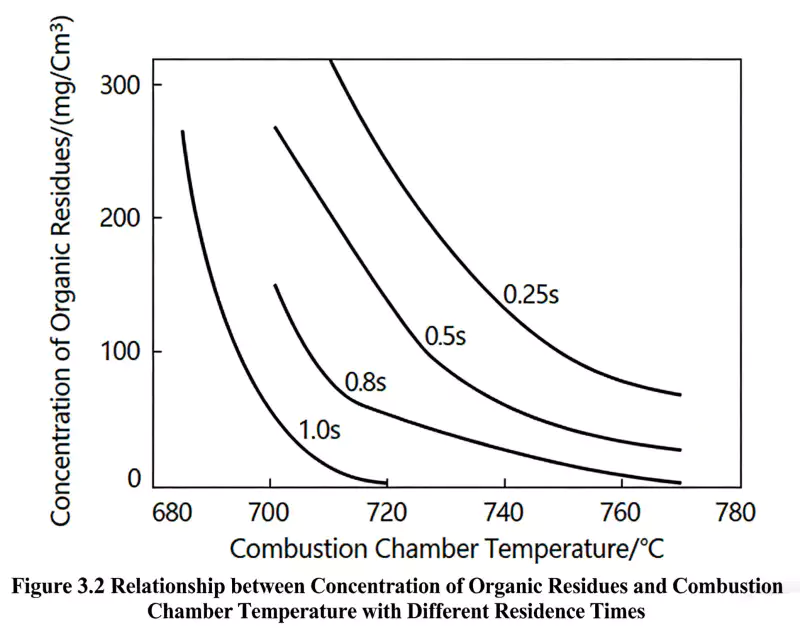
Review the exhaust envelope before introducing process gas. Confirm source, compounds, flow range, temperature, moisture, particulate, and known catalyst-sensitive constituents. Compare these conditions with the approved design basis. If production recipes changed after the engineering review, pause to assess whether sampling or a formal design review is needed instead of assuming the system can accept the new stream.
Mechanical completion should cover the full flow path. Inspect duct supports, access doors, expansion provisions, drains where specified, insulation, seals, fan rotation, dampers, valve or rotor installation, catalyst identification, and upstream conditioning. Use checks appropriate to the actual architecture. A component can appear installed yet be incorrectly oriented, inaccessible, or inconsistent with the approved drawing.
Instrument readiness matters because control decisions depend on measurements. Verify tag identity, range, calibration status, installation location, signal direction, and display scaling against the instrument list. Confirm that alarms and trends use the correct signal. If a sensor is unavailable, follow the approved commissioning hold-point process; do not bypass a required protection to preserve schedule.
Check the regenerative flow arrangement against the control narrative. Depending on design, this may include valve sequence, actuator feedback, purge behavior, rotating equipment, position confirmation, and transitions between operating states. Verify both the command and the physical response. A control output changing on screen does not prove the device moved to its intended position.
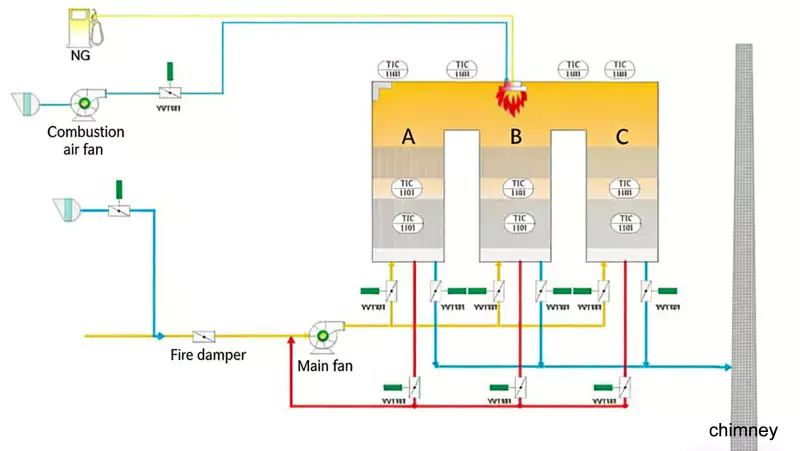
Safety permissives should be tested against the approved hazard review and cause-and-effect matrix. Inputs may include fan status, flow, temperature, valve position, heat-input status, gas conditions, and other protective signals. Record each test, expected response, actual response, and defect. Treat a failed required interlock according to the site’s hold-point and corrective-action process.
Before process startup, establish the safe operating area and communication method. Confirm the roles of the control-room operator, field operator, commissioning lead, and safety representative. Agree on stop-work signals, access restrictions, emergency response, and actions for unexpected odor, leakage, vibration, abnormal pressure, or a trip. A written plan prevents conflicting commands when several teams are around a new installation.
Start the system only under the approved sequence and with qualified personnel. Follow the supplier’s instructions for fan operation, heat input, flow establishment, catalyst conditioning if specified, and transition to the intended mode. The order can differ by design, so a generic online checklist should not replace the project-specific procedure. Record the actual sequence and any deviation for resolution before handover.

Make acceptance measurable and repeatable
During stabilization, capture operating conditions that make the baseline useful. Include process mode, approved flow indication, inlet and outlet temperatures where provided, pressure or differential pressure, heat-input status, valve or rotor behavior, alarms, and available gas-composition data. Use the approved instrument list and mark unavailable data honestly rather than inventing values.
| Commissioning area | Evidence required | Release question |
|---|---|---|
| Mechanical completion | As-installed checks and drawing reconciliation | Does the equipment match the approved configuration? |
| Instrumentation | Tag, range, calibration, signal and trend checks | Can operators trust the measurements? |
| Control and safety | Permissive, alarm, trip, and device-response records | Does the sequence respond as approved? |
| Process readiness | Feed envelope, startup procedure, site roles | Is the planned condition within the design basis? |
| Performance acceptance | Test method, operating conditions, report | Does evidence meet the agreed criteria? |
Define an acceptance test before the test date. Specify target, sampling location, operating mode, production rate or process condition, test method, averaging basis, and responsibility for sampling and analysis. Confirm whether stable operation, representative feed, or other conditions are required. If the plant cannot run the necessary mode during the planned window, document the limitation and agree a revised plan.
Performance results are meaningful only when operating conditions are recorded alongside them. A favorable result during low-load or atypical production may not represent the required duty. A test during an unplanned upset may also be unrepresentative. The report should connect results with process conditions and identify deviations from the agreed test protocol.

Check that stack sampling locations and access suit the approved test method. Confirm port location, safe platform access, isolation arrangements, and required utilities. Details depend on applicable requirements and the selected method. Do not assume a convenient opening is an appropriate test point; agree the sampling plan with the qualified testing team.
A five-stage commissioning release sequence
Training is part of commissioning, not a document handed over after technical work. Operators need to understand normal trends, alarm meanings, startup prerequisites, shutdown sequence, prohibited adjustments, and escalation points. Maintenance staff need equipment identification, safe access, replacement procedures, and recordkeeping expectations. Use actual control screens and site procedures so the team connects written instructions with installed equipment.
Closeout records should include as-built drawings, calibration records, completed interlock tests, manuals, catalyst records, spare-parts lists, approved operating limits, training attendance, performance reports, and open-item status. Identify what is complete and what needs follow-up. Each open item should have an owner, due date, risk assessment, and acceptance condition rather than disappearing into an email chain.
Check process data and acceptance criteria →
After the initial run, compare the baseline with later operating data. The purpose is to recognize drift and establish a reference for maintenance. Keep process conditions with measurements because a changed recipe or flow can alter readings without indicating equipment deterioration. If the baseline was collected in an atypical state, record that limitation and plan a representative repeat when practical.
Changes after commissioning should follow management of change. Adjustments to solvents, additives, production rates, exhaust collection, setpoints, control logic, or catalyst modules may affect the operating envelope. Before a change, determine whether new sampling, hazard review, supplier review, or acceptance testing is needed. Preserve the original approved basis so future teams understand why the installed limits were selected.
A disciplined handover leaves the operating team with a system they can explain, not merely a machine that runs. Staff should know the gas path, heat-management concept, catalyst limitations, protective functions, measurement points, maintenance needs, and evidence used to accept performance. That knowledge makes routine operation easier and helps distinguish a genuine deviation from normal variation.
Commissioning should finish with a documented decision: accepted for the defined envelope, accepted subject to controlled open items, or not accepted until specified defects are corrected. Reference the test records and approved conditions. A clear acceptance statement prevents the word commissioned from being interpreted as proof that every operating mode and every possible feed composition has been validated.
 AR
 EN
 ZH
 ES
 ID
 PT
 FR
 JA
 RU
 DE
 MS
 CS
 BG
 NL
 KO
 RO
 SK
 TH
 VI
 ZH_TW
 UK