
PM2.5 Treatment Solutions | RTO System for PM2.5 Treatment
PM2.5
PM2.5 is a complex mixture of particulate matter with a diameter of 2.5 micrometers or less (about 1/20th the diameter of a human hair)

The Silent Siege of PM2.5: Why RTO Technology is the Industrial Shield
In the current global industrial landscape, the battle against PM2.5 (Fine Particulate Matter) has evolved from a regulatory hurdle into a survival imperative for high-emission sectors. While direct dust and soot are visible, the true challenge for industries like Chemical Processing, Steel Manufacturing, and Industrial Coating lies in the invisible precursors—Vluchtige organische stoffen (VOS). These organic vapors undergo complex photochemical reactions in the atmosphere to form secondary PM2.5, which accounts for up to 60% of the persistent haze in industrial clusters.
As global environmental standards—from the US EPA’s stringent NAAQS to the EU’s Industrial Emissions Directive (IED)—tighten their grip, the era of “good enough” filtration is over. For B2B stakeholders, the mission is clear: eliminate the molecular source of PM2.5 before it reaches the stack. This is where Regenerative Thermal Oxidation (RTO) stands as the definitive technological vanguard.
An Engineer’s Perspective: From the Frontlines of Emission Control
“In our 12 years of servicing heavy-duty chemical plants and carbon fiber production lines in regions like Shanxi and the Ruhr Valley, we’ve observed a recurring failure: traditional scrubbers and carbon filters simply cannot handle the thermal load or the molecular complexity of modern industrial exhaust.
I remember a 2024 project for a massive film coating facility where the local AQI was consistently spiked by ‘invisible’ VOC emissions. Based on this decade of factory data, EVER-POWER implemented a multi-column RTO system that didn’t just capture pollutants—it incinerated them at $850^\circ\text{C}$ ($1562^\circ\text{F}$), achieving a destruction removal efficiency (DRE) of 99.2%. We weren’t just installing a machine; we were restoring the plant’s ‘social license’ to operate.”
Why the Industry is Shifting to RTO
What is an RTO? At its core, an RTO is an ultra-high-efficiency industrial furnace designed to destroy hazardous air pollutants (HAPs) and VOCs. Unlike traditional afterburners that consume massive amounts of fuel, an RTO uses a “regenerative” process—meaning it captures and reuses the heat generated during the combustion process to preheat the incoming dirty air.
As we move into the future of technology, the integration of AI-driven combustion monitoring and zero-leakage rotary valves will ensure your facilities contribute to a cleaner atmosphere while maintaining a superior return on engineering investment.
Total PM2.5 Elimination
Converts 99% of organic precursors into harmless H2O En CO2.
Operational Resilience
Designed to handle flow rates from 5,000 to over 270,000 Nm 3/ h , as seen in major coal mine VAM (Ventilation Air Methane) projects.
Regulatory Future-Proofing
Easily meets the 10 mg/m 3 emission limits being adopted by the world’s top 30 industrial nations.
RTO Working Principle: The Three-Phase Cycle
Gasgestookte elektriciteitscentrale
Metaalsmelten
Explosievenproductie
Afvalverbranding
Glasfabriek
How does RTO Technology Affect PM2.5 Concentration?
The Precursor Chain: From Gas to Particle
Most industrial processes—such as chemical manufacturing, lithium battery coating, and high-speed printing—emit high volumes of Vluchtige organische stoffen (VOS). These are gases, not particles. However, once these gases exit the factory stack and enter the atmosphere, they react with sunlight and other pollutants (like nitrogen oxides from transport).
This photochemical reaction triggers a phase change: the organic gases condense or react to form microscopic liquid or solid droplets. These are “Secondary PM2.5.” In many industrial regions, these secondary particles account for 40% to 60% of the total PM2.5 mass during heavy haze episodes.
The RTO Intervention: "Molecular Incineration"
An RTO prevents this transformation by destroying the VOCs at the source. By maintaining a combustion chamber temperature of 850℃(1562℉) with a 1.2-second residence time, the RTO shatters the complex carbon chains of the VOCs.
- Without RTO: 1,000kg of VOCs released → Potential formation of hundreds of kilograms of secondary PM2.5 in the downwind community.
- With EVER-POWER RTO: 99.2% of those VOCs are converted into harmless water vapor H2O and carbon dioxide CO2 before they ever leave the facility.
Technical Synergy: VOCs and Thermal Efficiency
The beauty of the RTO process is that these VOCs—the very precursors to PM2.5—actually serve as a fuel source. Because our systems achieve $\geq 95\%$ Thermal Energy Recovery, the “energy” contained in the VOC molecules is used to keep the ceramic beds hot. This creates a sustainable cycle: the more effectively we destroy the PM2.5 precursors, the less natural gas we need to run the system.
The ROI of Clean Air: Economic Analysis of RTO for a Large-Scale Printing Facility
In the high-precision world of flexographic and rotogravure printing, air quality control is no longer a luxury—it is a critical operational component. For a medium-to-large printing plant, the primary pollutant challenge is the high volume of Vluchtige organische stoffen (VOS)—such as ethyl acetate, ethanol, and toluene—which act as the primary precursors to secondary PM2.5.
Below is a detailed economic analysis comparing traditional thermal oxidation with our high-efficiency Regenerative Thermal Oxidation (RTO) technology, based on actual engineering benchmarks from our 2026 data.
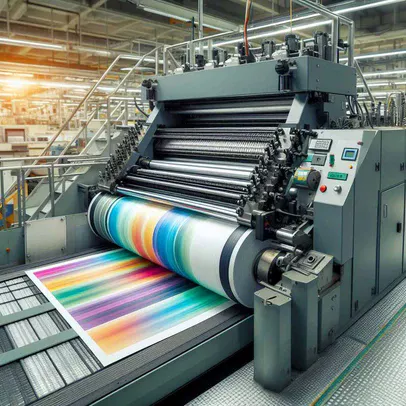
Case Profile: Medium-Large Printing & Packaging Plant
- Locatie: Industrial Zone (e.g., Danyang, Jiangsu or similar global industrial hubs)
- Production Lines: 3-4 High-speed rotogravure presses
- Exhaust Volume: 40,000 Nm^3
- Avg. VOC Concentration: 2.0g/Nm3
- Werking: $8,000 hours/year
| Metrisch | Conventional Afterburner (TO) | EVER-POWER RTO System | Difference / Savings |
|---|---|---|---|
| Exhaust Air Volume | 40,000 Nm³/h | 40,000 Nm³/h | Identical Load |
| Combustion Temperature | 850°C (1562°F) | 850°C (1562°F) | Precise VOC Destruction |
| Thermal Energy Recovery (TER) | 0% – 20% | ≥ 95% | +75% Efficiency |
| Annual Gas Consumption | 93,600,000 kWh | 4,680,000 kWh | –88,920,000 kWh |
| Annual Fuel Cost (Est. USD) | $4,680,000 | $234,000 | $4,446,000 Saved |
| VOC Destruction Efficiency (DRE) | 90% – 95% | ≥ 99.2% | Compliance Guarantee |
| PM2.5 Precursors Destroyed | N/A | 634,880 kg/year | Massive Env. Impact |
| Annual CO₂ Reduction | Base | 17,784 Tons | Green Credit Eligibility |
Redacteur: Miya
 NL
NL  EN
EN  ZH
ZH  ES
ES  AR
AR  ID
ID  PT
PT  FR
FR  JA
JA  RU
RU  DE
DE  MS
MS  CS
CS  BG
BG  KO
KO  RO
RO  SK
SK  TH
TH  VI
VI  ZH_TW
ZH_TW  UK
UK