
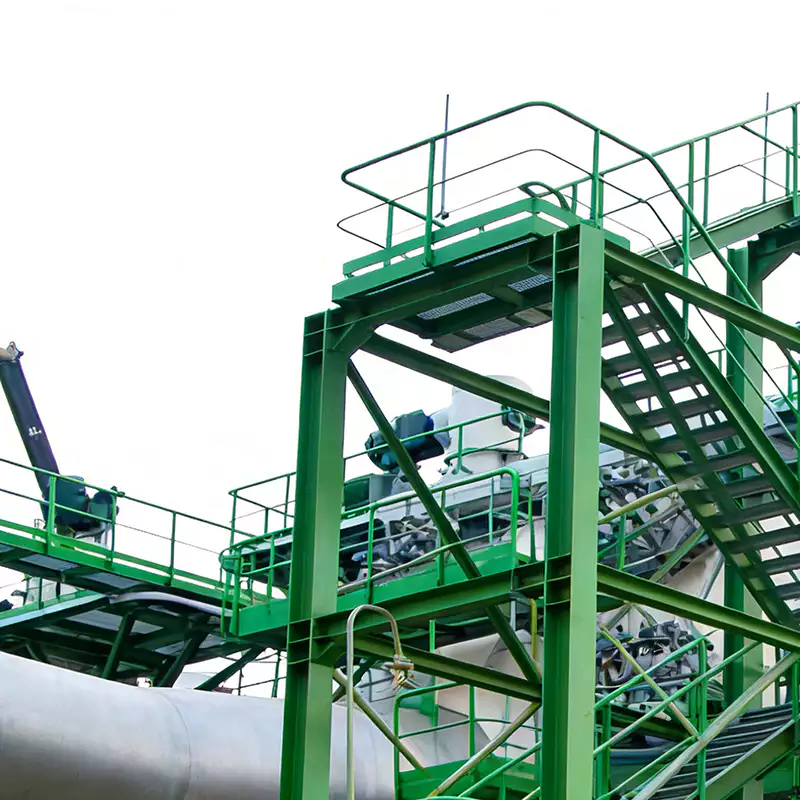
Description
Metallurgical Gas Purification | Dry Type Converter Gas ESP
Master the most complex metallurgical exhaust challenges with absolute safety. Engineered by Ever-power, our Cylindrical Dry Type Converter Gas Electrostatic Precipitator features a 100% zero-leakage design and an ultra-robust 0.2 MPa pressure-bearing capacity to safely purify explosive CO gas mixtures. Eliminate detonation risks, achieve emissions below 10mg/Nm3, and unlock maximum energy recovery from your tilting converter operations.
⚙️ Executive Engineering Brief
🔥 Gas Processing Capacity
- 📉 Max Gas Volume: 1,400,000 m3/h
- 🌡️ Gas Temperature: 80 – 160 °C
- 🌫️ Inlet Dust Density: Up to 50 g/Nm3
- 🌪️ Max Suction Pressure: -5,000 Pa
- 🏭 Supported Units: 18 – 450 MW scale
🛡️ Structural & Safety Integrity
- 💥 Casing Shape: Cylindrical (Explosion-Proof)
- 🛑 Gas Sealing: 100% Zero Leakage Design
- 🏋️ Pressure Bearing: Up to 0.2 MPa
- 🚨 Safety Mechanism: Integrated Relief Valves
- 🔄 Operation: Handles Intermittent Flows
🎯 Purification Performance
- ✅ Outlet Emission: < 50 mg/Nm3 (Capable of < 10 mg/Nm3)
- ✅ Internal Cleaning: Specialized Scraper Device
- ✅ Dust Discharge: Special Dust Removal System
- ✅ Distribution: High-efficiency screens
- ✅ Lifespan: Designed for 20+ Years
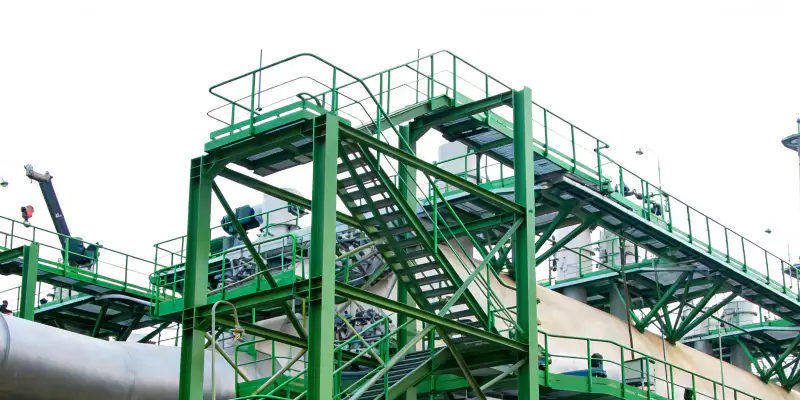
📊 Deep Technical Specifications
The Dry Type Converter Gas ESP is unequivocally one of the most critical and complex equipment pieces in the tilting converter gas purification system. Due to the high carbon monoxide (CO) content and the intermittent nature of the gas generation, strict aerodynamic and sealing specifications are mandatory.
| Engineering Parameter | Specification Standard | Metallurgical Impact |
|---|---|---|
| Casing Design Geometry | Cylindrical Configuration | Eliminates 90-degree corners to ensure optimal aerodynamic characteristics, completely preventing the formation of flammable gas/air mixtures and dangerous “blind zones”. |
| Structural Pressure Tolerance | 0.2 MPa | Built as a robust pressure vessel to withstand extreme internal deflagrations and pressure surges inherent to Basic Oxygen Furnace (BOF) operations. |
| Leakage Rate | Absolute Zero (0%) | 100% sealing prevents toxic and highly valuable Carbon Monoxide (CO) from escaping into the facility, ensuring personnel safety and maximum energy recovery. |
| Primary Safety Relief | Integrated Relief Valves | Instantly vents explosive pressure spikes to the atmosphere, protecting the core internal electrode framework from catastrophic structural damage. |
| Ash Discharge Mechanism | Specialized Scraper & Removal Device | Unlike standard gravity hoppers that introduce air ingress risks, this specialized mechanism reliably extracts metallurgical dust while maintaining absolute internal gas sealing. |
🔬 Process Mechanics & Internal Architecture
The Imperative for Cylindrical Design
The gas generated by tilting converters during the steelmaking process is highly intermittent and extremely combustible due to surges in Carbon Monoxide (CO). Standard rectangular Electrostatic Precipitators are highly dangerous in this application because gas can stagnate in corners. The Ever-power Dry Type Converter Gas ESP utilizes a strict Cylindrical Casing. This structural geometry forces a continuous, sweeping aerodynamic flow that eliminates return flow and dead zones, preventing explosion-inducing gas mixtures.
The Core Separation Process:
- The intermittent BOF gas enters through a precision distribution screen, ensuring laminar flow across the cylinder.
- The Discharge System ionizes the gas stream under tens of thousands of volts, applying a strong negative charge to suspended metallurgical dust.
- Driven by the Coulomb force, the charged particles aggressively migrate to the Collecting System plates, leaving the purified combustible CO gas to exit for downstream energy recovery.
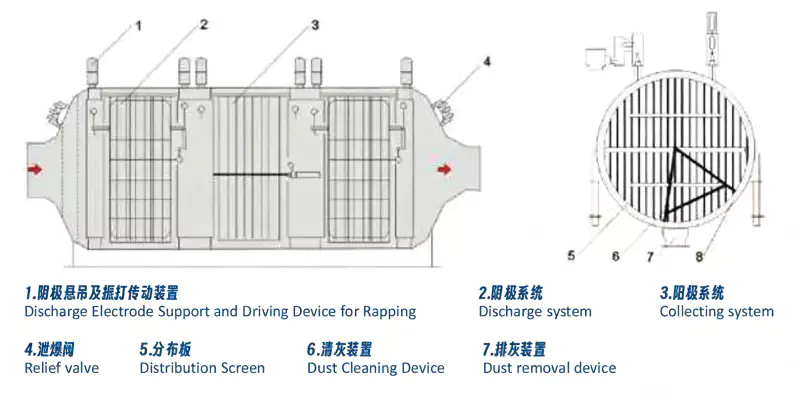
Internal Component Configuration
The internal architecture of the Converter Gas ESP demands absolute precision to function within a pressurized, explosive environment:
- Discharge System & Support: Equipped with advanced suspension frames and robust Discharge Electrodes designed to resist the intense vibrations and thermal shocks associated with batch converter smelting.
- Rapping Gearing: The Discharge Electrode Support and Driving Device for Rapping is engineered to operate seamlessly within the sealed pressure vessel, ensuring electrodes remain clean without requiring external atmospheric exposure.
- Dust Scraper & Removal: A highly specialized Dust Cleaning Device operates at the base of the cylinder, sweeping accumulated ash into the Dust Removal Device while sustaining the 100% zero-leakage threshold.
- Safety Relief Valves: Strategically positioned on the exterior casing to mitigate any internal deflagrations instantly.
🚀 Strategic Converter Design Advantages
Absolute Detonation Prevention
By marrying a cylindrical structural envelope with integrated high-response explosion relief valves, the Ever-power system mathematically rejects the aerodynamic conditions required for combustible gas detonation inside the precipitator.
Zero-Leakage Guarantee
Toxic CO leakage is a severe health hazard and an economic loss. Our 100% sealing design ensures that all valuable converter gas is fully contained and routed directly to the plant’s gas holder for downstream power generation.
Ultra-High Efficiency
Despite the incredibly hostile and intermittent gas flows of a tilting converter, our specialized electrode spacing and unique scraper mechanisms guarantee outlet dust concentrations consistently drop below 10 mg/Nm3.
⚠️ The High Stakes of Converter Gas Filtration
The Catastrophic Detonation Threat
Basic Oxygen Furnace (BOF) off-gas is highly concentrated with Carbon Monoxide. Utilizing standard rectangular precipitators in this process is a critical safety liability. Dead zones allow oxygen and CO to mix and stagnate. A single static spark from an electrode can trigger a catastrophic explosion, destroying millions of dollars in equipment, shutting down the steelworks, and threatening human life.
Lost Energy Recovery Revenue & Turbine Destruction
Modern steel plants rely on capturing converter gas to fire auxiliary power plants. Poorly sealed precipitators result in massive volumetric losses of this valuable gas to the atmosphere. Furthermore, if dust removal efficiency is poor (failing to reach sub-50mg/Nm3), the highly abrasive iron oxide dust destroys downstream gas holders and turbine blades, crippling plant profitability and causing massive maintenance overruns.
🏭 Primary Application Scenario
Tilting Converter Gas Purification System (BOF/LD Converter)
The Ever-power Dry Type Converter Gas ESP is specifically and exclusively designed for the primary exhaust of steelmaking converters. It operates synchronously with the blow cycles of the converter.
- ✔️ Intermittent Operation Mastery: Designed to power up and effectively precipitate dust during the intense, short-duration oxygen blows, handling rapid temperature fluctuations from 80°C to 160°C instantly.
- ✔️ Secondary Energy Integration: Acts as the critical bridge between the steelmaking vessel and the plant’s gasometer/power generation unit, ensuring the gas is clean enough for combustion in gas turbines.
⚖️ Cylindrical ESP vs. Rectangular ESP for Converter Gas
| Metric | Ever-power Cylindrical Converter ESP | Standard Rectangular ESP |
|---|---|---|
| Explosion Safety | Absolute. Zero corners prevent gas stagnation. | High Risk. 90-degree corners trap combustible gases. |
| Pressure Tolerance | 0.2 MPa Pressure Vessel Design. | Usually maxes out at 0.02 MPa. Prone to buckling. |
| Gas Sealing Capability | 100% Zero Leakage. | Susceptible to seal degradation, air ingress, and toxic leaks. |
| Dust Removal Strategy | Internal Scraper Mechanism maintains absolute seal. | Gravity hoppers prone to oxygen ingress (explosion trigger). |
🏆 Why Partner with Ever-power?
For over 20 years, Ever-power has dominated the engineering of severe-duty environmental equipment. Designing a Converter Gas ESP is the absolute pinnacle of precipitator engineering—it involves high-pressure vessel mechanics, explosive gas dynamics, and high-voltage physics. This cannot be outsourced to generalists.
- ✔️ End-to-End Metallurgical Mastery: We execute the entire project lifecycle: High-Pressure Vessel Engineering ➔ Lean CNC Manufacturing ➔ Complex Installation ➔ Intelligent Commissioning.
- ✔️ Trusted by Heavy Industry: Our bespoke BL Series protects the core converter operations of leading metallurgical conglomerates worldwide, preventing unscheduled downtime and catastrophic accidents.
- ✔️ Uncompromised Quality Credentials: Fully ISO certified for pressure vessel manufacturing, holding dedicated structural patents for explosive gas precipitators.
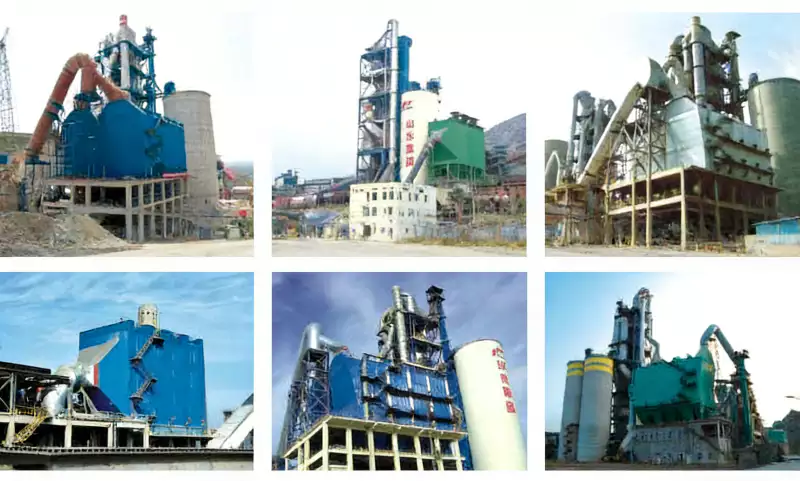
📐 Engineering Selection Guide: Architecting Your Solution
Due to the highly volatile nature of converter gas, precise engineering data is mandatory. Please gather the following parameters to allow our team to generate a highly accurate, explosion-proof technical proposal:
1. Converter Volumetrics & Blow Cycle Timing
Provide the Maximum Gas Volume (m3/h) (up to 1,400,000 m3/h), continuous Operating Temperature (°C), and detailed data regarding the specific oxygen blow cycle times of your tilting converter. This dictates the intermittency of the gas load and purging sequences.
2. Gas Composition & Explosion Parameters
We require the precise gas matrix—most importantly the Peak Carbon Monoxide (CO) % and potential oxygen ingress estimates. This data is critical for precisely sizing the mechanical explosion relief valves and designing the inert gas (nitrogen) purging protocols.
3. Dust Density & Site Footprint
Specify the Inlet Dust Concentration (g/Nm3) (typically up to 50 g/Nm3 for BOF gas) and provide the maximum allowable installation footprint. The cylindrical casing requires a distinctly different vertical and horizontal envelope compared to legacy rectangular units.
💰 Value Quantified: Return on Investment (ROI)
Upgrading to an Ever-power Dry Type Converter Gas ESP transforms an environmental liability directly into a high-value, measurable energy asset.
The Financial Risk of Subpar Filtration
- Wasted Fuel Source: Leaking or poorly performing traditional systems force plants to flare off valuable converter gas instead of recovering it, literally burning thousands of dollars a day.
- Downstream Destruction: Allowing dust loads above 50 mg/Nm3 into the gas holder severely erodes turbine blades and gas engines, causing millions in premature equipment replacement.
- Catastrophic Liability: A single dead-zone explosion can halt steel production for months, causing incalculable structural damage and revenue loss.
The Ever-power Upgrade ROI
- Maximum Energy Recovery: The 100% sealing design allows total capture of the CO gas stream. The financial value of this recovered gas powering captive turbines often covers the CapEx of the ESP within 18 to 24 months.
- Asset Protection: Reaching sub-10mg/Nm3 particulate levels ensures your gas holders and power generation turbines experience near-zero abrasion, extending their lifecycle immensely.
- Guaranteed Uptime: The explosion-proof cylindrical design allows the steelmaking process to operate continuously without safety-induced shutdowns.
🌍 Global Case Studies: Proving Our Authority
🇮🇳 Tata Heavy Steelworks (India)
Application: BOF Dry Converter Gas Recovery
Challenge: Previous rectangular ESP systems experienced micro-explosions during the oxygen blow cycle, causing severe casing deformations and halting smelting operations weekly.
Solution: Installed the Ever-power Cylindrical Converter ESP rated for 0.2 MPa. The aerodynamic design eliminated CO pooling. Explosion incidents dropped to absolute zero, and gas recovery efficiency increased by 34%.
🇧🇷 Minas Gerais Metallurgy (Brazil)
Application: Converter Gas Energy Recycling
Challenge: High particulate carryover (>120 mg/Nm3) was destroying the blades of their captive power gas turbines within months.
Solution: Upgraded to the Ever-power Dry Type Cylindrical ESP. Outlet emissions stabilized firmly below 20 mg/Nm3. Turbine maintenance intervals were extended from quarterly to semi-annually, saving over $2.5M in maintenance costs per year.
🇻🇳 Hoa Phat Smelting Complex (Vietnam)
Application: 1,200,000 m3/h Converter Gas Purification
Challenge: Strict new national environmental policies required the plant to halt flaring and safely capture all converter off-gas without toxic leakage to the atmosphere.
Solution: Deployed our 100% Zero-Leakage ESP system featuring the specialized internal dust scraper. Achieved full regulatory compliance and successfully routed the clean gas to fuel their rolling mill reheat furnaces.
🇨🇳 Tangshan Iron & Steel (China)
Application: High-Volume BOF Upgrade
Challenge: Required an ESP upgrade within a highly constrained spatial footprint that could still handle 0.2 MPa pressure surges and strict sub-10mg emissions.
Solution: Engineered a highly compact vertical cylindrical precipitator using ultra-efficient internal distribution screens, meeting the tight safety directives, space limitations, and ultra-low emission targets flawlessly.
❓ Engineering & Operational FAQ
Why can’t we use a standard rectangular ESP for Converter Gas?
Standard rectangular precipitators contain 90-degree corners. During intermittent BOF blows, oxygen and high-concentration CO gas can pool in these dead zones. A single corona spark from an electrode will ignite this mixture, causing a devastating explosion. Our cylindrical design forces a smooth aerodynamic sweep that entirely prevents gas stagnation.
What happens if pressure exceeds safe limits during a blow cycle?
The entire outer casing is built as a highly robust pressure vessel rated for 0.2 MPa. Furthermore, the unit is equipped with highly responsive mechanical explosion relief valves that instantly vent catastrophic pressure spikes, protecting the internal electrode framework from destruction.
How is dust removed without breaking the gas seal and causing an explosion?
Standard open gravity hoppers pose a massive risk of oxygen ingress. Instead, our Dry Type Converter ESP utilizes a specially designed, fully enclosed mechanical scraping and dust removal device at the base. This continuously extracts the iron oxide dust while maintaining an absolute 100% zero-leakage atmospheric seal.
Does this equipment handle sinter plant exhaust as well?
While we manufacture industry-leading ESPs for sinter plants, sinter exhaust requires a completely different design focused on handling massive continuous negative suction (up to -22,000 Pa) and high abrasion. The Cylindrical ESP is exclusively specialized for the explosive, pressurized nature of volatile converter gas.
What is the commissioning procedure like for this equipment?
Because of the extreme explosive hazards, commissioning involves rigorous hydrostatic pressure testing, nitrogen purge system validation, and aerodynamic flow modeling prior to introducing live CO gas. Ever-power’s senior engineers manage this full intelligent commissioning process on-site to ensure flawless integration.
Safeguard Your Steelworks & Recover Your Energy
Do not compromise on converter gas safety. Stop flaring valuable energy and completely eliminate the risk of precipitator detonations. Let Ever-power’s senior metallurgical engineering team design a bespoke Cylindrical ESP that guarantees 100% safety, < 10mg/Nm3 emissions, and maximum energy recovery.
 MS
MS  EN
EN  ZH
ZH  ES
ES  AR
AR  ID
ID  PT
PT  FR
FR  JA
JA  RU
RU  DE
DE  CS
CS  BG
BG  NL
NL  KO
KO  RO
RO  SK
SK  TH
TH  VI
VI  ZH_TW
ZH_TW  UK
UK