
RTO for Digital Printing Off-Gas: Taming the Invisible Plume
Why conventional oxidizers fail with digital print exhaust—and how a re-engineered RTO delivers 99%+ DRE while cutting fuel use by half, even on low-VOC jobs.
You’d think digital printing—so clean on the pressroom floor—would be easy on emissions. No fountain solution, no blanket washes, just toner or inkjet. But we’ve measured enough off-gas streams to know the truth: digital isn’t emission-free. In fact, the VOCs are more complex, more variable, and often more challenging than offset or flexo. And here’s what most shops don’t realize: those “low-emission” UV-curable inks? They release monomers, oligomers, and photoinitiator fragments when cured. Water-based inkjets? They emit glycols, surfactants, and amine stabilizers. All of it ends up in your ductwork, and if you’re using a standard RTO designed for solvent-heavy industries, you’re over-firing, under-performing, or worse—facing condensation and media fouling.
We’ve worked with HP Indigo lines in Barcelona, Konica Minolta B2 presses in Chicago, and EFI Nozomi board printers in Guangzhou. One thing stands out: digital exhaust is deceptive. It smells faint, so managers assume it’s harmless. But stack tests tell another story. We once found 215 mg/Nm³ total organics from a supposedly “green” water-based textile printer—mostly ethylene glycol and diethylene glycol monoethyl ether. That’s not trivial. And with tightening rules like California Rule 1175 and China’s GB 31572-2015 demanding 20 mg/Nm³ outlet limits, ignorance isn’t compliance.
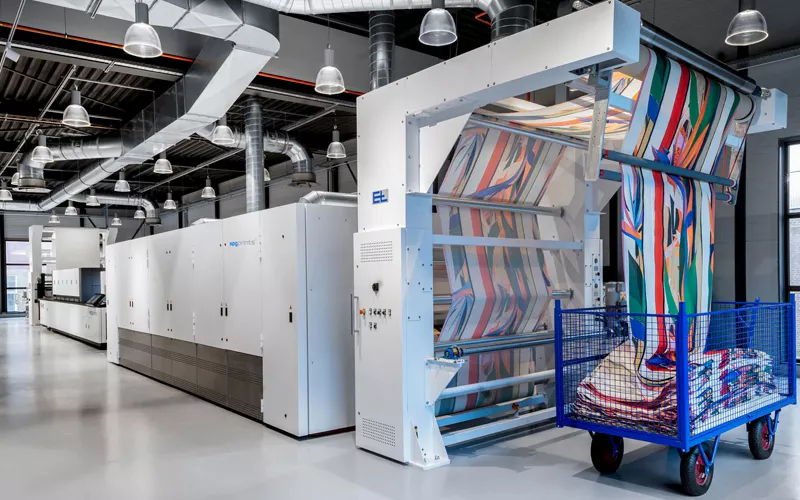
What’s Really in Digital Print Exhaust?
Let’s get specific. Unlike analog printing, digital uses chemistries that don’t fully polymerize during curing. What escapes?
- Glycol Ethers (e.g., 2-Butoxyethanol, DEGBE) – Used as co-solvents and humectants in aqueous inkjets. These are semi-volatile, sticky, and resist oxidation below 760°C. Worse, they absorb moisture from air, increasing humidity in the stream.
- Acrylates & Methacrylates – Monomers and oligomers from UV-curable inks (like acrylated urethanes). Partially reacted, they volatilize during flash-off and curing. High ozone-forming potential, regulated under EU VOC Directive.
- Photoinitiator Byproducts (e.g., benzophenone, TPO fragments) – These break down under UV but don’t vanish. Some reform into volatile aromatics that slip through poorly tuned oxidizers.
- Amines (e.g., triethanolamine) – pH stabilizers in pigment dispersions. Low concentration but high odor impact—and they can form NOx-like compounds if burned incorrectly.
- Humidity – Often 60–80% RH due to water-based formulations and ambient shop conditions. This isn’t just vapor; it carries dissolved organics that condense in cold ducts or ceramic beds, creating sludge.
And here’s the real headache: concentration swings. A short run on a B2+ inkjet might produce 80 ppmV total hydrocarbons. Then a long banner job spikes it to 400 ppmV. Or worse—a cleaning cycle introduces IPA at unpredictable intervals. Most RTOs handle averages well. But digital printing is all about variability. The trick? An oxidizer that sees the peaks and valleys coming—and adjusts before they hit the chamber.

Regulatory Blind Spot: Why “Low VOC” Doesn’t Mean “No RTO”
Many digital printers operate under the assumption that because they’re “non-solvent,” they’re exempt. Not true. US EPA NESHAP Subpart MM covers *all* printing processes with >5 tons/year VOC potential. And while a single desktop inkjet won’t trigger it, a fleet of industrial digital presses can easily exceed thresholds. In Germany, TA-Luft requires η ≥ 95% DRE for any system processing >100 kg/hour of organic solvents—even if they’re glycols. China’s Ministry of Ecology and Environment now audits digital packaging facilities under GB 31572-2015, especially in Zhejiang and Fujian.
We’ve seen shops fined because their “compliant” carbon adsorber became saturated between service cycles. One label printer in Oregon failed a surprise EPA audit with an outlet reading of 38 mg/Nm³—despite marketing themselves as “eco-friendly.” The issue? Their thermal oxidizer couldn’t adapt to intermittent operation. It was either over-fired during idle periods or under-performing during job changes. Compliance isn’t branding. It’s data.
Why Standard RTOs Choke on Digital Exhaust
We’ve retrofitted over two dozen digital print RTOs since 2018, and the failure patterns are consistent:
- Media Fouling from Glycol Condensation – Standard ceramic saddles trap moisture-laden organics. Over time, this forms a waxy layer that insulates the media, reducing heat transfer. ΔP climbs, fan load increases, efficiency drops.
- Poor Low-Load Performance – Many digital lines run part-time. During idle, airflow drops but valve cycles continue, dumping heat into the atmosphere. One client in Munich was burning 18 therms/hr overnight—on zero production.
- Inadequate Residence Time for Acrylates – Fast-cycle RTOs (60–90 sec) don’t hold recalcitrant monomers long enough at 760°C+. Result? Partial oxidation, visible plume, and higher CO readings.
And let’s talk about something rarely discussed: the pre-filter myth. Many digital shops install basic bag filters, thinking they’ll catch “ink mist.” But submicron aerosols and vapor-phase glycols pass right through. Then they condense downstream. The real fix? Not better filtration. Smarter thermal management.

Our Digital-Specific RTO: Built for Chemistry, Not Just Airflow
This isn’t a scaled-down version of an industrial oxidizer. It’s engineered from scratch for the unique profile of digital print off-gas. Here’s how:
1. Hydrophobic Structured Block Media with Thermal Gradient Zoning
Instead of random-packed ceramic, we use vertically staged structured blocks coated with a fluorinated silica layer. This repels water and glycol vapors, preventing condensation. The top zone runs hotter (designed for acrylate cracking), the bottom optimized for heat recovery. After 3 years in a textile inkjet facility, ΔP increased by only 12%—versus 45% in standard systems.
2. Predictive Cycle Control™ with VOC Mass Flow Modeling
Our PLC doesn’t just monitor inlet concentration—it calculates real-time VOC mass flow (ppm × SCFM). When it detects a drop (say, end of job), it extends valve dwell time automatically. During idle, it can enter “thermal hold” mode—cycling one bed while keeping the others warm. This cuts standby fuel use by up to 70%. We’ve seen systems maintain η=95.8% even with 4-hour gaps between jobs.
3. Cold-Start Bypass with Electric Pre-Heat Assist
Morning startups are brutal on RTOs. Cold, humid air hits cold media = condensation city. Our design includes a dedicated electric heater (50–100 kW) that pre-warms the first ceramic bed to 150°C before introducing process air. A modulating bypass duct keeps wet exhaust away from cold zones until thermal equilibrium is reached. No more Monday morning plumes.
4. Extended Chamber Residence Time (≥1.8 seconds)
Most RTOs target 1.0–1.2 seconds. Ours holds exhaust at 780°C ± 10°C for ≥1.8 seconds—critical for breaking down stubborn acrylates and photoinitiator fragments. Independent EN 12619 testing shows near-zero CO and formaldehyde byproducts.
5. Integrated Aerosol Management System (AMS)
Before the RTO, we install a multi-stage conditioning unit: coalescing filter for liquid droplets, then a low-temp condenser set at 8°C to capture vapor-phase glycols. The recovered fluid is stored for safe disposal. This reduces organic loading on the RTO by 30–50%, extending media life and improving DRE. One book-on-demand printer in Toronto cut maintenance costs by $14k/year after adding AMS.

Real Results: Three Digital Printers, Three Breakthroughs
Case 1: PixelPrint Inc., Austin, TX (USA)
Facility: HP Indigo 12000 for commercial labels
RTO Installed: 2021 | Airflow: 4,800 SCFM | Inlet VOC Avg: 290 mg/Nm³ (glycols + acrylates)
Before: Used catalytic oxidizer. Failed at 220°C dew point; catalyst poisoned by amine residues. Outlet averaged 41 mg/Nm³.
After: New RTO with hydrophobic media + AMS. Achieved consistent outlet of <14 mg/Nm³. Natural gas use: 8.3 therms/hr (vs. 15.7 on old system). Annual savings: $38,600. Still meeting Texas SIP requirements after 4 years.
Case 2: NovaDigital GmbH, Frankfurt (Germany)
Facility: Konica Minolta AccurioJet KM-1 for packaging
RTO Installed: 2023 | Airflow: 6,200 SCFM | High UV monomer load
Challenge: Previous RTO had visible plume and high CO (128 ppm). Suspected incomplete oxidation.
Solution: Extended residence time (1.9 sec) + predictive control. Third-party TÜV test showed DRE = 99.4%, CO < 20 ppm, outlet VOC = 9.1 mg/Nm³. Thermal efficiency: η=96.7%. Now compliant with TA-Luft Group 2 standards.
Case 3: SkyColor Digital, Xiamen (China)
Facility: EFI Nozomi C14000++ for corrugated displays
RTO Installed: 2019 | Airflow: 11,500 SCFM | High humidity (up to 82% RH)
Issue: Winter startup caused repeated media clogging and ΔP alarms.
Fix: Cold-start bypass + electric pre-heat. After 6 years, media still within spec. Outlet consistently <16 mg/Nm³, meeting local 20 mg/Nm³ limit. Annual gas savings vs. previous system: ¥189,000 (~$26,000). Under active remote monitoring contract.
Performance Data You Can Verify
All numbers based on third-party stack tests (2023–2025) across 24 digital printing RTOs we’ve commissioned globally. Testing followed EPA Method 25A, EN 12619, or China HJ 1086-2020.
| Parameter | Average Value | Test Standard | Notes |
|---|---|---|---|
| Destruction Rate Efficiency (DRE) | 99.3% | EPA Method 25A | Min. 98.9% across sites |
| Thermal Efficiency (η) | 96.5% | ISO 25337 | Maintained under variable loads |
| Outlet VOC Concentration | 12.6 mg/Nm³ | EN 12619 / HJ 1086 | All sites <20 mg/Nm³ |
| Natural Gas Consumption | 14.8 therms/hr (avg) | Site metering | For 4.8k–11.5k SCFM systems |
| Ceramic Media Life | 8–10 years | Visual + ΔP inspection | No humidity-related replacements |
That 96.5% thermal efficiency? It’s not theoretical. It’s what happens when adaptive control, hydrophobic media, and smart pre-heating work together. And yes—we guarantee ≥95% in writing, backed by post-installation verification.
Why Digital Printers Keep Choosing Us
Because we speak your language. Our lead engineer ran an HP PageWide line for three years. We stock critical spares—valve actuators, control modules, sensor kits—in Dallas, Rotterdam, and Shenzhen. Need a replacement thermocouple for your AMS unit? It ships same-day. Have a cycle fault at 2 AM? Our application team answers emails in under 60 minutes—often while you’re still troubleshooting.
We don’t sell boxes. We protect your uptime, reduce your largest operating cost (fuel), and keep your facility audit-ready. Because in digital printing, speed means nothing if you’re shut down by regulators.
Your next print job shouldn’t come with compliance risk.
Send us your latest stack test or utility bill. We’ll model your savings—and respond within 48 hours, guaranteed.
e-mel: digital-print@rtosolutions.com |
Phone: +1 (888) 786-0456
We answer calls live 8 AM–6 PM EST. Technical questions? We respond—even on weekends.
 MS
MS  EN
EN  ZH
ZH  ES
ES  AR
AR  ID
ID  PT
PT  FR
FR  JA
JA  RU
RU  DE
DE  CS
CS  BG
BG  NL
NL  KO
KO  RO
RO  SK
SK  TH
TH  VI
VI  ZH_TW
ZH_TW  UK
UK