– Regenerative Thermal Oxidizers (RTO) and other oxidation technologies play a crucial role in the coatings industry. This article will explore the advantages and disadvantages of RTO compared to other oxidation technologies for coatings.
– RTO is a highly effective and energy-efficient oxidation technology used in the coatings industry. It utilizes a regenerative process to remove volatile organic compounds (VOCs) from exhaust gases generated during coating operations.
– The regenerative process involves the cyclic heating and cooling of ceramic beds, allowing for the efficient destruction of VOCs and the recovery of heat energy.
– RTOs are known for their high destruction efficiency, typically exceeding 98%, making them a preferred choice for many coating manufacturers.
– Energy Efficiency:
– RTOs offer exceptional energy efficiency due to their regenerative design. The heat energy recovered during the oxidation process can be utilized to preheat incoming exhaust gases, reducing the overall energy consumption.
– This energy-saving feature not only reduces operational costs but also contributes to a more sustainable and environmentally friendly coating process.
– High Destruction Efficiency:
– As mentioned earlier, RTOs achieve destruction efficiencies of over 98%. This high efficiency ensures the effective removal of VOCs, preventing their release into the environment and helping coating manufacturers comply with stringent air quality regulations.
– Versatility:
– RTOs can handle a wide range of coating applications, including solvent-based and water-based coatings. Their versatility makes them suitable for various industries, from automotive to aerospace.
– Capital Investment:
– Implementing an RTO system can involve significant upfront costs. The need for specialized equipment, such as ceramic beds and heat recovery systems, can make the initial investment higher compared to other oxidation technologies.
– Space Requirements:
– RTOs require sufficient space for installation, especially when considering the size of the ceramic beds and other components. Coating manufacturers with limited space may find it challenging to accommodate an RTO system.
– Maintenance and Operational Complexity:
– RTOs require regular maintenance to ensure optimal performance. The complexity of the regenerative process and the need for periodic cleaning and inspection can add to the operational challenges.
– In conclusion, RTOs offer numerous advantages in terms of energy efficiency, destruction efficiency, and versatility. However, they also come with drawbacks such as capital investment, space requirements, and maintenance complexity. Coating manufacturers should carefully consider their specific requirements and evaluate the pros and cons before choosing between RTO and other oxidation technologies for their coatings processes.

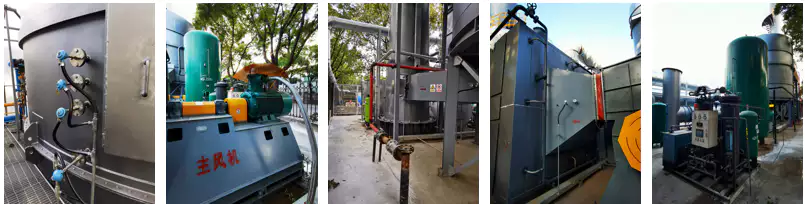
我們是一家專注於揮發性有機化合物(VOCs)廢氣綜合處理、減碳及節能技術的高科技企業。我們的核心技術包括熱能、燃燒、密封和自控,具備溫度場模擬、氣流場模擬建模、陶瓷儲熱材料性能研究、分子篩吸附材料篩選以及VOCs有機物高溫焚燒氧化特性測試等能力。
Our team is comprised of over 360 employees, including more than 60 R&D technical elites. Our core technology team comes from the Aerospace Liquid Rocket Engine Research Institute (Aerospace Sixth Institute). We have an RTO technology research and development center and a waste gas carbon reduction engineering technology center in Xi’an, and a 30,000 square meter production base in Yangling. We are a leading manufacturer of RTO equipment and molecular sieve rotary equipment in the world.
我們的核心產品包括旋轉閥式蓄熱氧化焚化爐(RTO)和分子篩吸附濃縮轉輪。憑藉我們在環境保護和熱能係統工程技術方面的專業知識,我們能夠為客戶提供適用於各種工況的工業廢氣處理和碳減排綜合解決方案。
為塗裝業選擇合適的RTO需要仔細考慮以下幾個面向:
我們的蓄熱式熱氧化器服務流程包括:
作為一站式RTO解決方案供應商,我們的專業團隊可為客戶量身打造RTO解決方案。我們已成功為塗料產業提供RTO解決方案,包括但不限於以下案例:
作者:米婭
RTO for Sterile API Crystallization and Drying Exhaust Treatment How our rotor concentrator plus RTO...
RTO For Revolutionizing Fermentation Exhaust Treatment How our three-bed RTO system efficiently handles esters, alcohols,...