
An RCO retrofit begins with the limits of the existing plant
A plant may consider Regenerative Catalytic Oxidation when an existing VOC control system approaches an equipment-life decision, production changes, or operating costs require review. An RCO retrofit can be attractive for compatible streams, but it is not a universal drop-in replacement. Existing equipment was designed for particular flows, temperatures, compounds, utilities, and safety functions. Compare those assumptions with current conditions before selecting a new treatment concept.
The first task is to establish what the existing system actually does. Review recent flow and emissions records, process changes, alarm history, maintenance work, utility use, and equipment constraints. If drawings and control narratives are incomplete, survey the installation and list gaps. A retrofit proposal based only on an old nameplate may miss changes that accumulated through years of production adjustments.
Compare RCO and other oxidizer options →
Survey the installation
Recheck feed compatibility
Protect the cutover
Determine what can be reused without transferring old problems
Source capture should be reviewed separately from treatment technology. The system may receive exhaust from several lines with different solvents, flow ranges, and operating schedules. Some branches may have been added since original commissioning; others may run only during cleaning or maintenance. Map the flow path and operating modes before calculating whether an RCO can handle the resulting envelope.
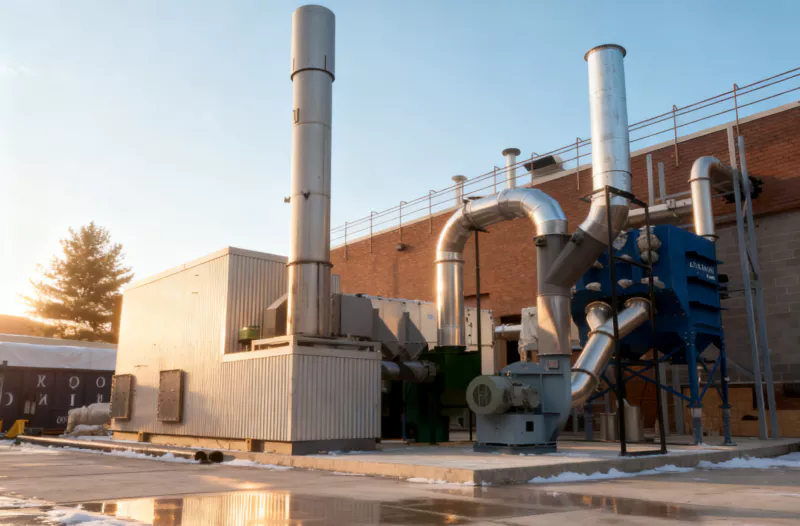
The compound profile needs a fresh compatibility review. RCO introduces catalyst-specific considerations that a previous noncatalytic system may not have faced in the same way. Trace additives, aerosols, condensables, or unexpected process chemicals can affect suitability even if total VOC appears similar. Request representative sampling and a supplier assessment of the proposed catalyst; success with another technology does not prove compatibility.
Fan capacity and pressure resistance can determine whether existing mechanical equipment can be retained. A new arrangement may have different resistance because of regenerative media, catalyst, pretreatment, transitions, or controls. Compare the expected operating point with verified fan data and collection requirements. Increasing fan speed may not be safe or sufficient, and can alter capture elsewhere in the plant.
Duct interfaces require a dimensional survey. Confirm location, orientation, materials, supports, expansion allowance, leakage condition, and routes for connecting the new unit. Review whether the existing duct can be isolated safely and whether temporary arrangements are permitted. A nominal flange match is not enough when access, thermal movement, and structural support may change during the retrofit.
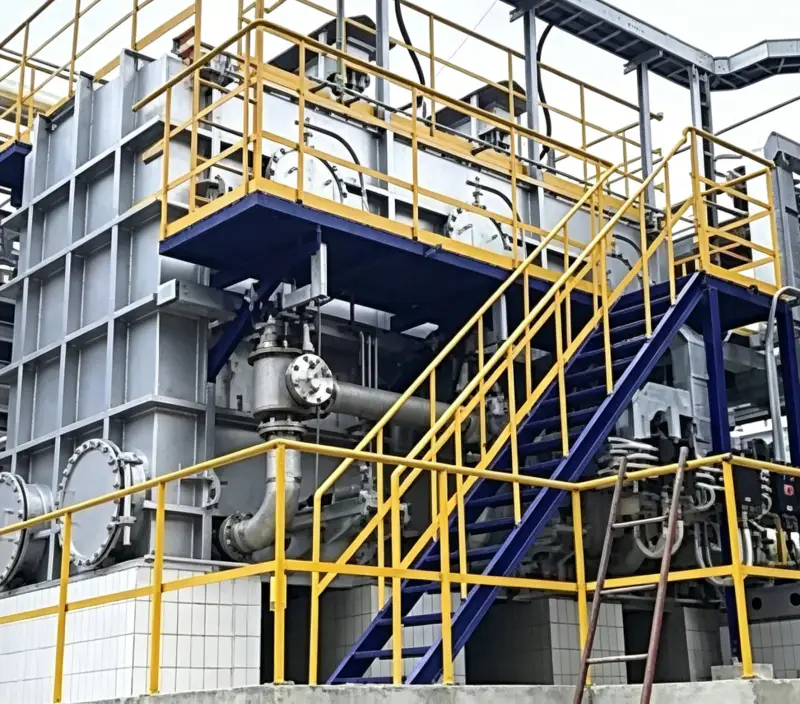
Available space is more than footprint. New equipment may need clearance for access doors, catalyst handling, lifting, insulation, platforms, fans, or future replacement. A plant can have enough floor area yet lack a safe maintenance route. Check structures, overhead restrictions, nearby services, and foundation capacity. If evidence is missing, assign a qualified structural review rather than treating old drawings as verified.
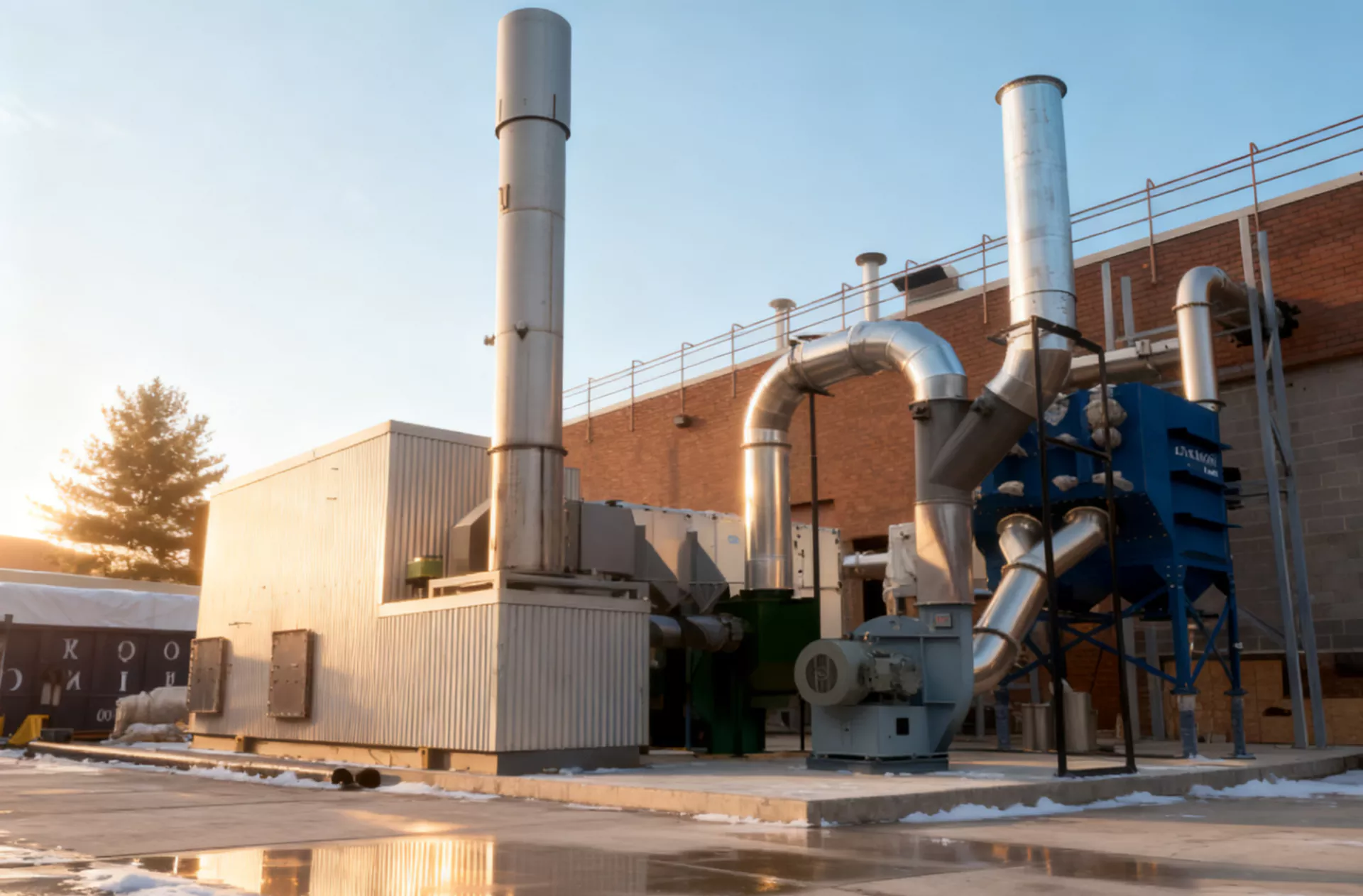
Utility connections should be verified by capacity and duty. Review electrical supply, control power, heating fuel or other energy source, compressed air where applicable, drainage, and communications interfaces. A connection being physically present does not prove it can support the new equipment. Document available capacity, reliability, isolation, and who is responsible for modifications on each side of the package boundary.
Existing controls may be partially reusable, but protective functions need independent review. Legacy narratives may not reflect current feed hazards, operating modes, or requirements. Determine which signals and functions remain, which are replaced, and how the new RCO integrates with process permissives, trips, alarms, and shutdown response. Do not retain an interlock solely because it has been used before, and do not bypass one to simplify installation.
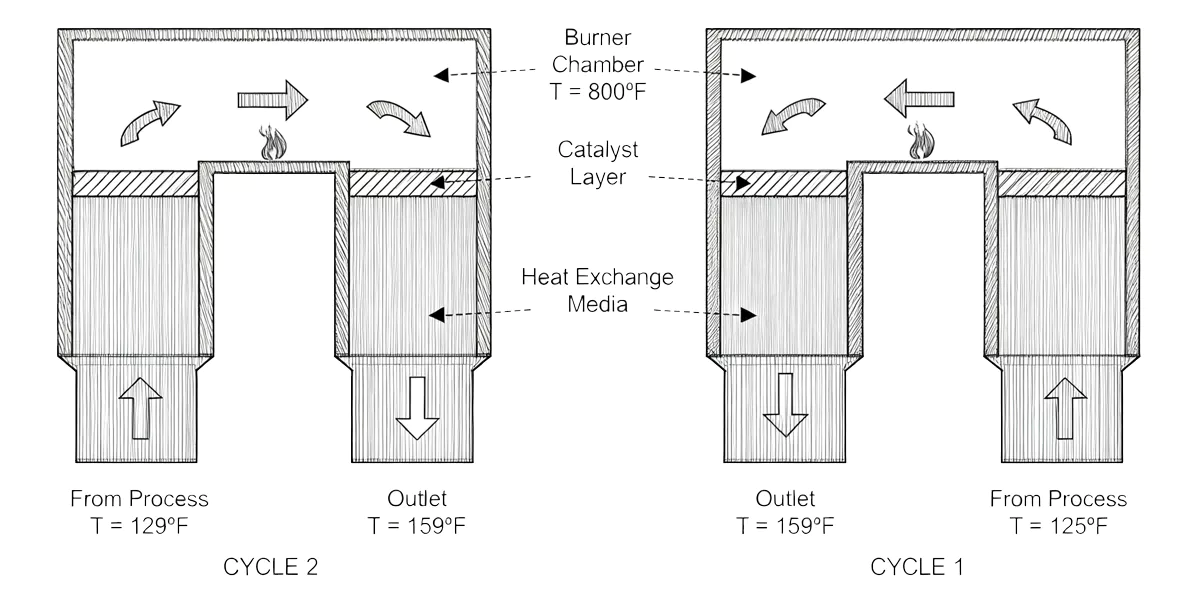
Regenerative and catalytic sections add maintenance needs. A retrofit proposal should include access for inspection, catalyst identification, pressure monitoring, regenerative media maintenance, and safe isolation. If these are not addressed during layout, the plant may inherit difficult service work immediately after installation. Review the expected tasks with maintenance staff who understand shutdown windows and physical access constraints.
Turn the retrofit concept into a controlled cutover plan
Environmental acceptance must be considered from the beginning. Determine applicable emissions targets, permit conditions, sampling locations, test method, and operating cases required for acceptance. Existing permits or tests may relate to the old configuration and should not automatically be transferred to a different technology. Qualified environmental reviewers should identify the approvals or additional testing required before cutover.
| Retrofit interface | Information to verify | Potential decision |
|---|---|---|
| Exhaust network | Sources, flows, temperatures, materials, leakage | Reuse, modify, or replace |
| Fan and pressure | Fan capability, resistance, capture needs | Capacity and operating-point review |
| Chemistry and pretreatment | Compounds, aerosols, deposits, compatibility | Suitability and upstream changes |
| Controls and utilities | Power, heat source, interlocks, signal integration | Rework and safety validation |
| Space and access | Foundations, lifting, service clearance | Layout and outage feasibility |
| Acceptance and permits | Target, test method, required authorizations | Cutover and commissioning criteria |
Construction sequencing can be as important as equipment design. The plant may need to maintain production, arrange a defined outage, or coordinate multiple lines sharing an exhaust header. Plan delivery, foundations, dismantling, lifting, connections, electrical work, controls, inspection, and startup. Identify activities possible while the old system runs and those requiring full isolation under approved procedures.
A retrofit risk register should list unresolved assumptions rather than bury them in a contingency. Typical items include incomplete as-built records, uncertain fan performance, duct corrosion, unknown catalyst-sensitive compounds, limited lifting access, utility constraints, and permit implications. Assign each risk an owner and verification action. This prevents avoidable surprises when the plant has already committed to a narrow outage window.
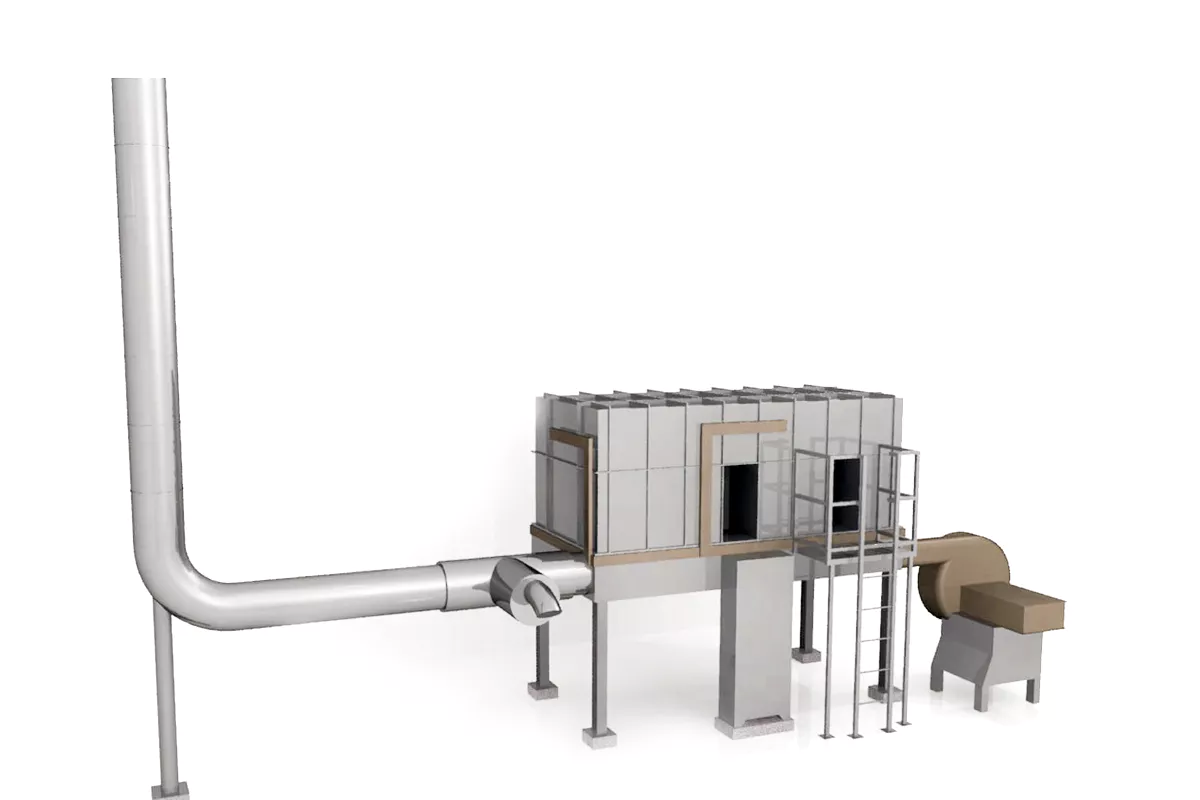
Commercial comparisons should define what the supplier and plant each provide. Inlet and outlet ductwork, foundations, lifting, wiring, controls integration, sampling ports, insulation, stack modifications, pretreatment, utilities, spares, training, and commissioning may sit in different contracts. A scope matrix prevents omissions. Ask for explicit exclusions rather than assuming every quote includes a complete installed system.
Practical review workflow
Performance should be reviewed at more than one operating point where the plant has material variation. Normal production, low-load runs, peak solvent events, cleaning, and startup can create different conditions. Suppliers should state which modes are inside the approved envelope and which need additional controls or restrictions. Link that envelope to acceptance tests rather than leaving it as an informal assumption.
The cutover plan must explain safe isolation of the old system and acceptance of the new one. Define responsibility for lockout, cooling, gas testing, electrical isolation, lifting, inspection, and final authorization. Do not use an improvised untreated-gas bypass that conflicts with environmental or safety requirements. Any temporary configuration needs qualified review and required approvals.
Commissioning should verify the treatment unit and retained interfaces. Confirm flow, instrument calibration, fan response, control logic, valve or rotor sequence where relevant, catalyst configuration, pressure behavior, alarms, and trips. Tests depend on the approved design. Record results and defects, and do not classify a required safety test as passed because the equipment runs under one favorable condition.
Review exhaust safety and interlock inputs →
An acceptance baseline should preserve the conditions needed for later comparison. Record exhaust composition, flow, process mode, inlet temperature, pressure profile, energy use, and test method where available. If measurements cannot be linked to production conditions, the plant may struggle to understand drift later. Make the baseline accessible to operations and maintenance and align it with actual purchase acceptance conditions.
Training must address differences between the old system and the new RCO. Operators may know an old alarm set or startup sequence that no longer applies. Explain catalyst limitations, monitoring points, approved operating envelope, abnormal response, and maintenance interfaces. Use real control screens and as-built documents, and discourage informal changes to protective functions or uncontrolled substitutions of process chemicals.
After cutover, establish management-of-change triggers. New solvents, coating recipes, cleaning agents, exhaust branches, fan settings, or operating schedules can move the system outside reviewed conditions. Define who evaluates changes and when sampling or supplier consultation is required. This prevents the retrofit from becoming a new source of undocumented assumptions as production evolves.
 UK
 EN
 ZH
 ES
 AR
 ID
 PT
 FR
 JA
 RU
 DE
 MS
 CS
 BG
 NL
 KO
 RO
 SK
 TH
 VI
 ZH_TW