
คำอธิบาย
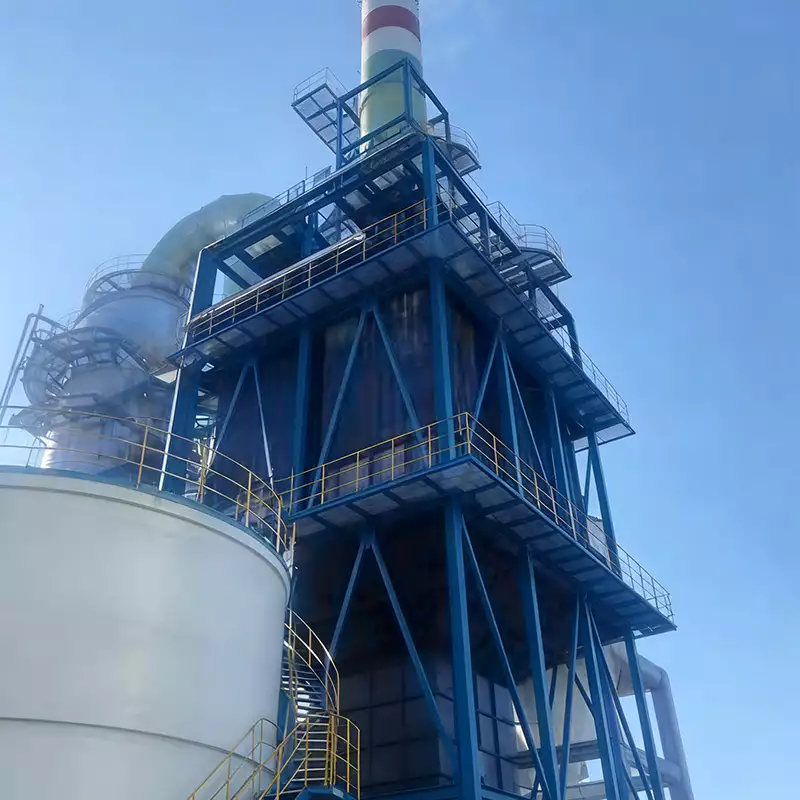
Terminal Exhaust Purification | Wet Electrostatic Precipitator (WESP)
WESP1W/240W Series by Ever-power
Eradicate visible blue plumes, aggressive acid mists, and ultra-fine PM2.5 particulates to achieve true near-zero emissions. Designed as the ultimate downstream safeguard after Flue Gas Desulfurization (FGD), our WESP systems master saturated, corrosive gas streams, guaranteeing outlet emissions below 10 mg/Nm3 (and routinely < 5 mg/Nm3) while protecting your stacks from catastrophic corrosion.
⚙️ Executive Engineering Brief
🌊 Volumetric Capacity
- 📉 Gas Volume: 10,000 to 2,400,000 m3/h
- 🌡️ Allowable Temp: 30 to 90 °C (Saturated)
- 🌫️ Inlet Dust/Mist: 1 to 300 mg/Nm3
- ⚖️ Casing Pressure: 2,000 to 20,000 Pa
🎯 Purification Performance
- ✅ Outlet Emission: < 10 mg/Nm3 (target < 5)
- ✅ Operating Resistance: 300 to 500 Pa
- ✅ Gas Velocity: 0.8 to 2.0 m/s (Anode Tube)
- ✅ Secondary Entrainment: Zero (Flushing System)
🛡️ Core Materials & Architecture
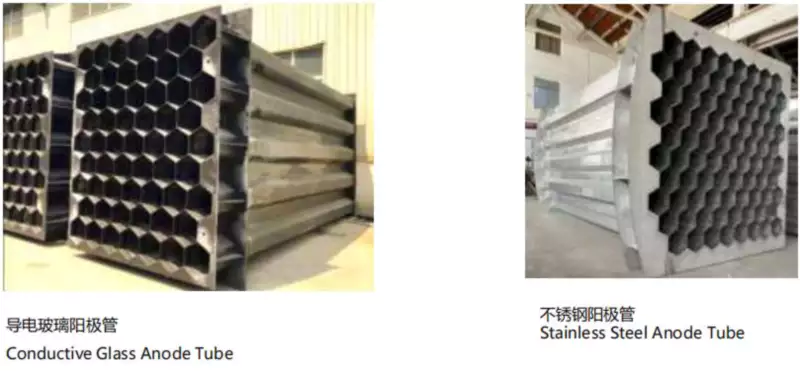
- 🔋 Anode Tubes: Conductive FRP / 2205 SS Honeycomb
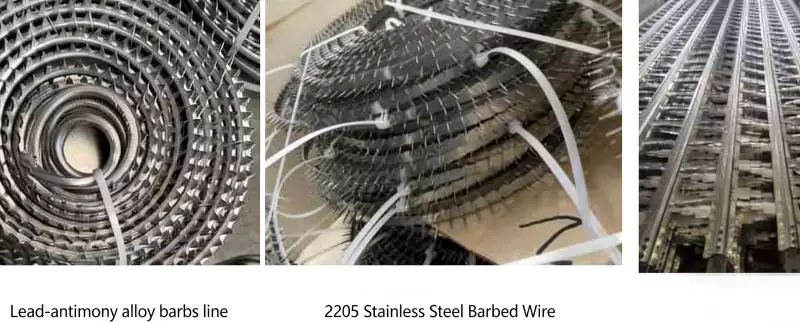
- ⚡ Cathode Wires: Lead-Antimony / 2205 SS Barbed
- ⚙️ Distribution: X-type / Square / Round Screen
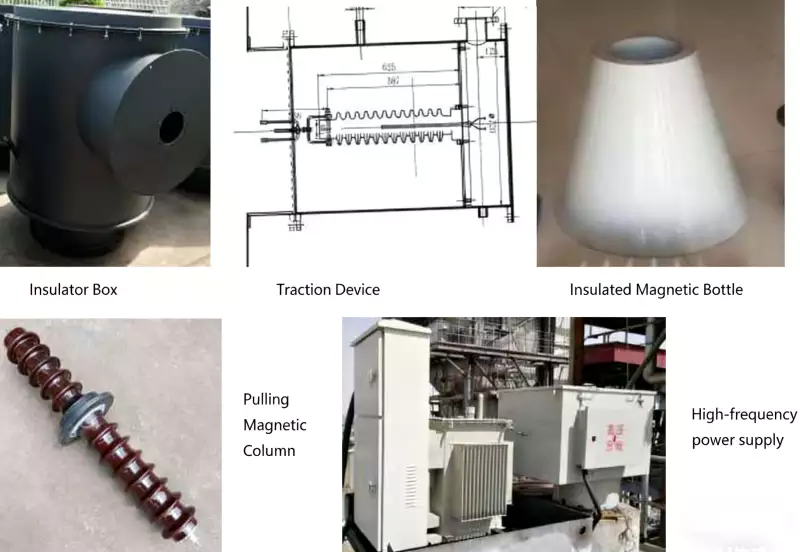
- 🛡️ Insulation: Sealed Heated Insulator Box
📊 Deep Technical Specifications (WESP1W/240W Series)
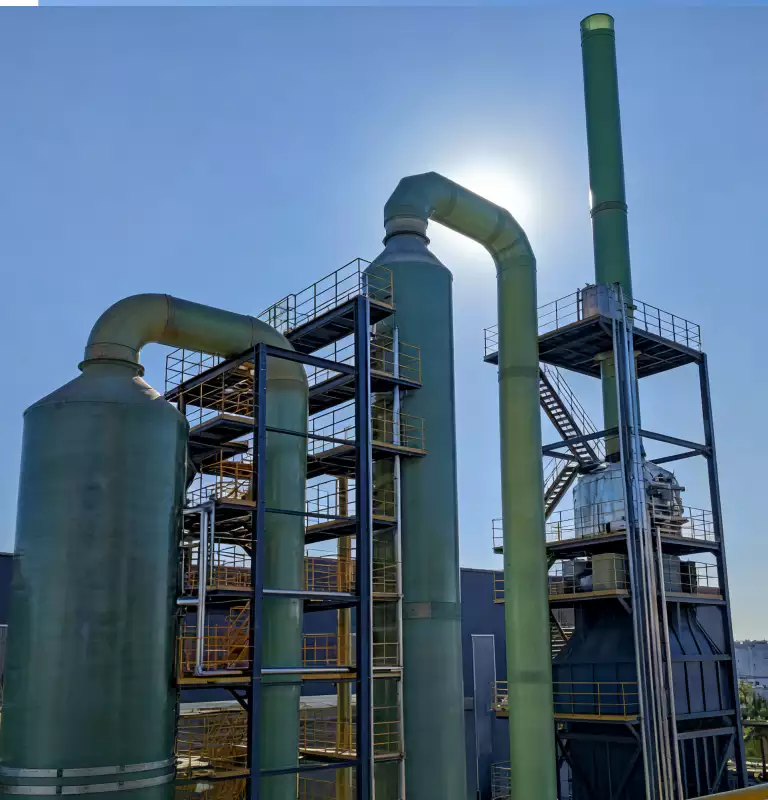
Ever-power’s WESP systems are highly modular, designed to scale seamlessly from boutique chemical calcination exhausts to massive utility-scale desulfurization effluents.
| Structural Parameter | Specification Range | Engineering Impact |
|---|---|---|
| Number of Modules | 1 to 20 (pcs.) | Modular design allows rapid scalability and limits downtime during localized maintenance. |
| Tubes per Module | 10 to 180 (pcs.) | Honeycomb configuration mathematically maximizes the specific collection area within a confined footprint. |
| Anode Tube Height | 6000 (mm) | Provides the precise residence time needed for sub-micron aerosols to migrate to the tube wall before gas exit. |
| Number of Electric Fields | 1 to 10 (pcs.) | Multi-stage electrostatic charging guarantees ultra-low emissions regardless of initial contaminant loading. |
| Anode Tube Specifications | Inscribed circle φ300 / φ360 (mm) | Calibrated to maintain optimal laminar velocity while resisting electrical arc-overs. |
| Total Filtration Area | 100 to 20,000 (m2) | Vast surface area enables unparalleled mass transfer of acid mists and fine particulate. |
🔬 Process Mechanics & Internal Architecture
The WESP Working Principle
Unlike dry ESPs, the Ever-power WESP operates in a fully saturated gas environment (below dew point). It is specifically engineered to capture liquid aerosols, SO3 acid mists, and sticky dusts that would blind dry mechanical filters.
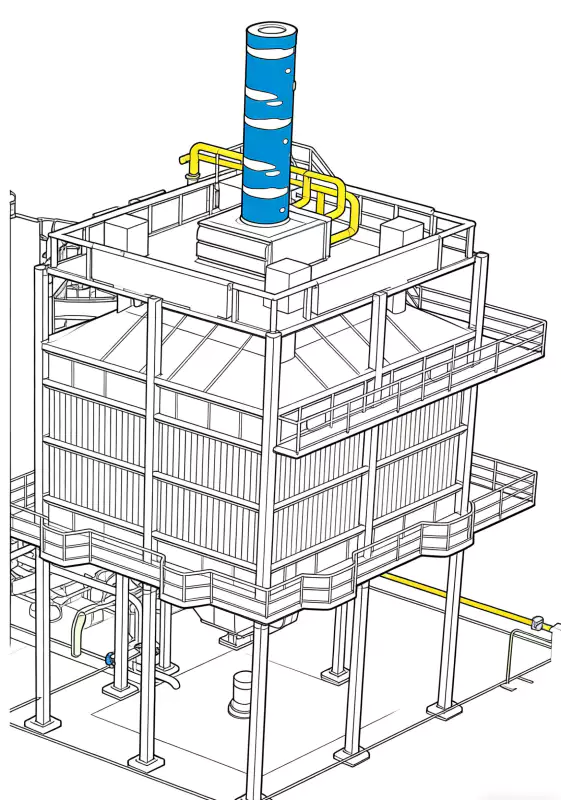
- High-Voltage Ionization: Tens of thousands of volts of DC high voltage are applied between the Anode Tube and Cathode Wire. The intense electric field fully ionizes the saturated gas, generating massive quantities of electrons and ions.
- Particle Charging: As dust-laden gas flows through, these ions collide with fine dust particles, droplets, and aerosols, heavily charging them.
- Electrostatic Migration: Driven by Coulomb force, the charged particulate separates from the airflow and migrates rapidly toward the grounded Anode Tube inner wall.
- Continuous Flushing: Adsorbed particles are trapped in a continuous water film. A Flushing System washes the tubes, allowing the slurry to flow into the lower liquid zone via gravity. No mechanical rapping is used, eliminating secondary dust entrainment.
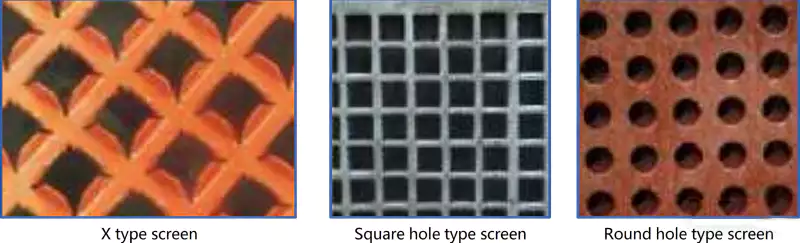
Advanced Internal Components
Handling wet, corrosive, acid-rich gases requires exceptional material science and structural engineering:
- Anode Tubes: Manufactured from either Conductive Fiberglass (FRP) Honeycomb or 2205 Duplex Stainless Steel Honeycomb. These materials offer flawless electrical conductivity combined with absolute immunity to sulfuric and hydrochloric acid corrosion.
- Cathode Wires: Tailored to the flue gas chemistry, we deploy Lead-Antimony alloy, 2205 SS barbed, or tubular barbed wires. These provide a sharp, intense corona discharge and are anchored by our rigid Tensioning Device to prevent sway and shorting.
- Insulator Box: The most critical failure point in any WESP is high-voltage tracking over wet insulators. Our system utilizes a sealed, heated Insulator Box acting as a “protective umbrella,” ensuring high voltage is safely introduced without grounding out in the humid environment.
- High-Frequency Power Supply: Delivers rapid micro-pulses of DC voltage, adapting instantly to changes in gas moisture and minimizing spark-over energy.
🚀 Strategic Engineering Advantages
Zero Secondary Entrainment
Because the WESP uses a water film and flushing system instead of mechanical hammers (rapping), collected dust is permanently trapped in liquid. It is physically impossible for dust to re-enter the gas stream, securing your ultra-low emission guarantees.
Total Plume & Mist Eradication
Standard wet scrubbers fail to capture aerosols smaller than 2 microns. The Ever-power WESP captures sub-micron PM2.5, SO3 acid mists, and heavy metals, effectively eliminating the dreaded “blue plume” or “yellow plume” at your stack outlet.
Low Resistance = Low OPEX
Despite its massive capture efficiency, the aerodynamic open-tube design yields a system resistance of only 300 – 500 Pa. This saves massive amounts of ID fan electricity compared to high-energy venturi scrubbers.
⚠️ The Terminal Purification Imperative
The Post-FGD Carryover Crisis
Many industrial plants install Wet Flue Gas Desulfurization (WFGD) scrubbers and assume compliance is met. However, scrubbers inherently generate microscopic gypsum droplets and saturated acid mists that pass right through standard mechanical mist eliminators. This “acid rain” violently corrodes downstream ductwork, destroys chimney stacks, and creates highly visible, legally non-compliant plumes. A WESP is the mandatory final gatekeeper to protect your infrastructure.
Extreme Regulatory Pressure on PM2.5
Global environmental protection agencies are moving past TSP (Total Suspended Particulates) and strictly enforcing PM2.5 and PM1.0 limits. Fabric filters and dry ESPs cannot capture sticky, ultrafine saturated aerosols. WESP technology is the only commercially viable method proven to consistently achieve outlet concentrations below 5 mg/Nm3 for these complex streams.
🏭 Typical Application Scenarios & Industry Fit
The Ever-power WESP1W/240W Series is adaptable to any process emitting saturated, corrosive, or sticky particulate matter.
Power Generation & Boilers
Installed immediately after Wet Flue Gas Desulfurization (WFGD) towers. Eliminates gypsum carryover, sulfuric acid mist (SO3), and fine ash, allowing power plants to hit “ultra-low emission” targets effortlessly.
Lithium & New Energy Materials
Crucial for Lithium Carbonate calcination and roasting exhaust. Captures valuable product dust that escapes dry collection systems while resisting highly corrosive chemical byproducts generated in battery material processing.
Metallurgy & Calcination
Purifies off-gases from steel sintering, lead/zinc roasting, and new wall material workshops. Captures heavy metals, sticky tars, and condensed acids that would permanently blind traditional fabric filters.
⚖️ Core Advantages: WESP vs. Alternative Scrubbing Tech
| Performance Metric | Ever-power WESP | High-Energy Venturi Scrubber | Standard Mist Eliminators |
|---|---|---|---|
| Sub-Micron (PM2.5) Capture | > 99% Efficiency. Electrostatic force pulls particles to the wall. | Moderate (70-80%). Relies purely on violent pressure drop and collision. | Poor (< 20%). Only captures large droplets > 10μm. |
| System Pressure Drop (ΔP) | Extremely Low: 300 – 500 Pa | Extremely High: 3000 – 8000+ Pa. Massive energy drain on fans. | Low: 150 – 300 Pa. |
| Acid Mist (SO3) Eradication | Excellent. Eliminates blue/yellow plumes entirely. | Fair, but requires excessive chemical dosing to precipitate. | Fails. Fine aerosols pass right through the chevrons. |
| Water Consumption | Very Low. Flushing water is clarified and recirculated. | Very High. Constant high-pressure spraying required. | N/A |
🏆 Why Partner with Ever-power?
For over two decades, Ever-power has been the structural backbone of heavy industrial air purification. Designing a Wet Electrostatic Precipitator requires profound mastery over corrosion-resistant polymers, high-voltage physics in wet environments, and fluid dynamics. This cannot be outsourced to generic fabricators.
- ✔️ Full Value-Chain Capability: We provide total turnkey integration: Process Engineering ➔ In-house FRP/Alloy Manufacturing ➔ Complex Installation ➔ Intelligent HV Commissioning.
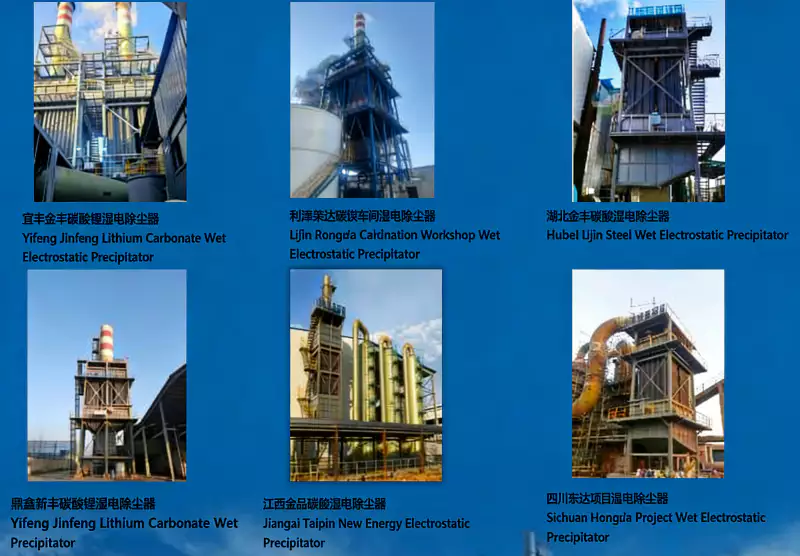
- ✔️ Proven Across Core Industries: The BL series WESP successfully protects the core operations of leading conglomerates, from massive steel plants (Hubei Lijin) to cutting-edge lithium facilities (Jiangxi Taipin New Energy).
- ✔️ Proprietary Material Technology: Our unique Conductive Fiberglass Honeycomb tubes ensure unparalleled corrosion resistance and maximize electric field intensity without degrading over time. ISO Certified, patented, and globally recognized.
📐 Engineering Selection Guide: Architecting Your WESP
To ensure the WESP is perfectly matched to your process chemistry and volume, our engineering team requires specific operational data. Prepare the following parameters for a precise technical proposal:
1. Volumetrics & Temperature
Provide the Actual Wet Gas Volume (Am3/h) and the continuous Operating Temperature (°C). Because WESPs operate in saturated conditions (typically 30-90°C), temperature dictates whether we use Conductive FRP, 2205 SS, or require upstream evaporative quenching.
2. Inlet Contaminant Profile (Crucial for Metallurgy/Chemicals)
We need the Inlet Dust & Mist Concentration (mg/Nm3). More importantly, provide a chemical analysis of the gas—specifically levels of Chlorides (Cl-), Fluorides (F-), and SO2/SO3. This chemistry dictates the exact anti-corrosion materials required for the casing, distribution screens, and electrodes.
3. Target Emission & Site Footprint Constraints
Confirm your local regulatory target (< 10mg/Nm3, < 5mg/Nm3, or specific visual opacity limits). Provide maximum allowable layout dimensions. The modular nature of our WESP allows us to stack or align modules to fit tight legacy plant footprints, often directly atop existing scrubbers.
💰 Value Quantified: Return on Investment (ROI) Analysis
A WESP is a major CapEx investment, but it acts as an unparalleled defense mechanism that secures plant longevity and operational profitability.
The True Cost of Inaction
- Stack & Duct Destruction: Uncaptured acid mist condenses in downstream ductwork and chimney stacks. Rebuilding an acid-eaten concrete/steel chimney costs millions of dollars and halts plant production for months.
- Regulatory Shutdowns: Visible plumes and PM2.5 violations trigger immediate civic complaints, leading to punitive daily fines and forced facility suspensions by environmental authorities.
- High Fan Energy Waste: Relying on high-pressure venturi scrubbers to capture fine mist forces your ID fans to burn excessive megawatts continuously, destroying your energy efficiency metrics.
The Ever-power Upgrade ROI
- Absolute Asset Protection: By eliminating 99%+ of acid mists and gypsum carryover, downstream equipment life is extended indefinitely. The WESP pays for itself by preventing a single chimney rebuild.
- Valuable Byproduct Recovery: In industries like Lithium refining or non-ferrous smelting, the WESP captures highly valuable product dust that escaped dry filters, generating direct secondary revenue.
- Uninterrupted Compliance: Operating comfortably below 5mg/Nm3 ensures your facility remains online 24/7/365, totally immune to tightening future environmental legislation.
🌍 Global Case Studies: Proving Our Authority
🇨🇳 Hubei Lijin Steel (China)
Application: Sintering Plant WFGD Post-Treatment WESP
Challenge: Heavy gypsum carryover and sulfuric acid mist from the wet scrubber caused severe “blue smoke” and rapid downstream duct corrosion, drawing regulatory scrutiny.
Solution: Installed the Ever-power BLWESP series utilizing conductive FRP honeycomb tubes. Eliminated the plume entirely, dropping total particulates consistently below 5mg/Nm3 and halting duct corrosion immediately.
🇧🇷 Minas Gerais Lithium Tech (Brazil)
Application: Lithium Carbonate Calcination WESP (Similar to Yifeng Jinfeng Project)
Challenge: Ultra-fine, highly valuable lithium dust was slipping through upstream dry collectors. The exhaust was saturated and slightly corrosive.
Solution: Deployed a multi-field WESP. Captured over 99.5% of the escaping sub-micron lithium dust as a slurry, which the plant reprocessed. The system paid for itself in recovered product value within 14 months.
🇮🇳 Gujarat Chemical & Acid Plating (India)
Application: Acid Mist Eradication from Pickling Lines
Challenge: Heavy concentrations of hydrochloric and sulfuric acid mist were destroying nearby structural steel and violating local EPA mandates.
Solution: Custom-engineered a WESP using 2205 Duplex Stainless Steel honeycomb tubes. The continuous flushing system washed the captured acid safely into the neutralization pit, ensuring 100% compliant, invisible stack emissions.
🇩🇪 Rhine Valley Materials (Germany)
Application: New Wall Material Workshop Roasting Exhaust (Similar to Dingxin Project)
Challenge: High-moisture roasting exhaust containing sticky tars and particulate that blinded standard baghouses within weeks, halting production.
Solution: Installed the WESP1W series. The electrostatic force pulled the sticky tars to the wet tube walls, where the flushing system washed them away. Maintained a steady 400 Pa resistance with zero downtime for filter changes.
❓ Engineering & Operational FAQ
What is the primary difference between a Dry ESP and a Wet ESP?
A Dry ESP operates above the dew point, collecting dry dust using mechanical hammers (rapping) to dislodge it. A WESP operates in a wet, saturated environment (below dew point). It collects wet dust, aerosols, and acid mists, and cleans the electrodes using a water flushing system instead of rapping, completely eliminating secondary dust re-entrainment.
How does the WESP prevent high-voltage shorting in a wet environment?
This is a critical engineering feat. We use specially designed, sealed Insulator Boxes equipped with hot air purge systems or electrical heating. This creates a dry, pressurized micro-environment around the high-voltage insulators, ensuring the high voltage safely crosses into the wet gas zone without tracking or grounding out.
How much water does the flushing system consume?
Fresh water consumption is surprisingly low. The flushing system typically operates intermittently (e.g., 5 minutes every few hours) or via a continuous ultra-low-flow water film. Furthermore, the wash water is collected in the bottom hopper, sent to a clarification tank, and heavily recirculated back into the WESP headers.
How do you choose between FRP and Stainless Steel for Anode Tubes?
Selection is primarily driven by gas chemistry and temperature. Conductive Fiberglass (FRP) is highly resistant to acids and is extremely cost-effective for standard saturated flows up to 80-90°C. If temperatures fluctuate higher, or specific organic solvents/strong alkalis are present that degrade resins, we upgrade to 2205 Duplex Stainless Steel or higher alloys.
What is the maintenance schedule like?
Unlike fabric filters requiring thousands of bag changes, WESPs have no consumable filter media. Maintenance is primarily focused on inspecting the water spray nozzles annually to ensure they aren’t plugged with scale, checking insulator heater function, and verifying the alignment of the Cathode Tensioning Device during scheduled plant turnarounds.
Achieve True Near-Zero Emissions Today
Stop corrosive acid rain from destroying your stacks. Eliminate visible plumes and eradicate sub-micron particulates permanently. Let Ever-power’s senior engineering team design a bespoke WESP system that guarantees < 5mg/Nm3 compliance and secures your plant’s operational future.
 TH
TH  EN
EN  ZH
ZH  ES
ES  AR
AR  ID
ID  PT
PT  FR
FR  JA
JA  RU
RU  DE
DE  MS
MS  CS
CS  BG
BG  NL
NL  KO
KO  RO
RO  SK
SK  VI
VI  ZH_TW
ZH_TW  UK
UK