
คำอธิบาย
Metallurgical Flue Gas Purification | BLESP Series Electrostatic Precipitators
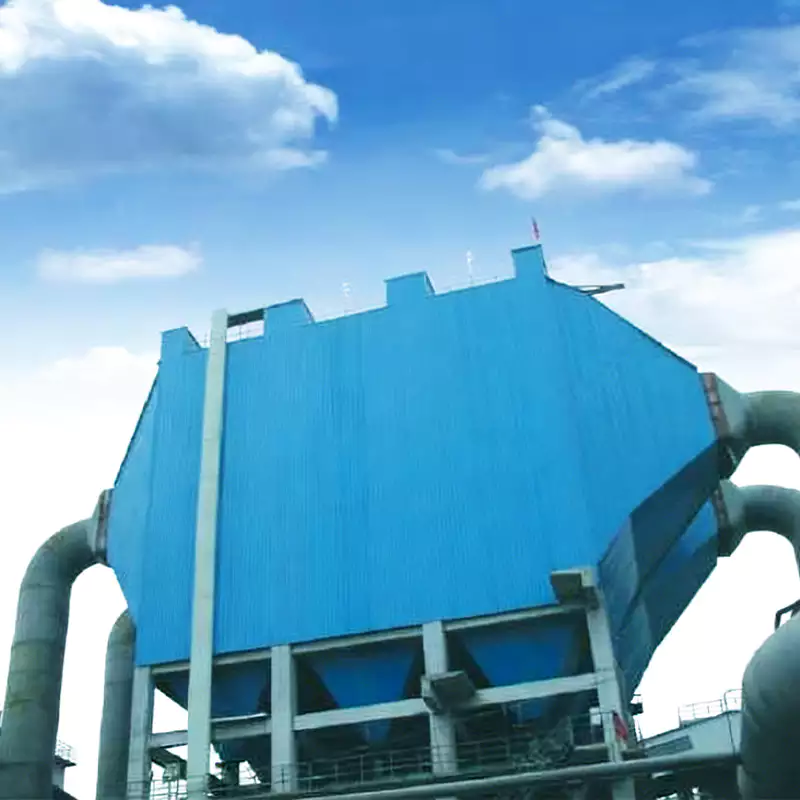
Conquer explosive converter gases and abrasive sinter dust with Ever-power’s benchmark dry electrostatic precipitators. Engineered specifically for the extreme conditions of the metallurgical industry, handling unprecedented suction pressures up to -22,000 Pa and delivering ultra-low emissions (< 50mg/Nm³). Eliminate regulatory downtime and protect your downstream equipment.
⚙️ Executive Engineering Brief
🔥 Sinter Plant Dedusting (Head/Tail)
- 📉 Max Gas Volume: Up to 2,500,000 m³/h
- 🌡️ Temperature: 80 – 160 °C
- 🌫️ Inlet Dust Density: Up to 50 g/Nm³
- 🌪️ Max Suction Pressure: -22,000 Pa (Extreme)
- 🏭 Supported Units: 18 – 450 MW scale
🛡️ Dry Type Converter Gas ESP
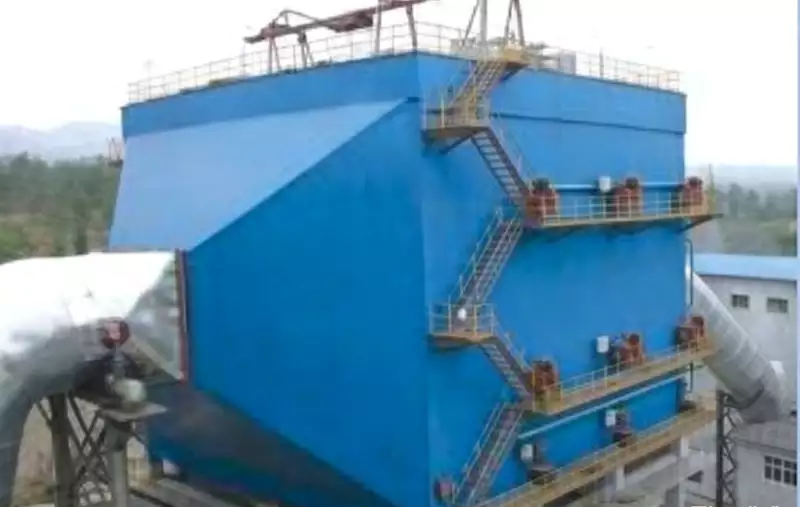
- 📉 Max Gas Volume: 1,400,000 m³/h
- 💥 Design: Cylindrical, Explosion-Proof
- 🛑 Sealing: 100% Zero Leakage Design
- 🏋️ Casing Pressure Bearing: 0.2 MPa
- 🚨 Safety: Integrated Relief Valves
🎯 Core System Performance
- ✅ Outlet Emission: < 50 mg/Nm³ (Capable of < 10 mg/Nm³)
- ✅ Operating Resistance: 200 – 350 Pa
- ✅ Collecting Plates: ZT24 High-Efficiency
- ✅ Discharge Wires: Fishbone / B-Type / V-Type
- ✅ Lifespan: Designed for 20+ Years
📊 Deep Technical Specifications
| Structural Parameter | Specification Range | Metallurgical Engineering Impact |
|---|---|---|
| Number of Chambers | 1 – 2 (pcs) | Ensures parallel processing. Allows partial isolation for maintenance without shutting down the entire sintering or smelting line. |
| Passages Per Chamber | 9 – 40 (pcs) | Highly scalable cross-section to maintain ideal aerodynamic velocity across fluctuating blast furnace gas volumes. |
| Height of Field | 5 – 15 (m) | Maximizes the specific collection area (SCA) within the constrained terrestrial footprints typical of legacy steelworks. |
| Number of Fields | 1 – 6 (pcs) | Sequential electrostatic charging stages guarantee ultra-low emission targets (< 10-50mg/Nm³) even for highly resistive metallurgical dust. |
| Passage Space | 300, 400, 450 (mm) | Wide plate spacing heavily mitigates spark-over potential and accommodates severe abrasive dust loads without bridging. |
| Cross Sectional Area | 10 – 494 (m²) | Engineered to maintain strict internal gas velocities (usually 0.8 – 1.2 m/s) to prevent particle re-entrainment. |
🔬 Process Mechanics & Internal Architecture
How Electrostatic Precipitation Works
The Ever-power BLESP Series separates abrasive and potentially explosive particulate matter from metallurgical gas streams using intense electrostatic forces (Coulomb force). This achieves maximum capture efficiency with virtually zero mechanical resistance.
- Laminar Gas Distribution: Raw gas flows through highly engineered distribution screens (X-type, square hole, or round hole) to ensure uniform velocity distribution across the entire cross-section.
- High-Voltage Ionization: Tens of thousands of volts (DC) are applied to the Discharge Electrodes. This creates a powerful corona discharge, ionizing the gas and generating an electron avalanche.
- Particle Charging & Migration: Suspended metallurgical dust particles collide with ionized gas molecules, acquiring a strong negative charge, and are driven forcefully toward the grounded Collecting Electrodes.
- Mechanical Rapping: Precisely timed continuous and revolving-arm hammers strike the plates and wires. The shear force causes the agglomerated dust to fall directly into the collection hoppers.
Advanced Internal Componentry
The reliability of an ESP in a steel plant depends entirely on its internal structural integrity:
- ZT24 Collecting Electrodes (CE): Our proprietary ZT24 profile plates offer superior discharging performance and uniform current density. They mathematically yield a 10% larger effective dust collecting area compared to standard profiles in the same space.
- Rigid Discharge Electrodes (DE): We utilize heavy-duty B-type, V-type, and rigid Fishbone wires. In turbulent sinter flows, these guarantee absolute solidity, non-breakability, and aggressive, uninterrupted corona generation.
- Specialized Cylindrical Architecture (Converter Gas): For explosive CO gas mixtures, standard rectangular ESPs fail. Our cylindrical casing design prevents combustible gas/air pockets, eliminates dead zones, and features a 100% sealed, 0.2MPa pressure-bearing shell equipped with explosion relief valves and special internal dust scrapers.
🚀 Strategic Metallurgical Design Advantages
Extreme Suction Tolerance
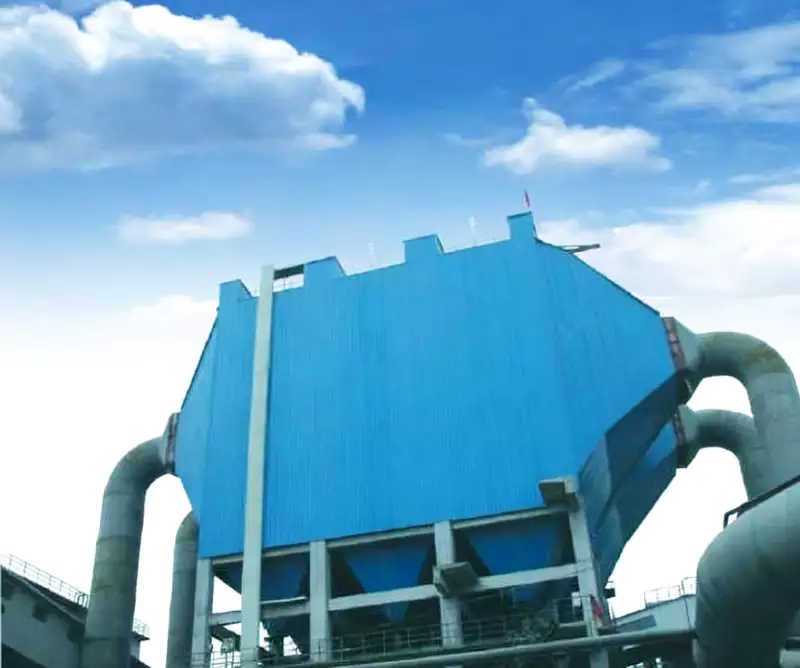
Sintering processes generate massive negative pressure. Standard casings buckle. The BLESP series is structurally reinforced with heavy-duty carbon steel framing to operate flawlessly under extreme suction pressures up to -22,000 Pa.
Explosion-Proof Engineering
Converter gas recovery is highly volatile due to fluctuating CO concentrations. Our Dry Type Converter Gas ESPs are built as cylindrical pressure vessels (up to 0.2 MPa tolerance) with zero-leakage seals and dynamic explosion relief venting.
Ultra-Low Resistance
While fabric filters create 1500+ Pa of resistance, our aerodynamic internal pathways ensure dynamic operating resistance remains at a mere 200 – 350 Pa. This slashes the enormous electrical load on your main Induced Draft fans.
⚠️ Why Upgrade Now? The True Cost of Inaction
Regulatory Strangulation & Fines
Global environmental ministries are actively targeting the steel and non-ferrous sectors. Enforcing strict ultra-low limits (< 50mg/Nm³, and increasingly < 10mg/Nm³). Exceeding these limits triggers automated telemetry alarms, resulting in staggering daily fines and immediate operational shutdowns. Your dedusting system is the primary shield protecting your production quota.
The “Hidden” Profit Bleed of Outdated Filters
Legacy baghouses or failing ESPs force your ID fans to work against massive pressure drops, burning megawatts of excess electricity every single day. Furthermore, inadequate dust capture causes rapid, severe abrasive wear on downstream fan blades and ductwork, resulting in millions of dollars in premature equipment replacement.
🏭 Typical Metallurgical Application Scenarios
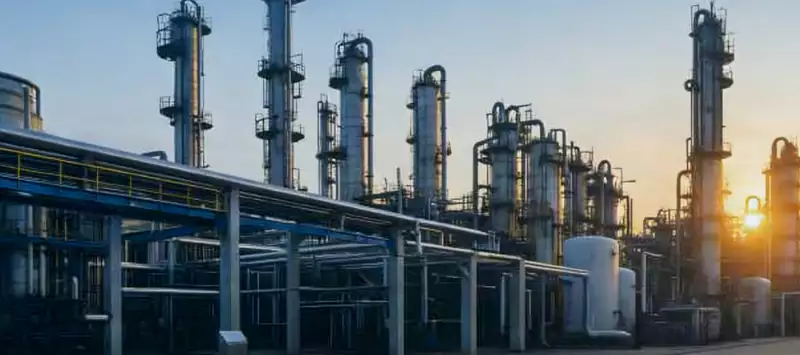
The Ever-power BLESP series is dynamically scaled for non-ferrous smelting and heavy iron & steel plant operations.
Sintering Machine Process Gas (Head & Tail)
Captures highly abrasive sinter dust from main extraction points. Built to withstand continuous 2,500,000 m³/h volumes at severe -22,000 Pa negative pressure, protecting main extraction fans from erosion.
Dry Type Converter Gas Recovery
The most complex ESP application. Purifies explosive, intermittent Carbon Monoxide (CO) off-gas. Our cylindrical design avoids combustible dead zones, allowing safe capture and energetic recycling of converter gas.
Non-Ferrous & Auxiliary Smelting
Highly effective for capturing valuable metallic dust from copper, aluminum, and zinc smelting processes, turning emission compliance into direct material recovery and secondary revenue.
⚖️ Ever-power ESP vs. Traditional Fabric Filters
| Comparison Metric | Ever-power BLESP Series | Traditional Baghouse |
|---|---|---|
| Operating Resistance (ΔP) | 200 – 350 Pa (Massive fan energy savings) | 1200 – 2000 Pa (High continuous electrical load) |
| Explosion Safety (CO Gas) | Cylindrical pressure vessel; zero dead zones. | Rectangular corners trap explosive gases. High risk. |
| Consumables / Maintenance | Zero consumables. Rigid steel internals. | Thousands of bags require frequent, costly replacement. |
| Abrasive Dust Handling | Excellent. Steel plates resist abrasion. | Poor. Sinter dust shreds fabric filters quickly. |
🏆 Why Partner with Ever-power?
For over two decades, Ever-power has been the structural backbone of heavy industrial air purification. The BL Series is not an off-the-shelf product; it is a technically honed, battle-tested benchmark forged through hundreds of complex metallurgical projects.
- ✔️ Full Value-Chain Capability: We provide total turnkey integration: Process R&D Design ➔ Lean CNC Manufacturing ➔ Complex Engineering Installation ➔ Intelligent HV Commissioning.
- ✔️ Trusted by Heavy Industry Giants: Our systems successfully protect core operations for major metallurgical and power entities globally, preventing thousands of hours in potential downtime.
- ✔️ Uncompromised Quality Credentials: Fully ISO certified, holding multiple structural patents for ESP internal geometries, and globally recognized environmental manufacturing credentials.
📐 Engineering Sizing Guide: Architecting Your Solution
To ensure the ESP is perfectly matched to your blast furnace, sinter plant, or converter, our engineering team requires specific operational data. Prepare the following parameters to expedite your quote:
1. Process Gas & Pressure Parameters
Provide the Maximum Gas Volume (m³/h), the continuous Operating Temperature (°C), and critically, the Maximum Suction Pressure (Pa). Sintering creates extreme vacuum forces that dictate the casing thickness and steel grade required.
2. Dust & Chemical Composition
Specify the Inlet Dust Concentration (g/Nm³). For converter gas, we must know the exact CO percentage and peak volatility to size the explosion relief valves and nitrogen purging systems correctly.
3. Target Emission & Footprint Constraints
Confirm your local regulatory target (< 50mg/Nm³, < 30mg/Nm³, or near-zero). Provide maximum allowable layout dimensions (L x W x H), as installing multiple electrostatic fields requires careful spatial planning.
💰 Value Quantified: Return on Investment (ROI)
Procuring a large-scale ESP is a CapEx decision, but the true financial victory is realized through drastically reduced OpEx.
The Cost of Inaction
- Massive Fan Energy Waste: Overcoming a 1800 Pa pressure drop on a 2,000,000 m³/h sinter exhaust requires hundreds of excess kilowatts constantly.
- Consumables Bleed: Replacing shredded filter bags due to abrasive iron dust costs tens of thousands annually in material and labor.
- Unplanned Stoppages: Bag blinding or explosion risks force unscheduled shutdowns, costing hundreds of thousands in lost steel production.
The Ever-power Upgrade ROI
- Fan Power Slashed: Operating at a mere ~300 Pa saves enough electrical power to frequently pay back the entire ESP investment within 3-4 years.
- Zero Filtration Consumables: Our rigid ZT24 plates and Fishbone wires do not abrade like fabric. Zero bags to buy for decades.
- Material Recovery: Highly efficient capture of non-ferrous or iron dust allows for immediate material recycling back into the process loop.
🌍 Global Case Studies: Proving Our Authority
🇨🇳 Tangshan Iron & Steel (China)
Application: 360m² Sintering Machine Tail ESP
Challenge: Processing highly abrasive iron ore dust under -18,000 Pa negative pressure without casing deformation.
Solution: Installed the BLESP Series with heavy-duty structural reinforcement. Protected the main extraction fan from erosion and maintained outlet emissions strictly below 30mg/Nm³, ensuring continuous compliance in China’s strictest emission zone.
🇮🇳 Mumbai Metallurgical Corp (India)
Application: Dry Type Converter Gas Recovery
Challenge: Extremely volatile CO gas mixtures causing safety shutdowns in legacy rectangular precipitation systems.
Solution: Ever-power deployed our specialized Cylindrical ESP. The 0.2MPa pressure-bearing zero-leakage design eliminated gas pockets, allowing the plant to safely recover converter gas for secondary power generation with 100% safety.
🇧🇷 Sao Paulo Steelworks (Brazil)
Application: Blast Furnace Cast House Dedusting
Challenge: Plant required a rapid upgrade from failing baghouses that were blinding due to ambient moisture and heat spikes.
Solution: Converted to a multi-field BLESP system. The low 300 Pa operating resistance immediately freed up megawatts of ID fan capacity, and the system easily handled temperature excursions up to 200°C without damage.
🇩🇪 Ruhr Valley Smelting (Germany)
Application: Non-Ferrous Copper Smelting Exhaust
Challenge: Capturing high-value, highly resistive sub-micron copper particulates to meet stringent EU emission standards.
Solution: Engineered a compact, high-field ESP utilizing micro-pulse High-Frequency power supplies. Achieved 99.98% collection efficiency, recovering tons of valuable copper dust daily and paying for itself in 18 months.
❓ Engineering & Operational FAQ
Why is a Cylindrical ESP required for Converter Gas?
Converter gas contains high levels of Carbon Monoxide (CO). Standard rectangular ESPs have corners (“dead zones”) where combustible gas and air can mix, creating extreme explosion hazards. Our Cylindrical ESP eliminates dead zones, is 100% sealed, and is built as a pressure vessel (0.2MPa) with explosion relief valves to guarantee absolute safety.
How does the ESP casing handle -22,000 Pa suction?
Sinter machine dedusting requires massive induced drafts. We utilize advanced FEA (Finite Element Analysis) to design the casing’s structural ribbed framework. We use high-grade carbon steel plates and specialized internal cross-bracing to prevent implosion and casing deformation under these extreme vacuums.
Can we upgrade our current ESP internals to Ever-power specs?
Yes. We offer comprehensive metallurgical retrofit services. We can gut your old internals, replace outdated plates with our ZT24 profile plates (increasing effective area by 10%), install unbreakable Fishbone wires, and upgrade the HV transformers, all while keeping your existing outer casing intact.
How do you prevent abrasive sinter dust from destroying the internals?
Unlike fabric filters which are shredded by abrasive metallic dust, our internal components are forged from heavy-duty steel. Furthermore, we design specialized gas distribution screens that slow the gas velocity (to ~1.0 m/s), dropping out heavy coarse particles immediately into the front hopper before they even reach the electrostatic fields.
Does this equipment handle wet desulfurization exhaust?
The standard BLESP series is for high-temperature dry dust. For wet scrubbing exhausts containing acid mist (e.g., after sintering FGD), you require our BLWESP Series (Wet Electrostatic Precipitator), which utilizes corrosion-resistant conductive honeycomb anode tubes.
Secure Your Production Output Today
Stop risking plant shutdowns due to emission violations and stop destroying your main extraction fans. Let Ever-power’s senior metallurgical engineering team design a BLESP system that guarantees compliance and aggressively cuts your operational expenditures.
 TH
TH  EN
EN  ZH
ZH  ES
ES  AR
AR  ID
ID  PT
PT  FR
FR  JA
JA  RU
RU  DE
DE  MS
MS  CS
CS  BG
BG  NL
NL  KO
KO  RO
RO  SK
SK  VI
VI  ZH_TW
ZH_TW  UK
UK