– Regenerative Thermal Oxidizers (RTO) and other oxidation technologies play a crucial role in the coatings industry. This article will explore the advantages and disadvantages of RTO compared to other oxidation technologies for coatings.
– RTO is a highly effective and energy-efficient oxidation technology used in the coatings industry. It utilizes a regenerative process to remove volatile organic compounds (VOCs) from exhaust gases generated during coating operations.
– The regenerative process involves the cyclic heating and cooling of ceramic beds, allowing for the efficient destruction of VOCs and the recovery of heat energy.
– RTOs are known for their high destruction efficiency, typically exceeding 98%, making them a preferred choice for many coating manufacturers.
– Energy Efficiency:
– RTOs offer exceptional energy efficiency due to their regenerative design. The heat energy recovered during the oxidation process can be utilized to preheat incoming exhaust gases, reducing the overall energy consumption.
– This energy-saving feature not only reduces operational costs but also contributes to a more sustainable and environmentally friendly coating process.
– High Destruction Efficiency:
– As mentioned earlier, RTOs achieve destruction efficiencies of over 98%. This high efficiency ensures the effective removal of VOCs, preventing their release into the environment and helping coating manufacturers comply with stringent air quality regulations.
– Versatility:
– RTOs can handle a wide range of coating applications, including solvent-based and water-based coatings. Their versatility makes them suitable for various industries, from automotive to aerospace.
– Capital Investment:
– Implementing an RTO system can involve significant upfront costs. The need for specialized equipment, such as ceramic beds and heat recovery systems, can make the initial investment higher compared to other oxidation technologies.
– Space Requirements:
– RTOs require sufficient space for installation, especially when considering the size of the ceramic beds and other components. Coating manufacturers with limited space may find it challenging to accommodate an RTO system.
– Maintenance and Operational Complexity:
– RTOs require regular maintenance to ensure optimal performance. The complexity of the regenerative process and the need for periodic cleaning and inspection can add to the operational challenges.
– In conclusion, RTOs offer numerous advantages in terms of energy efficiency, destruction efficiency, and versatility. However, they also come with drawbacks such as capital investment, space requirements, and maintenance complexity. Coating manufacturers should carefully consider their specific requirements and evaluate the pros and cons before choosing between RTO and other oxidation technologies for their coatings processes.

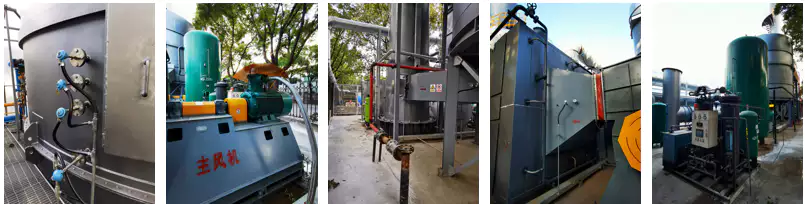
Nous sommes une entreprise de haute technologie spécialisée dans le traitement complet des gaz résiduaires contenant des composés organiques volatils (COV), la réduction du carbone et les technologies d'économie d'énergie. Nos technologies clés comprennent l'énergie thermique, la combustion, l'étanchéité et l'autorégulation, avec des capacités de simulation des champs de température et d'écoulement d'air, d'évaluation des performances des matériaux de stockage de chaleur céramiques, de sélection des matériaux d'adsorption par tamis moléculaire et de tests des caractéristiques d'oxydation par incinération à haute température des COV.
Our team is comprised of over 360 employees, including more than 60 R&D technical elites. Our core technology team comes from the Aerospace Liquid Rocket Engine Research Institute (Aerospace Sixth Institute). We have an RTO technology research and development center and a waste gas carbon reduction engineering technology center in Xi’an, and a 30,000 square meter production base in Yangling. We are a leading manufacturer of RTO equipment and molecular sieve rotary equipment in the world.
Nos principaux produits comprennent l'incinérateur à oxydation par stockage de chaleur à vanne rotative (RTO) et la roue rotative de concentration par adsorption sur tamis moléculaire. Grâce à notre expertise en protection de l'environnement et en ingénierie des systèmes d'énergie thermique, nous proposons à nos clients des solutions complètes pour le traitement des gaz résiduaires industriels et la réduction des émissions de carbone, adaptées à diverses conditions de fonctionnement.
Le choix du RTO approprié pour l'industrie du revêtement nécessite une attention particulière aux aspects suivants :
Notre processus de service pour les oxydants thermiques régénératifs comprend :
En tant que fournisseur de solutions RTO complètes, notre équipe de professionnels conçoit des solutions RTO sur mesure. Nous avons déjà fourni avec succès des solutions RTO à l'industrie du revêtement, notamment dans les cas suivants :
Auteur : Miya
Bulk Solid Waste Comprehensive Treatment: Integrated Dust Removal & Denitrification Project A Technical Case Study…
Steel Industry Dedusting & Desulfurization Project Integrated Flue Gas Treatment for Steel Manufacturing by Ever-power…
New Energy Lithium Battery Industry Flue Gas Purification Project Advanced Industrial Waste Gas Treatment for…
High-Performance Lithium-Ion Battery Anode Material Graphitization Industry: Dust Removal, Desulfurization & Denitrification Project A Comprehensive…