– Regenerative Thermal Oxidizers (RTO) and other oxidation technologies play a crucial role in the coatings industry. This article will explore the advantages and disadvantages of RTO compared to other oxidation technologies for coatings.
– RTO is a highly effective and energy-efficient oxidation technology used in the coatings industry. It utilizes a regenerative process to remove volatile organic compounds (VOCs) from exhaust gases generated during coating operations.
– The regenerative process involves the cyclic heating and cooling of ceramic beds, allowing for the efficient destruction of VOCs and the recovery of heat energy.
– RTOs are known for their high destruction efficiency, typically exceeding 98%, making them a preferred choice for many coating manufacturers.
– Energy Efficiency:
– RTOs offer exceptional energy efficiency due to their regenerative design. The heat energy recovered during the oxidation process can be utilized to preheat incoming exhaust gases, reducing the overall energy consumption.
– This energy-saving feature not only reduces operational costs but also contributes to a more sustainable and environmentally friendly coating process.
– High Destruction Efficiency:
– As mentioned earlier, RTOs achieve destruction efficiencies of over 98%. This high efficiency ensures the effective removal of VOCs, preventing their release into the environment and helping coating manufacturers comply with stringent air quality regulations.
– Versatility:
– RTOs can handle a wide range of coating applications, including solvent-based and water-based coatings. Their versatility makes them suitable for various industries, from automotive to aerospace.
– Capital Investment:
– Implementing an RTO system can involve significant upfront costs. The need for specialized equipment, such as ceramic beds and heat recovery systems, can make the initial investment higher compared to other oxidation technologies.
– Space Requirements:
– RTOs require sufficient space for installation, especially when considering the size of the ceramic beds and other components. Coating manufacturers with limited space may find it challenging to accommodate an RTO system.
– Maintenance and Operational Complexity:
– RTOs require regular maintenance to ensure optimal performance. The complexity of the regenerative process and the need for periodic cleaning and inspection can add to the operational challenges.
– In conclusion, RTOs offer numerous advantages in terms of energy efficiency, destruction efficiency, and versatility. However, they also come with drawbacks such as capital investment, space requirements, and maintenance complexity. Coating manufacturers should carefully consider their specific requirements and evaluate the pros and cons before choosing between RTO and other oxidation technologies for their coatings processes.

Wir sind ein Hightech-Unternehmen, das sich auf die umfassende Behandlung von Abgasen mit flüchtigen organischen Verbindungen (VOC) sowie auf Technologien zur CO₂-Reduzierung und Energieeinsparung spezialisiert hat. Zu unseren Kerntechnologien zählen thermische Energie, Verbrennung, Abdichtung und Selbststeuerung. Wir verfügen über Kompetenzen in der Temperaturfeldsimulation, der Modellierung von Luftströmungsfeldern, der Leistungsbewertung von keramischen Wärmespeichermaterialien, der Auswahl von Molekularsieb-Adsorptionsmaterialien und der Prüfung der Oxidationseigenschaften von VOC-haltigen organischen Stoffen bei der Hochtemperaturverbrennung.
Our team is comprised of over 360 employees, including more than 60 R&D technical elites. Our core technology team comes from the Aerospace Liquid Rocket Engine Research Institute (Aerospace Sixth Institute). We have an RTO technology research and development center and a waste gas carbon reduction engineering technology center in Xi’an, and a 30,000 square meter production base in Yangling. We are a leading manufacturer of RTO equipment and molecular sieve rotary equipment in the world.
Zu unseren Kernprodukten zählen Rotationsventil-Wärmespeicher-Oxidationsverbrennungsanlagen (RTO) und Molekularsieb-Adsorptionskonzentrations-Rotationsräder. Durch die Kombination unserer Expertise im Umweltschutz und in der thermischen Energietechnik bieten wir unseren Kunden umfassende Lösungen für die industrielle Abgasreinigung und CO₂-Reduzierung unter verschiedensten Betriebsbedingungen.
Die Auswahl des geeigneten RTO für die Beschichtungsindustrie erfordert sorgfältige Berücksichtigung der folgenden Aspekte:
Unser Serviceprozess für regenerative thermische Oxidationsmittel umfasst:
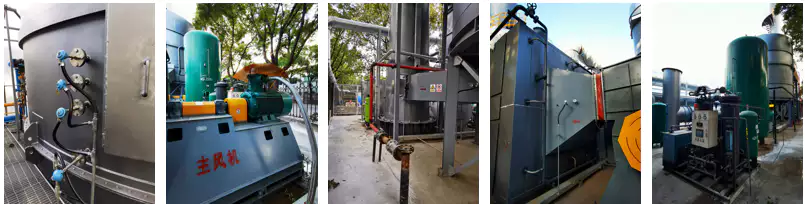
Als Komplettanbieter für RTO-Lösungen kann unser professionelles Team maßgeschneiderte RTO-Lösungen für unsere Kunden entwickeln. Wir haben bereits erfolgreich RTO-Lösungen für die Beschichtungsindustrie realisiert, unter anderem in folgenden Fällen:
Autor: Miya
RTO for Sterile API Crystallization and Drying Exhaust Treatment How our rotor concentrator plus RTO…
RTO For Revolutionizing Fermentation Exhaust Treatment How our three-bed RTO system efficiently handles esters, alcohols,…
RTO for Soft Capsule/Injection Extract Concentration How our regenerative thermal oxidizer system efficiently handles acetone,…
RTO For Revolutionizing Tablet/Capsule Fluid Bed Coating How our three-bed regenerative thermal oxidizer system efficiently…